
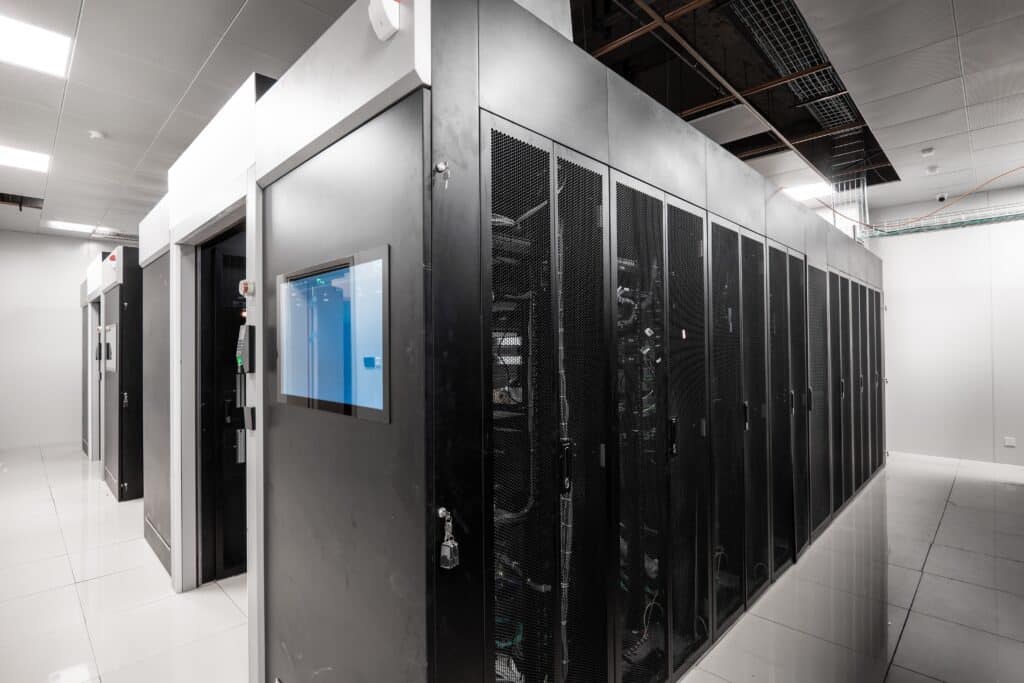

“I’m not designing one data center. I’m designing the standard every site in our portfolio will be built to — for the next decade.”
That’s the mindset of the engineering leaders who own infrastructure standards across a fleet, not just a single build. And it points to a cost that rarely shows up on anyone’s radar until someone goes looking for it: overcooling.
Overcooling doesn’t look like a problem. It looks like safety margin. Most facilities run their cooling systems with a buffer, because undercooling is the failure mode everyone fears — a thermal event, a throttled rack, a call at 2 a.m. So operators cool conservatively, and the extra energy spent doing it gets absorbed into the operating budget as the cost of doing business.
Except it isn’t fixed. It’s a variable that most facilities have never actually measured.
Margin Is Not the Same as Efficiency
Every data center has some buffer built into its cooling design — that’s sound engineering. The problem is that “buffer” quietly becomes “default operating state” when there’s no reliable way to see how much margin is actually needed at any given moment versus how much is being run out of caution.
Without accurate, real-time visibility into flow, temperature, and load conditions across the loop, teams can’t tell the difference between a system running exactly as efficiently as it safely can, and a system running well past that point, burning energy for a safety margin that isn’t buying any additional protection. At fleet scale, that gap compounds. A few percentage points of unnecessary cooling capacity, multiplied across a portfolio of sites, adds up to a real number on the energy line — one that’s largely invisible until someone builds the instrumentation to measure it.
Why This Stays Hidden
Three things typically keep overcooling costs out of view:
- Instrumentation that isn’t accurate enough to trust for optimization — sensors that drift or require frequent recalibration get treated as directional at best, which means nobody adjusts setpoints based on them
- Site-by-site variance — without a standardized measurement approach across a fleet, one facility’s “efficient” is another facility’s “wasteful,” and there’s no common baseline to compare against
- Alarm fatigue — when data quality is inconsistent, teams tune out minor deviations rather than investigate them, which means genuine optimization opportunities get lost in the noise along with the false positives
None of these are operator failures. They’re the predictable result of running fleet-wide infrastructure on measurement technology that wasn’t built to support fleet-wide standardization in the first place.
What Changes With Verified, Standardized Measurement
The fix isn’t telling teams to run cooling systems closer to the edge — that’s exactly the wrong instinct for mission-critical infrastructure. The fix is giving them accurate enough data that “closer to the edge” and “safely optimized” become the same thing, measured with confidence rather than approximated with caution.
That requires:
- Process-grade accuracy on flow, temperature, and pressure — precise enough that setpoint adjustments can be made with confidence instead of guesswork
- One standard instrument platform across the portfolio — so efficiency gains at one site translate directly into a repeatable playbook for the next, instead of starting from scratch each time
- Data clean enough to feed automated optimization — real-time, drift-free measurement that DCIM and building management systems can act on directly, not just display
This is where PUE and WUE targets stop being aspirational numbers on a sustainability report and start being something a facility can actually manage toward, because the underlying data is trustworthy enough to manage with.
(Source: Shutterstock / DC Studio)
The Portfolio-Wide Payoff
For a single facility, better measurement means lower energy costs and tighter operational confidence. For a portfolio, it means something bigger: a repeatable standard. When every site is instrumented to the same accuracy and reliability benchmark, the lessons learned optimizing one facility become directly transferable to the next — instead of being trapped as tribal knowledge at a single site.
That’s the real prize behind solving overcooling: not just the energy saved, but the standardization it enables. A reference architecture that scales cleanly across the next five builds is worth more than any single efficiency win, and it starts with instrumentation accurate enough to trust across every site in the fleet.
Yokogawa has spent decades building the kind of process-grade measurement accuracy that industrial operations depend on to run lean without running risky — and that same standard is exactly what fleet-wide data center cooling needs now.
Next in this series: why measurement data needs to be defensible, not just accurate — and what that means for sustainability reporting at hyperscale.
How Yokogawa Helps Data Centers Achieve Higher Performance
Yokogawa combines over a century of industrial measurement, control, automation, and data integration expertise with solutions relevant to modern data center infrastructure. For corporate engineering teams, the opportunity is to turn facility-level measurements into a consistent operating standard that supports efficiency, resilience, and better-informed investment decisions.
- Precision measurement for cooling performance
Yokogawa flowmeters, temperature and pressure transmitters, and liquid analyzers help operators monitor cooling distribution, thermal conditions, and coolant quality. Visibility into flow balance, temperature differences, and fluid condition helps teams investigate excess cooling, identify changes in heat exchanger performance, and detect emerging restrictions or degradation. The objective is to maintain thermal limits while evaluating where unnecessary cooling energy can be reduced.
- Energy and power performance visibility
Reliable measurements help engineering teams compare cooling-system behavior with changing IT loads and electrical demand. Yokogawa also offers precision power measurement and distributed temperature sensing for applications such as power electronics validation and thermal monitoring of power distribution infrastructure. These capabilities support performance assessment and earlier identification of abnormal conditions. They do not, by themselves, guarantee an improvement in PUE.
- Connected data for informed control
Integrating measurements across mechanical and electrical systems gives operators a more complete view of facility performance. Yokogawa describes multi-source data integration and closed-loop control approaches that support timely monitoring and adjustment of operating conditions. Any automated optimization should be engineered around site-specific control limits, integration requirements, and redundancy policies.
- A repeatable standard across the portfolio
A common approach to instrumentation, data quality, and performance monitoring makes it easier to compare sites, validate changes, and apply successful operating practices to future builds. Fleet-wide standards can define what to measure, where to measure it, how to maintain accuracy, and how performance is reported. This gives corporate engineering teams a practical path to lower lifecycle costs without compromising uptime requirements.

Measure the Opportunity Before Changing the Setpoint
The first step is to establish a trustworthy baseline. Compare cooling energy, IT load, temperatures, flow, and operating conditions across representative sites. Then evaluate scenarios against thermal limits, equipment constraints, and lifecycle cost assumptions. A total cost of ownership (TCO) assessment can help quantify where better monitoring and control may offer value before changes are rolled out across the fleet.
Explore how Yokogawa supports data center cooling, power monitoring, and operational optimization: https://www.yokogawa.com/industries/data-centers/
Next in this series: why measurement data needs to be defensible, not just accurate, and what that means for sustainability reporting at hyperscale.