
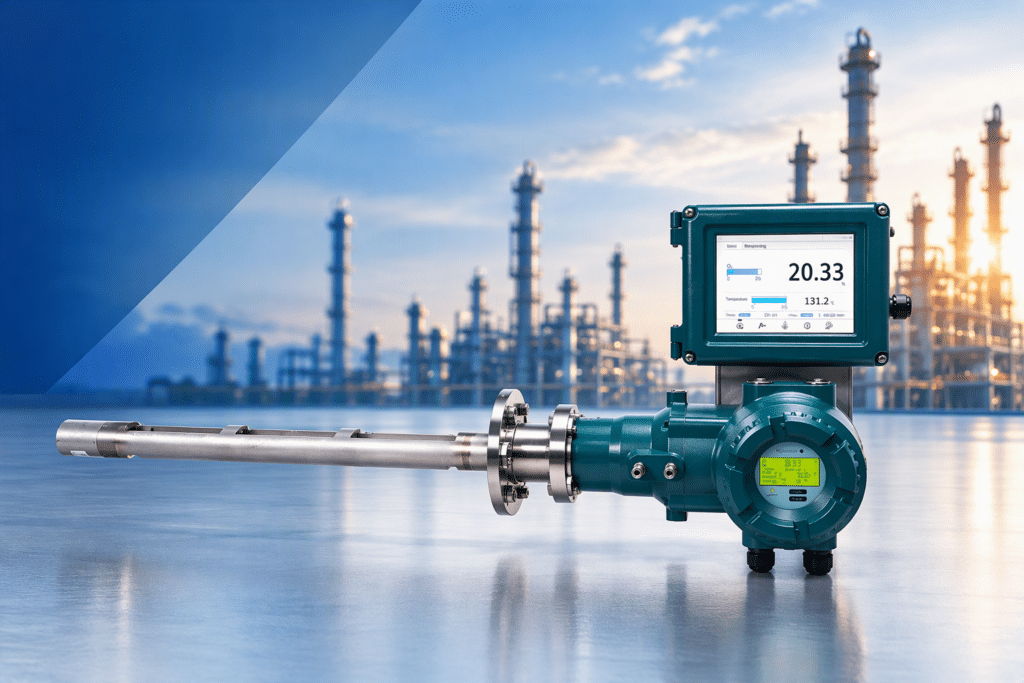

Why Traditional Gas Measurement Is No Longer Enough
Industrial operators face increasing pressure to improve efficiency, reduce emissions, and maintain safe operations. Yet many gas measurement systems still rely on extractive sampling methods that introduce delays, require significant maintenance, and can struggle in challenging process conditions.
High temperatures, dust, corrosive gases, moisture, and pressure fluctuations often affect measurement reliability, leading to:
- Delayed process adjustments
- Higher fuel consumption
- Increased emissions
- Unplanned maintenance
- Reduced plant availability
- Safety risks
To overcome these challenges, many operators are turning to Tunable Diode Laser Spectroscopy (TDLS) technology.
TDLS enables direct, real-time gas measurement inside the process, delivering fast and accurate data without the need for complex sample conditioning systems.
What Is TDLS?
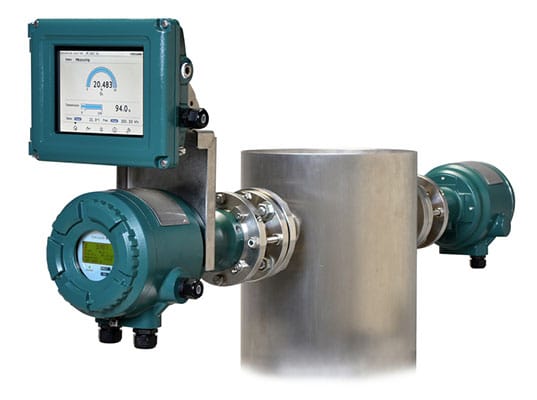
TDLS (Tunable Diode Laser Spectroscopy) is a laser-based gas measurement technology that determines gas concentrations by analyzing how a specific gas absorbs light at a unique wavelength.
Because each gas molecule absorbs light differently, TDLS delivers highly selective measurements with minimal interference from other gases.
Unlike traditional analyzers, TDLS measures directly in the process stream and does not require direct sensor contact with the process gas.
Key advantages include:
✅ Real-time measurements
✅ Fast response times
✅ No sample conditioning systems
✅ Low maintenance requirements
✅ High reliability in harsh conditions
✅ Accurate measurements even in dusty or corrosive environments
When Is TDLS the Best Solution?
While many analyzer technologies have their place, there are several applications where TDLS clearly offers significant advantages.
1. Combustion Optimization in Fired Heaters and Furnaces
Challenge
Refineries, petrochemical plants, and power stations depend on efficient combustion to maximize throughput while minimizing fuel consumption and emissions.
Traditional extractive analyzers often measure gases after significant delays and require extensive maintenance.
Why TDLS Is Better
TDLS can measure oxygen (O₂), carbon monoxide (CO), and methane (CH₄) directly in the combustion zone with response times of only a few seconds.
Operators can immediately optimize air-fuel ratios, leading to:
Reduced fuel usage
Lower CO and NOx emissions
Improved energy efficiency
Increased process safety
Example
A refinery operating multiple fired heaters can install a TDLS analyzer near the radiant section of the furnace to continuously monitor O₂ and CO levels and adjust combustion conditions in real time.
2. Burner Failure Detection
Challenge
Burner failures in furnaces or boilers can result in unstable combustion, energy losses, and potentially hazardous conditions.
Why TDLS Is Better
TDLS can detect:
- – Methane (CH₄)
- – Carbon monoxide (CO)
- – Oxygen (O₂)
almost instantly, allowing operators to identify abnormal combustion conditions before they escalate.
Example
A power plant can use TDLS methane measurement to immediately identify burner flame-out situations and take corrective action.
3. Ammonia Slip Monitoring in SCR Systems
Challenge
Selective Catalytic Reduction (SCR) systems are widely used to reduce NOx emissions. However, overdosing ammonia creates “ammonia slip,” resulting in environmental compliance issues and catalyst damage.
Why TDLS Is Better
TDLS provides highly selective NH₃ measurement with fast response times, enabling optimized ammonia injection.
Benefits include:
- – Reduced ammonia consumption
- – Improved emissions compliance
- – Extended catalyst lifetime
- – Lower operating costs
Example
Waste-to-energy plants and power stations use TDLS to continuously monitor ammonia slip downstream of SCR systems.
4. Moisture Measurement in Carbon Capture (CCUS)
Challenge
Carbon Capture, Utilization and Storage (CCUS) processes require accurate moisture monitoring to prevent corrosion, maintain product quality, and protect equipment.
Conventional measurement technologies can struggle with contamination and slow response.
Why TDLS Is Better
TDLS offers low-level moisture measurements with excellent sensitivity and repeatability.
Example
A CO₂ transportation pipeline operator can use TDLS to ensure moisture remains below specified limits before compression and transport.
5. Harsh Biomass and Waste-to-Energy Applications
Challenge
Biomass and waste-to-energy combustion environments are notoriously difficult due to:
- High dust loading
- Variable fuel composition
- Corrosive gases
- Temperature fluctuations
Traditional analyzers often suffer from plugging and maintenance issues.
Why TDLS Is Better
Because TDLS is a non-contact technology, it can operate reliably where conventional analyzers frequently struggle.
Example
A waste-to-energy facility can use TDLS to continuously optimize combustion and improve overall energy recovery.
Why More Operators Are Switching to TDLS
Organizations increasingly choose TDLS because it helps solve some of the most common analyzer challenges:
| Common Problem | TDLS Advantage |
| Slow analyzer response | Near real-time measurement |
| Sample system maintenance | No sample conditioning required |
| Dusty environments | Non-contact measurement |
| Corrosive gases | Minimal process exposure |
| Analyzer drift | Stable optical measurement |
| High OPEX | Lower maintenance costs |
| Safety concerns | Fast detection of abnormal conditions |
Conclusion
As process industries pursue greater efficiency, safety, and sustainability, gas measurement technology becomes increasingly important.
TDLS provides a unique combination of speed, accuracy, reliability, and low maintenance that makes it particularly effective for:
- Combustion optimization
- Burner failure detection
- Ammonia slip monitoring
- Moisture measurement
- CCUS applications
- Biomass and waste-to-energy facilities
- Harsh industrial processes
For operators seeking accurate gas measurements where traditional technologies reach their limits, TDLS is often the most effective solution available today.
Want to discover whether TDLS is the right solution for your application?
Check out our free On-Demand Webinars with one Click here:
CCUS On-Demand Webinar
TDLS8000 QAL1 On-Demand Webinar
TDLS & Zirconia On-Demand Webinar
Download our free ebook “TDLS8200 for Safety” here