
process

Three Ways to Improve pH Measurements in Brine

Manufacturing operations in many sectors of industry know that measuring pH in brine or salt water presents technical challenges that, if ignored, lead to product loss, higher sensor wear, inefficient operation and high maintenance costs. For example, the salt solution can have an unfavourable effect on the production process by reducing the service life of the sensor, which the plant operator may not notice. But a remedy is possible. And we deal with the how in our blog article series “Three ways to optimise pH measurements in brine”.

Three Ways to Improve pH Measurements in Brine Read More »

4 questions about an energy digital twin on real ways to improve business operation

Many companies are interested in the benefits a digital twin can bring to their business. The energy sector is no exception, as is the chemical and pharmaceutical sectors. After all, it plays a pioneering role in the introduction of new technologies. That is why we have asked ourselves a few questions about digital twin technology in the energy sector. And precisely how its use can optimise costs and streamline your operations. Register with one click for the free live webinar “An Energy Digital Twin for the most efficient and cost-effective operation”, which will take place on Wednesday 16 September 2020 to see a live demonstration of Visual Mesa EMS and find out how it can work for you.

4 questions about an energy digital twin on real ways to improve business operation Read More »

How to use Design Thinking for digitalisation processes

Clearly, a company has to be digital to be competitive and to maintain this state. However, some questions remain unanswered: To what extent should the digital transformation be implemented? Is it sufficient to take care of the internal infrastructure first? Or do we set ourselves equally ambitious goals, such as a smart factory? How do you realize the defined goals? Since most companies have little or no experience in this area, it often makes sense to get support from outside. One technique for finding a solution together is that of Design Thinking.

How to use Design Thinking for digitalisation processes Read More »

The top ten articles of the first half of 2020

If the year 2020 were a football match, it would be halftime long ago. Reason enough to look back on the first half of 2020. Because a lot has happened in the first half of the year – including, of course, on the chemicals and pharmaceuticals blog. Since the beginning of the year, the team of authors and experts has again researched and written about some exciting topics related to automation. The following ten articles have aroused the greatest interest of the readers in the past six months.

The top ten articles of the first half of 2020 Read More »

Keep Standard Operating Procedures (SOP) up to date – secure implicit knowledge

SOP – Standard Operation Procedures – play an important role, especially in regulated companies such as the pharmaceutical or food industry. Due to the high relevance of the processes to the environment, health and safety, the share of SOPs in these industries is correspondingly high. But it is not only here that standardised procedures are documented. They also help employees in many other areas of industry to handle recurring process sequences with consistently high quality. No wonder, then, that SOP management is also becoming the focus of Industry 4.0.

Keep Standard Operating Procedures (SOP) up to date – secure implicit knowledge Read More »

M+C sensors, M+O sensors and process analytics

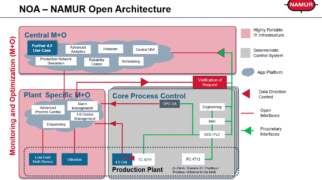
NOA – NAMUR OPEN Architecture – is powerfully on the move. Two terms keep coming up: M+C sensors and M+O sensors. M+O stands for maintenance and optimization. These are the new ones. These are the ones that detect the properties of process components (not the process medium). The detection of vibrations of machine parts such as pumps or valves has already become a classic example of pure M+O sensors.

M+C sensors, M+O sensors and process analytics Read More »

Topic IA2IA – new column by Dr. Andreas Helget is online

Self-propelled cars are well known. In other areas of application, however, “autonomy” is also a major (future) topic, for example in the process industry. But what do we actually understand by “autonomous systems” at present and where is the journey heading? In his latest column “Zur Sache, bitte” (To the point, please), Dr. Andreas Helget, Managing Director of Yokogawa Deutschland GmbH, deals with the topic of IA2IA.

Topic IA2IA – new column by Dr. Andreas Helget is online Read More »

Optimisation? Of course! – Part 2 of 3

In the first part of this series we have dealt with the question of what is meant by “optimizing” in this context and whether it is worthwhile to “optimize”. If one has come to a positive result for oneself, the question now arises, which possibilities there are. The following presentation of possibilities in the second of a total of three articles in this series certainly does not claim to be complete, but is intended as an incentive and source of ideas.

Optimisation? Of course! – Part 2 of 3 Read More »

EuroPACT in Copenhagen: EU-wide PAT Trialogue

For several years Werner Worringen has been working as Industry Marketing Manager Analytical Solutions at Yokogawa Germany. Since then he has also been involved in numerous committees relating to process analytics. As a member of the extended executive board, he is also a member of the Process Analytics Working Group (AK PAT), which was established in 2005 and now has 365 members. Working group of the Division of Analytical Chemistry within the German Chemical Society (GDCh), which works closely with DECHEMA (Society for Chemical Engineering and Biotechnology). This is also the case with regard to EuroPACT, which will be held in Copenhagen in May.

EuroPACT in Copenhagen: EU-wide PAT Trialogue Read More »

Scroll to Top