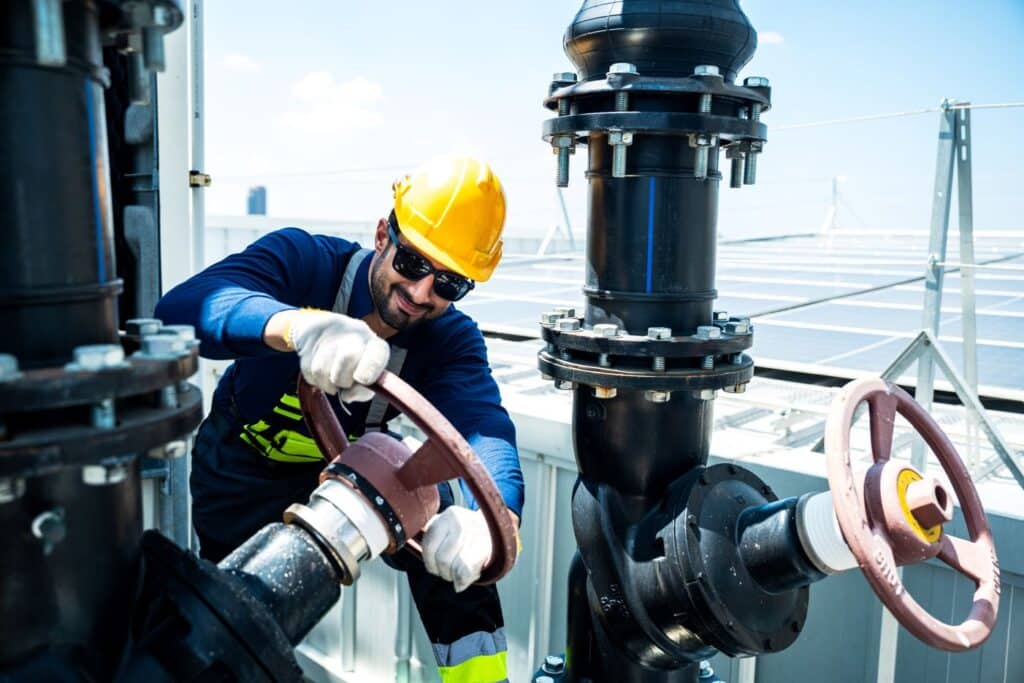

“I don’t care how elegant the design is on a Revit model. I care if it’s on the truck, if it fits the pipe, and if it works the first time we flip the switch. My job is to protect the win and hit the date.”
That’s the mindset that gets a data center built. But it’s not the mindset that keeps one running for the next ten years — and that’s where lifecycle reliability becomes the real economics story, long after the ribbon-cutting.
Commissioning day gets all the attention. Lifecycle cost is where the real money moves.
The Gap Between Commissioning and Year Seven
Every piece of instrumentation on a mission-critical mechanical system looks the same on day one. The differences show up later — in how often it needs recalibration, how many nuisance alarms it generates, how many truck rolls it takes to keep it trustworthy, and how much operator attention it silently consumes over years of continuous operation.
That gap rarely shows up in a procurement comparison. Two flow meters or pressure sensors can carry similar upfront costs and nearly identical spec sheets, and still diverge dramatically over a decade of service — one requiring periodic intervention and recalibration, the other holding its accuracy with minimal maintenance burden. The instrument that looked like a wash at commissioning becomes the deciding factor in total cost of ownership by year five.
For portfolio owners standardizing across a fleet, that gap multiplies. A measurement platform that demands frequent attention at one site demands it at every site — and at fleet scale, “minor maintenance overhead” stops being minor.
Why Maintenance Burden Is a Design Decision, Not an Operations Problem
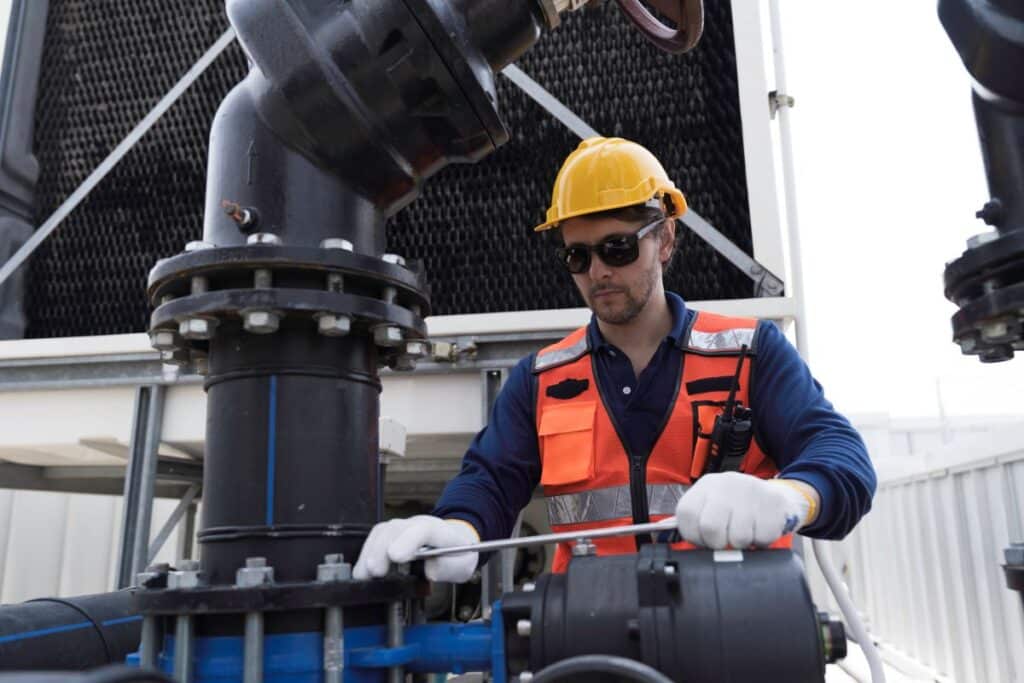
It’s tempting to treat instrument maintenance as something the operations team deals with after handover. In practice, it’s determined almost entirely by what gets specified before construction even starts. Instrumentation built for industrial-grade reliability — the kind designed to hold calibration and performance over years in demanding process environments — carries that reliability into a data center the same way it does in a refinery or power plant. Instrumentation built to a lighter commercial standard carries its limitations in just as directly.
That’s the case for treating measurement technology as a lifecycle decision at the specification stage, not a line item to be optimized on unit price:
- Calibration stability over years, not months — instrumentation that holds its accuracy without frequent recalibration reduces both the direct maintenance cost and the operational risk of running on drifting data between service visits
- Fewer nuisance alarms — stable, accurate measurement means alerts reflect real conditions, not sensor noise — which protects the operator’s trust in the alarm system itself
- Simplified commissioning today, simplified operations for the next decade — self-calibrating, plug-and-play instrumentation reduces field time at handover, and the same design qualities that make commissioning smooth tend to be the ones that keep maintenance burden low for years afterward
- Global service support — when a fleet spans regions, having local expertise available within hours, not days, matters as much for year six as it does for week one
Proof, Not Promises
For a person that’s explicitly wary of “anything new without long operational proof” — and skeptical of vendors who look great on a spec sheet but haven’t demonstrated it in the field — the strongest argument isn’t a projection. It’s a track record.
Yokogawa’s measurement technology carries more than a century of experience instrumenting the flow, pressure, and temperature parameters that matter most in industrial and mission-critical environments — refineries, chemical plants, and power generation facilities that have run continuously for decades on the same measurement discipline now being applied to data center mechanical systems. That’s not a claim about what the technology should do over a decade of service. It’s a record of what equivalent technology has already done, across industries where failure was never an acceptable outcome.
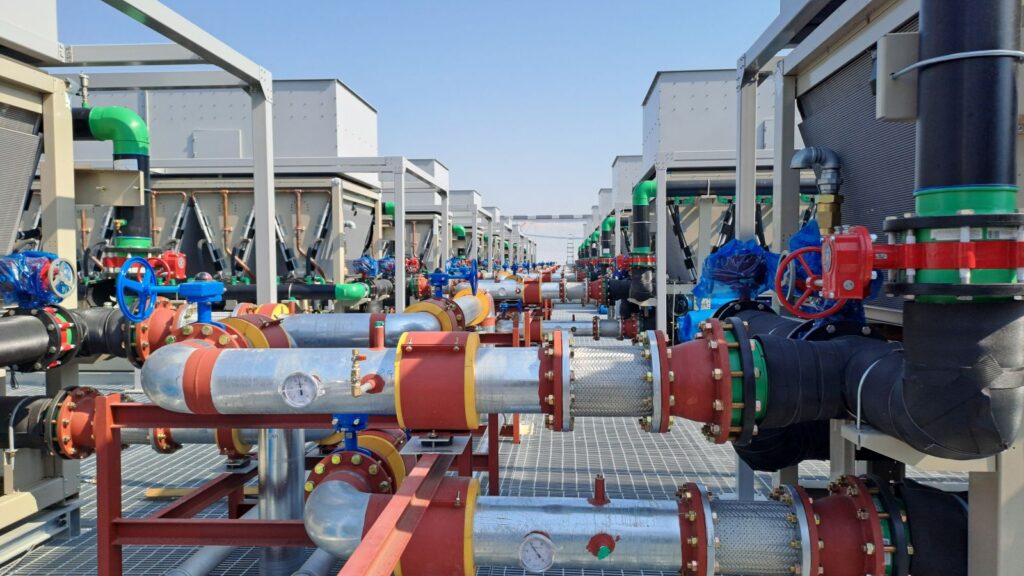
How Yokogawa Helps Data Centers Achieve Higher Performance
- Data center owners and engineering teams need measurement technologies that deliver stable cooling visibility at commissioning and remain practical to maintain throughout the facility lifecycle. Yokogawa combines more than a century of industrial measurement and control experience with solutions for data center mechanical infrastructure.
- Reliable measurement for critical cooling loops. Yokogawa flowmeters, pressure transmitters, and temperature instruments help teams track cooling conditions and identify changes that merit investigation. Consistent measurements support informed maintenance and operating decisions.
- Early identification of abnormal operating conditions. Continuous measurement can reveal changes in flow, differential pressure, and temperature before problems become visible as a major cooling disturbance. The effectiveness of early detection depends on sensor placement, alarm strategy, and system integration.
- Control that protects cooling infrastructure. Yokogawa temperature control solutions support stable operation of mechanical equipment. Its published data center freeze-protection reference illustrates how industrial control can help an OEM address freeze-related risk in critical cooling loops.
Lifecycle standardization across sites. A consistent approach to instrumentation, integration, diagnostics, and service planning can simplify commissioning, spare-parts strategy, training, and maintenance across a multi-site portfolio. Actual maintenance intervals and lifecycle savings depend on the selected devices, installation conditions, and service plan.
Explore Yokogawa data center solutions: https://www.yokogawa.com/industries/data-centers/
Related proof point: Major Data Center – Industrial-Grade Freeze Protection for Mission-Critical Cooling Loops (listed under Resources on Yokogawa Data Centers page). https://www.yokogawa.com/us/library/resources/references/industrial-grade-freeze-protection-for-mission-critical-cooling-loops/
Closing the Series
Across this series, the same idea has shown up from four different angles: chilled water loops need precision to catch problems before they escalate, portfolio-wide energy efficiency depends on data teams can trust, sustainability reporting has to survive scrutiny, and lifecycle cost is decided by specification choices made long before a facility ever reaches capacity.
The common denominator is the same in every case — process-grade measurement precision, applied consistently, protects uptime, protects efficiency, protects the integrity of the data, and protects the total cost of ownership over the full life of the facility. For infrastructure that’s meant to run without anyone thinking about it for the next decade, that consistency is the whole point.
Yokogawa brings that standard to data center mechanical systems — the lowest-risk, lifecycle-focused approach for infrastructure that has to stay always-on.