All articles of Tim-Peter Henrichs
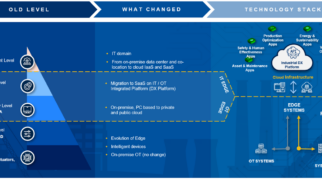
For companies in the process industry, the transition to an open architecture through edge systems offers the opportunity to optimise manufacturing and operational processes. But it is also an opportunity to unlock and enhance the value of existing systems and data. An industrial cloud architecture reflects the interplay of existing and future systems by aligning plant and operational processes with value chains. Unlike traditional concepts, the DX architecture starts from market requirements and customer experience. It extends from applications and operational processes to hardware and data.
Smart manufacturing: boundaries fade – requirements stay the same Read More »
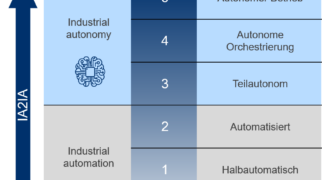
Only if we start and follow the path from industrial automation to industrial autonomy do we have the chance to actually get closer to this goal. Join us on our blog with more topics on digital transformation in the process industry.
Symbiotic autonomy in the process industry Read More »
The people of ancient Greece worshipped the goddess Automatia (“the one who comes by herself”). In addition, the Greeks at that time created city states (polis) with the claim of “autonomia”, to live as an independent unit. Today, on the journey from industrial automation to industrial autonomy, we are using an understanding that people already had in ancient times. However, the question remains: will the process plant of today develop into an autonomous polis?
A city within a state? The process plant Read More »
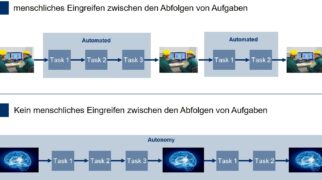
Artificial intelligence, machine learning, information retrieval or even data mining – these are all buzzwords that come up in connection with autonomous systems within the process industry. Are autonomous systems the future in the process industry and thus practically the next step beyond automation? I already wrote in my previous post that I see in precisely this circumstance the beginning of a change in automation that is moving towards industrial autonomous systems. But what actually makes us so confident that this transformation will actually take place?
Autonomy through perseverance Read More »
Digital transformation, so-called Industry 4.0, has been talked about for ten years now. What began at that time as a future project for comprehensive digitalisation is now taking place as a transformation throughout society and is also establishing itself in industry. The past twelve months in particular have given another enormous push in this direction. For example, the pandemic has accelerated the digital communication strategy of companies by six years on average worldwide. Digital transformation offers opportunities in all areas of business to adapt and evolve in the world of rapidly changing markets and technologies. The continuous development of digital technologies opens up new opportunities in research and development, but also in the areas of engineering, marketing, sales and services, all the way to logistics and value chains. Join us here on this blog with more topics on digital transformation in the process industry.
Make your digital transformation in the process industry Read More »
Rarely has the need for individuality and flexibility been as great as it is today. A circumstance that makes the markets even more dynamic. Consequently, companies in the chemical and pharmaceutical industries are striving to make production as flexible as possible – in every respect. Of course, the whole thing should also be economical. But is that even possible?
Flexible into the future Read More »
Although the digital transformation in the process industry is facing a significant change, there is still the view in some places that the change in technology, processes and business methods can be carried out using tried and tested methods. Some defend the respective historically grown areas and solutions. However, the implementation of digitization projects is a highly interdisciplinary task, and it affects all areas of the company.
Digital Transformation: Can there only be one? Read More »
The world is changing and new trends, technologies and business models will always prevail. Or as Heraclitus said about 2500 years ago: “Panta Rhei – everything flows”. This statement is based on his recognition of the natural process of constant becoming and change. Now this phenomenon has also reached process automation. This has always been known as conservative and also as sluggish. At least as far as the fact of adapting new technologies is concerned. The process industry is also constantly confronted with new challenges and must exploit the opportunities provided by digitization. The process automation community is quite proud of clear structures that guarantee high availability and functional security. This refers to the automation pyramid (photo: NAMUR), which, despite all its advantages, is unfortunately the brake pad for the digital transformation of the process industry. Everything within the pyramid is structured. NAMUR’s proposal is now on the table with an open architecture that combines the availability and safety of the automation pyramid with the advantages of digital transformation. In short: the NAMUR open architecture (Photo: NAMUR), abbreviated NOA.
Panta Rhei – everything flows Read More »