Safety

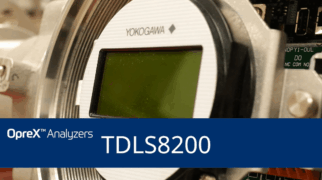
TDLS8200: Maintenance-free, SIL2 certified and explosion-proof

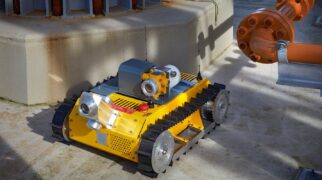
In almost every chemical production plant, it is always necessary to store various substances in containers or tank farms. Depending on the chemical substance, this can from time to time result in an explosion hazard. For this reason, elementary protection against a possible explosion must be provided. In the best case scenario, this should be done in such a way that no explosive gas mixture can form in the gas phase of the container. In the age of ever-increasing safety requirements, a current safety assessment may make it necessary to actually record the oxygen content – especially if the device in question has been classified as a SIL (safety integrity level) application.  This is exactly where Yokogawa’s TDLS8000 laser comes into play.

TDLS8200: Maintenance-free, SIL2 certified and explosion-proof Read More »
A city within a state? The process plant

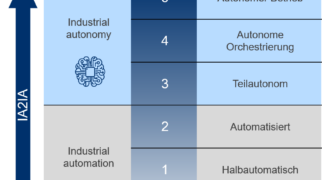
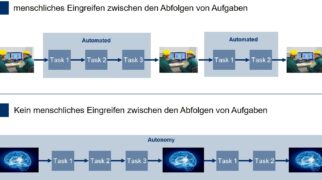
The people of ancient Greece worshipped the goddess Automatia (“the one who comes by herself”). In addition, the Greeks at that time created city states (polis) with the claim of “autonomia”, to live as an independent unit. Today, on the journey from industrial automation to industrial autonomy, we are using an understanding that people already had in ancient times. However, the question remains: will the process plant of today develop into an autonomous polis?

A city within a state? The process plant Read More »

Risk Assessment: First Step to Securing an OT Environment

Imagine this scenario: A chemical processing company decides to launch a cybersecurity program for a manufacturing plant, so it brings together an IT expert and someone from operations who is moderately well versed in the plant networks. The two have other responsibilities and complete their task quickly by inserting a smattering of security appliances at strategic points and declare the plant protected.
Meanwhile, a hacker who has been systematically analyzing the plant’s networks over several months, has a better grasp of the architecture and what assets are deployed than anyone in the facility. The hacker gained access because some system integrator, a few years ago, installed a Brand X PLC to solve a chemical injection problem. The technician left a path to access the PLC via the internet for follow-up service, but everyone has forgotten about it. The hacker is aware of a key vulnerability—a default password—with that PLC because its characteristics were published, but the plant never acted on changing it because they had forgotten it is even there. This vulnerability provides the hacker a path into the larger network through an unprotected connection from the PLC to the automation system.
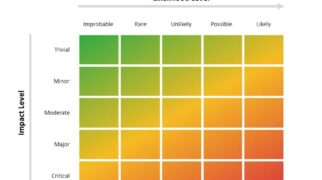
While this scenario is an oversimplification, it illustrates the problems many companies face as they consider how to approach cybersecurity strategy for operations technology (OT) networks. A well-thought-out strategy will find and correct these problems, and for the rest of this article, we will look at how to implement this type of plan.

Risk Assessment: First Step to Securing an OT Environment Read More »

Scroll to Top