
Analysis

Assistance systems 3 – The “signpost” & the “predictor”

Can you do that? Is there? Surely both production managers and plant operators have already asked themselves these questions. To become more concrete: You, as a production manager, have experienced plant operators and you know that you have taken good care of your control and alarm strategy. Functional safety is also up to date. You won’t burn anything. Nevertheless, something is bothering you: No matter how stable and safe your system is, you don’t really know how efficiently it drives. Isn’t there the famous “grain” left in it?
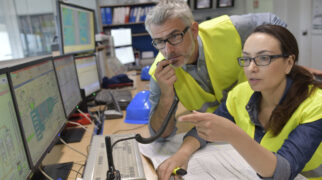
Or let’s put ourselves in your place as a plant operator: you have been operating your plant for years and know it well. From time to time she does her “talking tricks” and you don’t know why. Although you keep to the allowed temperature step in the reactor, it is about to go through or it is going through. Such an “early warning system” would be very practical. This runs in real time and warns you in advance that something is going to go wrong. Then you still have enough time to react accordingly. Something like a “process crystal ball” would be good. But is there such a thing?

Assistance systems 3 – The “signpost” & the “predictor” Read More »

Assistance systems – 2. Electronic stability control

It’s desperate. The level in the column sump is simply unstable and fluctuates like a drunken sailor. The process control system (PCS) and the plant operator are constantly occupied with keeping these fluctuations under control to such an extent that the plant is at least running and no permanent alarm is triggered. And what have we not already tried everything. Tuning the control loops in the PLS, improving the instrumentation, looking for process or control connections that cause these problems and so on.

Assistance systems – 2. Electronic stability control Read More »

Assistance systems – 1. Our little daily helpers

Even in the age of smartphones and the like, our car is one of our favourite technical toys. Whether for reasons of safety or comfort, more and more assistance systems have found their way into the process of driving a car – as in the process industry. The mini-series starting with this article deals with what assistance systems there are, what typical applications are and what benefits they bring.

Assistance systems – 1. Our little daily helpers Read More »

Hand in hand with the process data

Alarm! Is there now a hectic rush at the control station? Or does the operator lean back and relax, press a button to acknowledge the alarm and continue to sip the coffee he bought a minute ago?
Both are possible, both are interesting information – usually when it comes to alarm management for the analysis and reduction of alarms according to EEMUA 191, for example. But even at the beginning of a data analysis, a look at this data makes sense.

Hand in hand with the process data Read More »

Design thinking – tackling digitalisation with help from your users

As we all know, transformation processes will be necessary to keep up with digitalisation. They will affect our workplaces as well as our ways of working. IIoT and Industry 4.0 offer a great deal of creative scope, and we are far from grasping all the opportunities and possibilities inherent to them. Many fairly unclear aspects interact with each other in this field. Why not use the potentials of design thinking?

Design thinking – tackling digitalisation with help from your users Read More »

12th seminar for doctoral students – dialog consistent with the WG-PAT philosophy

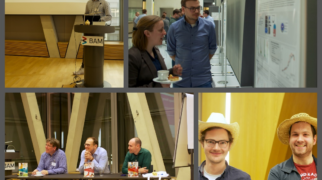
This year’s doctoral seminar was again held in keeping with the philosophy of AK-PAT (Working Group of the Division Analytical Chemistry within the GDCh), which maintains close ties to DECHEMA’s Process, Apparatus and Plant Engineering group. Exchange between the different participants from teaching, industry and manufacturers, especially vertically, i.e. exchange between experienced professionals and academic beginners. The unifying topic was a core topic of spectroscopy: “Multivariate Data Analysis”.

12th seminar for doctoral students – dialog consistent with the WG-PAT philosophy Read More »

Scroll to Top