

Safety needs friends… (Part 1)
Security needs friends, because it has enemies! Also in the process industry. The example “Car” in part 1 of our new #Series tells you which enemies safety has!
Safety needs friends… (Part 1) Read More »
Security needs friends, because it has enemies! Also in the process industry. The example “Car” in part 1 of our new #Series tells you which enemies safety has!
Safety needs friends… (Part 1) Read More »
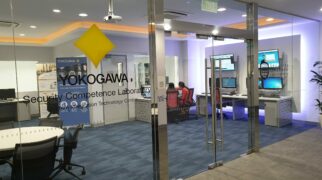
Sustainable growth in our increasingly networked, smarter times requires adaptation to the new needs of our customers – quickly and efficiently. With the right innovative and digital tools, companies can achieve this in a smart way. In order to ensure the success of technical innovations, companies now have to do one thing above all else: put people and plant security at the centre – without alternatives. Plant security and safety must be “business as usual” and anchored in the corporate culture.
Digital ambition – key aspect Plant Security Read More »

Where NOA comes into play: If process analysis technology delivers more and more complex data and experience sometimes requires changes, then we need an additional piece of intelligence. This is not properly stored in the analyzer. Because the type of intelligence is also determined by the process. In the control system, the additional data becomes tight; changes are possible there, but not necessarily popular. A separate software, for example in the form of an app, frees us from these restrictions and gives us the necessary flexibility for specific adaptations.
PAT-Demonstrator – NOA is the ideal partner Read More »

Can you do that? Is there? Surely both production managers and plant operators have already asked themselves these questions. To become more concrete: You, as a production manager, have experienced plant operators and you know that you have taken good care of your control and alarm strategy. Functional safety is also up to date. You won’t burn anything. Nevertheless, something is bothering you: No matter how stable and safe your system is, you don’t really know how efficiently it drives. Isn’t there the famous “grain” left in it?
Or let’s put ourselves in your place as a plant operator: you have been operating your plant for years and know it well. From time to time she does her “talking tricks” and you don’t know why. Although you keep to the allowed temperature step in the reactor, it is about to go through or it is going through. Such an “early warning system” would be very practical. This runs in real time and warns you in advance that something is going to go wrong. Then you still have enough time to react accordingly. Something like a “process crystal ball” would be good. But is there such a thing?
Assistance systems 3 – The “signpost” & the “predictor” Read More »
Can you do that? Is there? Surely both production managers and plant operators have already asked themselves these questions. To become more concrete: You, as a production manager, have experienced plant operators and you know that you have taken good care of your control and alarm strategy. Functional safety is also up to date. You won’t burn anything. Nevertheless, something is bothering you: No matter how stable and safe your system is, you don’t really know how efficiently it drives. Isn’t there the famous “grain” left in it?
Or let’s put ourselves in your place as a plant operator: you have been operating your plant for years and know it well. From time to time she does her “talking tricks” and you don’t know why. Although you keep to the allowed temperature step in the reactor, it is about to go through or it is going through. Such an “early warning system” would be very practical. This runs in real time and warns you in advance that something is going to go wrong. Then you still have enough time to react accordingly. Something like a “process crystal ball” would be good. But is there such a thing?
Assistance systems 3 – The “signpost” & the “predictor” Read More »
Can you do that? Is there? Surely both production managers and plant operators have already asked themselves these questions. To become more concrete: You, as a production manager, have experienced plant operators and you know that you have taken good care of your control and alarm strategy. Functional safety is also up to date. You won’t burn anything. Nevertheless, something is bothering you: No matter how stable and safe your system is, you don’t really know how efficiently it drives. Isn’t there the famous “grain” left in it?
Or let’s put ourselves in your place as a plant operator: you have been operating your plant for years and know it well. From time to time she does her “talking tricks” and you don’t know why. Although you keep to the allowed temperature step in the reactor, it is about to go through or it is going through. Such an “early warning system” would be very practical. This runs in real time and warns you in advance that something is going to go wrong. Then you still have enough time to react accordingly. Something like a “process crystal ball” would be good. But is there such a thing?
Assistance systems 3 – The “signpost” & the “predictor” Read More »
Can you do that? Is there? Surely both production managers and plant operators have already asked themselves these questions. To become more concrete: You, as a production manager, have experienced plant operators and you know that you have taken good care of your control and alarm strategy. Functional safety is also up to date. You won’t burn anything. Nevertheless, something is bothering you: No matter how stable and safe your system is, you don’t really know how efficiently it drives. Isn’t there the famous “grain” left in it?
Or let’s put ourselves in your place as a plant operator: you have been operating your plant for years and know it well. From time to time she does her “talking tricks” and you don’t know why. Although you keep to the allowed temperature step in the reactor, it is about to go through or it is going through. Such an “early warning system” would be very practical. This runs in real time and warns you in advance that something is going to go wrong. Then you still have enough time to react accordingly. Something like a “process crystal ball” would be good. But is there such a thing?
Assistance systems 3 – The “signpost” & the “predictor” Read More »

It’s desperate. The level in the column sump is simply unstable and fluctuates like a drunken sailor. The process control system (PCS) and the plant operator are constantly occupied with keeping these fluctuations under control to such an extent that the plant is at least running and no permanent alarm is triggered. And what have we not already tried everything. Tuning the control loops in the PLS, improving the instrumentation, looking for process or control connections that cause these problems and so on.
Assistance systems – 2. Electronic stability control Read More »
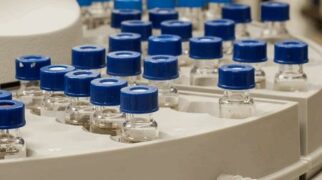
The motivation to reduce costs, meet regulatory requirements and improve process flexibility has led many pharmaceutical companies to consider single-use, pre-sterilised plastic equipment systems as an alternative to stainless steel. Single-use equipment makes the pharmaceutical manufacturing process increasingly efficient and less costly. However, with the environmental impact of increased plastic waste making headlines, and limited recycling opportunities facing the industry, is there an environmental trade-off happening?
Pharmaceutical Single-use Technologies: An Environmental Trade-off? Read More »