Optimisation

Maturity models in digital transformation – an interview with Dr. Violett Zeller

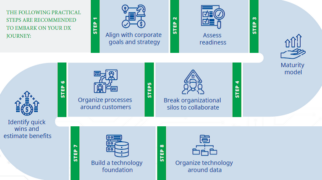
Many different questions pose major challenges for companies entering the digital transformation.  Maturity models can provide great support in answering them. But even later on, an examination of the status quo is essential in order to be able to adapt existing strategies to changing circumstances in an agile manner. We talked to Dr Violett Zeller, Chair of the VDI/VDE Digital Transformation Department, about what maturity models are all about and how companies can find the right model for them. Join us on our blog for this and other topics on digital transformation in the process industry.

Maturity models in digital transformation – an interview with Dr. Violett Zeller Read More »

Good data – good money?

High #data quality is therefore not a cost driver. Rather, it represents a value that should compensate for the costs of providing it. It is therefore worth investing in good #dataquality. Because it will be indispensable on the path to industrial autonomy. #industrialautonomy

Read this and more in our article “Good data – good money?”:

Good data – good money? Read More »

The future of Predictive Maintenance

When we discuss the increasingly hot topic of Industry 4.0, we tend to limit the focus to products and solutions, forgetting that this industrial revolution revolves around the human factor. The purpose of the digital transformation we are facing is not to remove people from the big picture, but to make their work easier. This is the starting point for this simple experiment, which we highlight in our new blog article “The future of Predictive Maintenance”:

The future of Predictive Maintenance Read More »

Smart manufacturing: boundaries fade – requirements stay the same

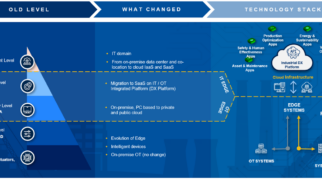
For companies in the process industry, the transition to an open architecture through edge systems offers the opportunity to optimise manufacturing and operational processes. But it is also an opportunity to unlock and enhance the value of existing systems and data. An industrial cloud architecture reflects the interplay of existing and future systems by aligning plant and operational processes with value chains. Unlike traditional concepts, the DX architecture starts from market requirements and customer experience. It extends from applications and operational processes to hardware and data.

Smart manufacturing: boundaries fade – requirements stay the same Read More »

A city within a state? The process plant

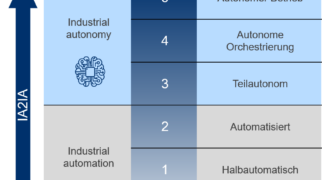
The people of ancient Greece worshipped the goddess Automatia (“the one who comes by herself”). In addition, the Greeks at that time created city states (polis) with the claim of “autonomia”, to live as an independent unit. Today, on the journey from industrial automation to industrial autonomy, we are using an understanding that people already had in ancient times. However, the question remains: will the process plant of today develop into an autonomous polis?

A city within a state? The process plant Read More »

Risk Assessment: First Step to Securing an OT Environment

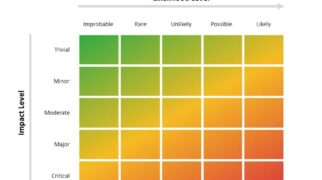
Imagine this scenario: A chemical processing company decides to launch a cybersecurity program for a manufacturing plant, so it brings together an IT expert and someone from operations who is moderately well versed in the plant networks. The two have other responsibilities and complete their task quickly by inserting a smattering of security appliances at strategic points and declare the plant protected.
Meanwhile, a hacker who has been systematically analyzing the plant’s networks over several months, has a better grasp of the architecture and what assets are deployed than anyone in the facility. The hacker gained access because some system integrator, a few years ago, installed a Brand X PLC to solve a chemical injection problem. The technician left a path to access the PLC via the internet for follow-up service, but everyone has forgotten about it. The hacker is aware of a key vulnerability—a default password—with that PLC because its characteristics were published, but the plant never acted on changing it because they had forgotten it is even there. This vulnerability provides the hacker a path into the larger network through an unprotected connection from the PLC to the automation system.
While this scenario is an oversimplification, it illustrates the problems many companies face as they consider how to approach cybersecurity strategy for operations technology (OT) networks. A well-thought-out strategy will find and correct these problems, and for the rest of this article, we will look at how to implement this type of plan.

Risk Assessment: First Step to Securing an OT Environment Read More »

Real-time, Model Based Digital Twin for Energy and Emissions Management

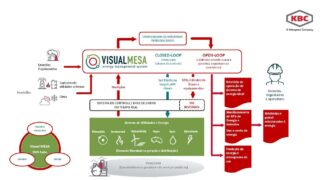
The Visual MESATM energy management applications suite is configured to work autonomously, gathering, and processing the necessary forecasts of the external variables—such as fuel/power price projections and weather forecasts -, executing calculations, historizing key performance indicators, producing and distributing the resulting reports. These can run as open loop or closed loop actions, depending on whether targets generated from the schedule are to be automatically passed from the scheduler to the optimizer and, from there, to be manually implemented by the Operators or flowing down to the Advanced Process Control (APC) or basic control layer.
Consistency among the decisions systems at different time scales, optimizing in real time but accounting for the constraints imposed by the optimal schedule is guaranteed. Consequently, overall cost and GHGs emissions can be substantially reduced with the help of a real-time, model based Digital Twin approach.

Real-time, Model Based Digital Twin for Energy and Emissions Management Read More »

Scroll to Top