The refining and petrochemical industries are undergoing significant transformation driven by energy transition, digitalization, and evolving market demands. At the same time, companies face increasing operational complexity, growing pressure to improve efficiency and sustainability, workforce and knowledge transfer challenges, and rising cybersecurity risks. To remain competitive in this rapidly changing environment, companies must enhance operational agility, optimize energy and resource utilization, and enable better decision-making across the value chain. Leveraging decades of experience, Yokogawa supports customers in achieving safe, reliable, and optimized operations through a comprehensive portfolio of automation and digital solutions.

Challenges
Customer Challenge: Plant’s Flexibility, Sustainability, and Future Scalability
Refining and petrochemical companies continue to invest in new facilities, capacity expansions, modernization projects, and digital transformation initiatives. At the same time, project teams must balance increasingly complex requirements related to safety, reliability, operational flexibility, sustainability, and future scalability while maintaining project schedules and controlling capital expenditures.
Our Solutions
Yokogawa provides a comprehensive automation foundation that helps customers design, build, and operate facilities with safety, reliability, and long-term operational excellence in mind. From field instrumentation and analyzers to integrated control and safety systems, our solutions establish the foundation for efficient operations throughout the asset lifecycle.

- Field Instruments
- Analyzers
- Distributed Control System (DCS)
- Safety Instrumented System (SIS)
- Off-site & Terminal Management
- Project Engineering Services
- Sustainable Maintenance
Customer Challenge: Fragmented operations Across the Refinery Value Chain
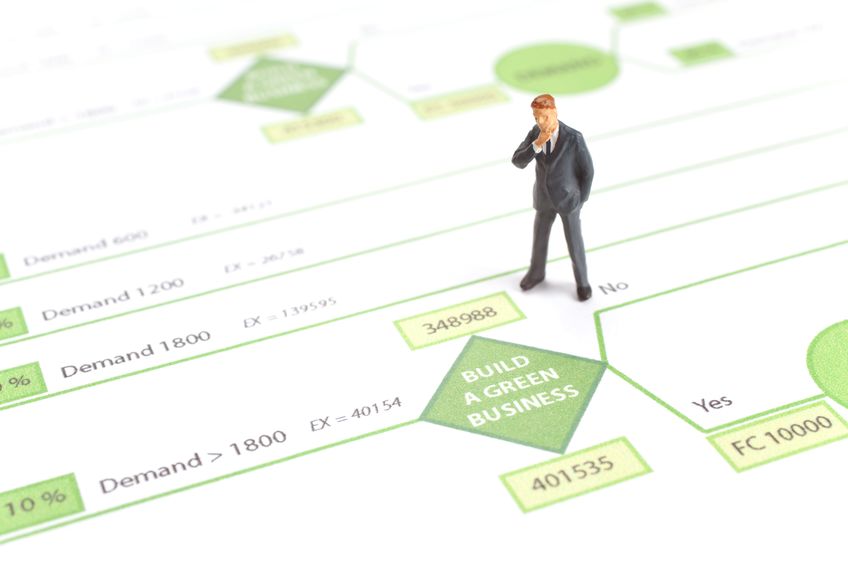
Refineries and petrochemical plants must optimize process units, blending, logistics, utilities, and inventory as one integrated operation. Yet fragmented systems, disconnected workflows, and silos often limit visibility and coordination. In today’s volatile environment, operators must optimize production, energy, quality, and logistics across the value chain through connected, coordinated, and increasingly autonomous operations.
Our Solutions
Yokogawa enables refineries and petrochemical plants to connect process units, blending, tank farms, oil movements, and utilities within an integrated operational environment. By combining automation, APC, operational management, production information, and optimization capabilities, we improve visibility, decision-making, product quality, resource utilization, safety, and reliability, enabling connected and increasingly autonomous site-wide operations.

- Advanced Process Control (APC)
- Production Management
- Operations Management
- Off-site & Terminal Management
- Movement Monitoring (Visa-OM)
- Process Data Analytics
Customer Challenge: Market Volatility and Supply Chain Uncertainty

Refinery and Petrochemical companies face increasing uncertainty driven by the energy transition, margin pressure, rising energy costs, supply chain disruptions, and market volatility. To remain competitive, organizations must make faster and better-informed decisions while aligning business strategy, planning, supply chain execution, and operations.
Our Solutions
Yokogawa helps refining and petrochemical companies improve profitability and agility by connecting business strategy, planning, supply chains, and operations. Combining deep consulting expertise, industry knowledge, digital transformation, and automation technologies, we enable faster and better-informed decisions, optimize enterprise performance, and build resilience across the value chain.

- KBC Consulting Services
- Digital Transformation (DX) Consulting
- Operational Excellence
- Energy Efficiency, Waste Reduction & Decarbonization
- Production Planning, Scheduling & Optimization
Customer Challenge: Threads to Long Term Competitiveness

Increasing operational complexity, workforce attrition, aging infrastructure, decarbonization requirements, and cyber risks are placing unprecedented pressure on refinery and petrochemical operators. These factors threaten profitability, reliability, agility, and the ability to adapt to evolving market and regulatory demands.
Our Solutions
Through industrial AI, digital transformation, autonomous operations, and robust cybersecurity, Yokogawa enables organizations to optimize performance, enhance operational resilience, empower a changing workforce, and drive sustainable growth while navigating an increasingly uncertain business environment.

- Yokogawa Industrial AI
- Digital Transformation (DX)
- Security Program
- Cybersecurity Consulting Services
AI-related references:
- Aramco and Yokogawa Achieve a Major Milestone with Commissioning of Multiple Autonomous Control AI Agents at Major Gas Facility
- In a World First, Yokogawa and JSR Use AI to Autonomously Control a Chemical Plant for 35 Consecutive Days
- "A world's first" is now routine – ENEOS Materials Successfully Achieves Autonomous Control at a Plant Using AI
Resources

Yokogawa provided a Dynamic Real-Time Optimizer (RT-OP) to optimize the operations of the hydrocracker unit at Aramco Riyadh Refinery.
By dynamically calculating optimal setpoints, the RT-OP optimizes operations beyond the APC system.

Measurement and control of Heat Exchanger Leakage can help prevent costly maintenance, repair and downtime. The simple, essentially maintenance-free measurement of condensate conductivity will give the operator information necessary (or provide automatic control) to prevent severe damage to the boiler should a breakthrough of the heat exchanger occur.

Ion Exchange is a method for the exchange of ions between two electrolytes or between an electrolyte solution and a complex molecule. In most cases the term is used to denote the processes of purification, separation, and decontamination of aqueous and other ion-containing solutions with solid polymeric or mineralic ion exchangers.

The U.S. refineries represent approximately 23 percent of the world's petroleum production, and the United States has the largest refining capacity in the world. Petroleum refining is an industry, which is undergoing intense amounts of scrutiny in the United States from regulatory agencies and environmental groups.

Temperature Uniformity Survey (TUS) is a vital part of the overall equipment performance and validation that ensures the heat treat/vacuum furnace repeatedly and accurately produces the same quality parts with no variance. Based upon the furnace class and its specifications, the equipment must hold uniform temperature across all zones at a specified set point and time-period, according to SAE AMS2750E pyrometry standards.

Gasoline and Diesel blending applications of on-line Near Infra-red (NIR) analysis and control are well documented in the literature, and the economic benefits of NIR control systems have been reviewed recently.
News
-
Press Release | Corporate Oct 21, 2025 Yokogawa and Sinopec Engineering Group Sign Memorandum of Cooperation on Global EPC Projects
-
Press Release | Corporate Feb 20, 2023 Yokogawa Enters into Partnership with Radial Software Group to Provide AI-powered Viewport Software Worldwide
- Giving customers a single view of all their technical data -
-
Press Release | Projects Dec 22, 2014 Yokogawa Wins Control System Order for Large Oil Refinery in Southwestern China
-
Press Release | Projects Sep 8, 2014 Yokogawa Receives Order to Provide Control System for New PEMEX Ultra-low-sulfur Diesel Fuel Plant
-
Press Release Aug 3, 2004 URSUMCO Continues Expansion with CS3000 R3.04
Looking for more information on our people, technology and solutions?
Contact Us