Maximize data center efficiency through precision, control, and renewable integration
AI is transforming data centers into highly complex power and cooling infrastructures. As operators face increasing energy demand, liquid cooling requirements and multi-vendor system complexity, accurate measurement and coordination across infrastructure systems are becoming critical.
Yokogawa brings together precision measurement, industrial control, data integration and energy management expertise to help customers understand, connect and optimize the infrastructure that keeps AI data centers running. From power and cooling systems to facility operations and energy management, Yokogawa supports more reliable, efficient and sustainable data center operations.
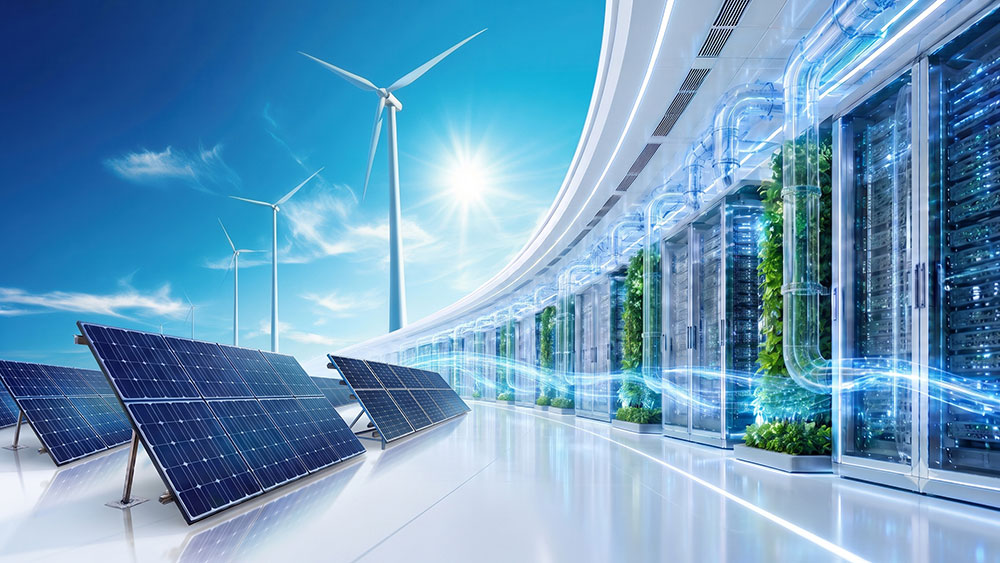
Key Industry Challenges
Operate Data Centers, Not Infrastructure
Enable operators to focus on business outcomes and uptime instead of managing complex power, cooling, water, and automation infrastructure.
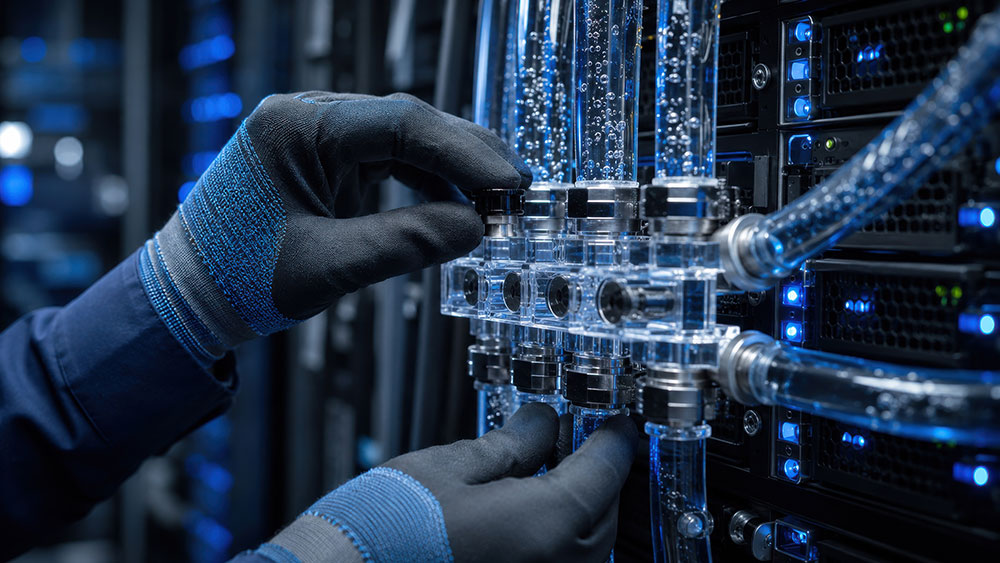
Liquid Cooling Performance Monitoring
Detecting abnormalities and performance degradation in liquid cooling systems.
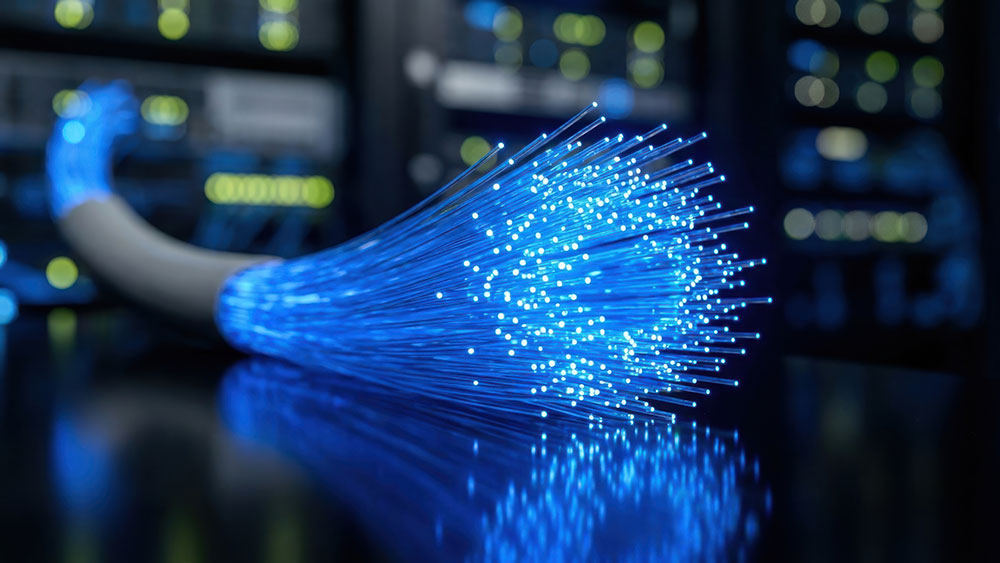
Power Efficiency & Optical performance validation
Ensuring accurate validation of power efficiency and optical performance in next-generation data center components.
Yokogawa's Solutions
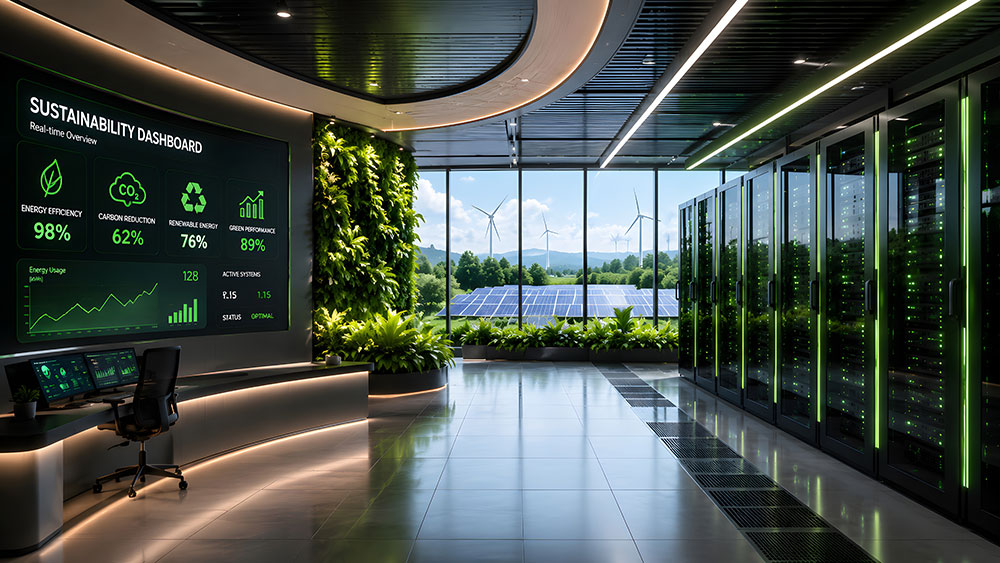
From Monitoring Data to Better Optimization
Integrate and utilize monitoring data to optimize power and cooling systems, enabling operators to better understand changing conditions and improve energy efficiency(PUE).
Solutions
- Integrate and unify data: Multi-source data integration and unified data model enable holistic optimization.
- Control from monitoring to action: Real-time monitoring of local critical assets enables continuous visibility of load fluctuations and dynamic adjustment of cooling and power systems.
Benefits
- Unified visibility
- PUE improvement
- Improved operating efficiency
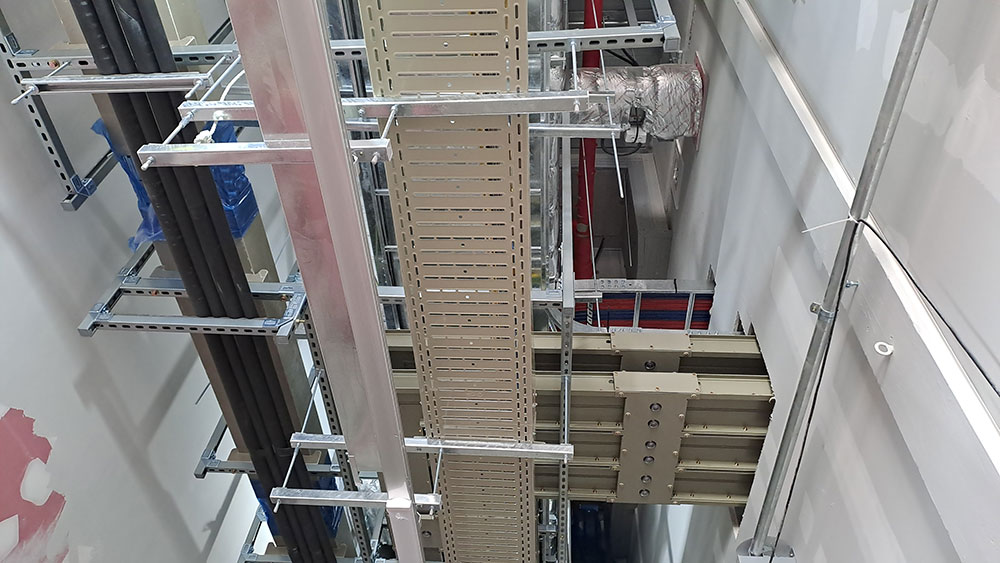
Real-Time Thermal Visibility for Power Distribution Lines
Ensure better visibility into thermal conditions in busbars and power cables to enable earlier issue detection and better use of existing cable capacity.
Solutions
- Detect abnormal heat: Eliminate blind spots inherent to point-sensors. Deploy miles of continuous fiber optic cable to track real-time, linear temperature profiles along power busbars and cable trays, locating thermal anomalies to the exact meter.
- Assess cable temperature and capacity in real time (Real-Time Thermal Rating): Dynamic assessment of conductor temperature and available cable capacity under actual operating conditions.
Benefits
- Improved thermal visibility and early hotspot detection
- Improved utilization of existing power cable capacity
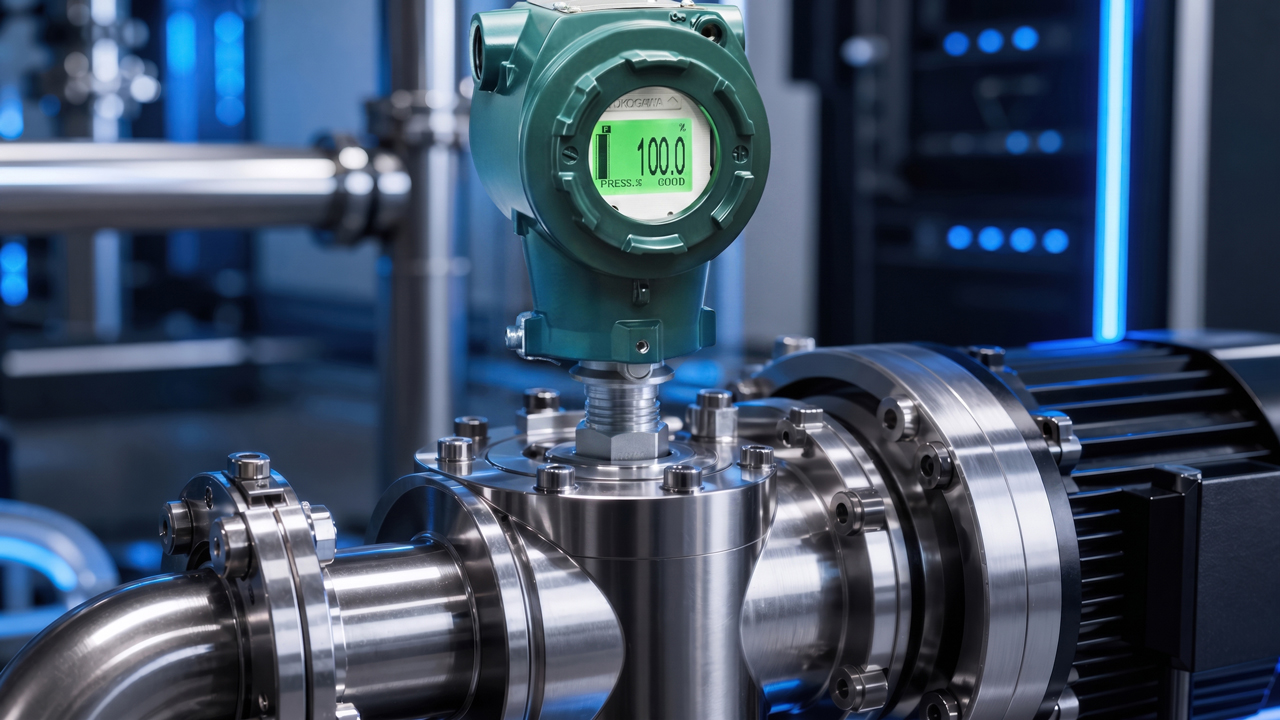
Precision Sensing for Liquid Cooling Performance Monitoring
Help cooling equipment manufacturers clearly monitor liquid cooling conditions through precise measurement of flow, temperature, pressure, and liquid properties, enabling earlier detection of abnormalities and performance changes.
Solutions
- Monitor coolant degradation and chemistry in real time: Continuous liquid analysis safeguards your infrastructure against scaling, corrosion, and biological growth within cooling towers and secondary fluid loops, extending the lifespan of mission-critical mechanical assets.
- Verify sub-loop flow and mass balance: Ensure exact dielectric fluid and chilled water delivery across Cooling Distribution Units (CDUs). Accurately measure flow velocity and balance to maximize heat exchanger efficiency and instantly flag line restrictions.
- Track ultra-low delta-T thermal conditions: In liquid-cooled architectures, monitoring tight temperature differentials across the primary and secondary loops is critical. Detect micro-changes in coolant temperature to prevent localized hot spots before they trigger automatic server throttling.
Benefits
- Cooling loop visibility
- Early detection of abnormalities and performance changes
- Stable cooling performance
Closed-Loop Control for Stable Server Conditions
Maintain server conditions within the desired range through industrial closed-loop control.
Solutions
- Stabilize conditions in real time through closed-loop control: Continuously adjusts power and cooling conditions to maintain optimal server environments.
Benefits
- Maximized computing capacity utilization
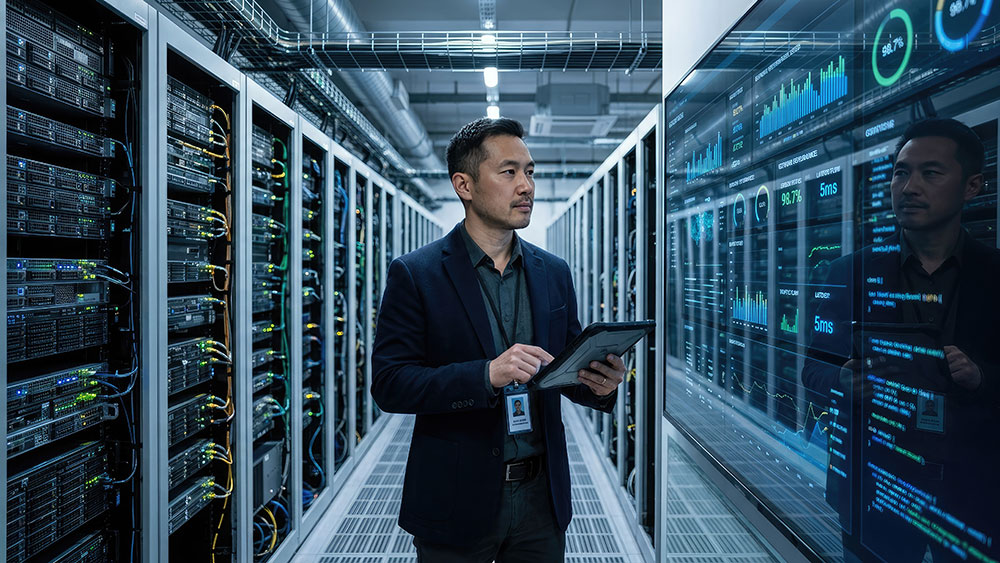
Precision Measurement for Power Electronics and Optical Innovation
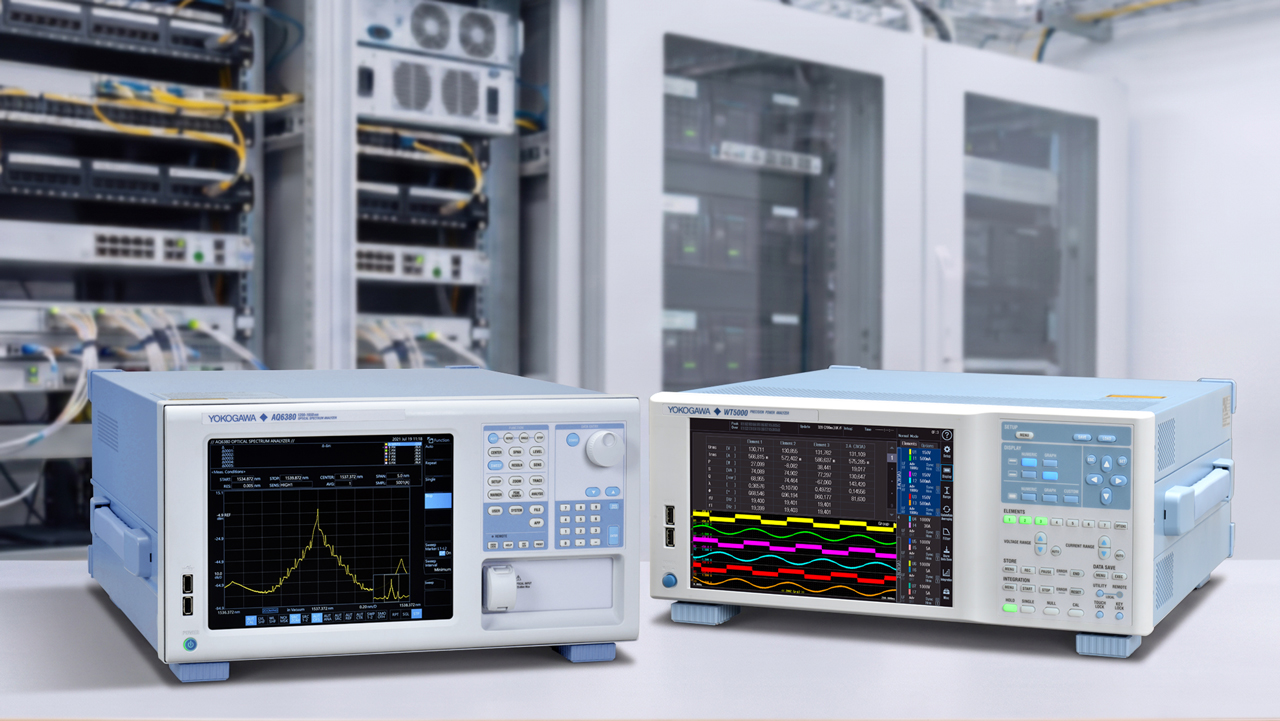
Yokogawa Test & Measurement helps engineers validate the power and optical technologies behind next-generation data centers. Our solutions support confident measurement of power efficiency, power quality, waveform behavior, and optical performance.
Solutions
Trusted precision power analyzers, isolated oscilloscopes, and advanced optical measurement solutions.
Benefits
- Improve efficiency and power quality
- Verify performance with confidence
- Accelerate design validation and production test
News
-
Press Release | Corporate Sep 29, 2026 Yokogawa to Assist the Scale Up of Tropical Climate AI Data Center Testbed into a Multi-megawatt Pilot Facility
- Contributing to Singapore's sustainable digital infrastructure initiative -
Related Products & Solutions
-
Fiber Optic Temperature Sensor DTSX
The DTSX fiber optic temperature sensor, which uses optical fiber for the temperature sensor, quickly detects and locates abnormalities in equipment by monitoring temperatures at production facilities located far away and across wide areas 24 hours a day, without omission. Highly accurate predictive maintenance avoids downtime and ensures stable plant operation.
-
Liquid Analyzers
Liquid analyzers are used for monitoring process chemistry including water quality, providing process optimization and control.
-
Temperature Transmitters
Yokogawa offers a full line of temperature transmitters that are head-mounted, panel-mounted, or field-mounted.
-
Temperature Controllers
UTAdvanced temperature controllers and digital indicating controllers employ an easy-to-read, 14-segment large color LCD display, along with navigation keys, thus greatly increasing the monitoring and operating capabilities.
-
Flowmeters
Yokogawa has a wide range of flow solutions with high quality, accuracy, and reliability. With over 100 years of flowmeter experience, our technologies can provide a solution for virtually all flow applications.
-
Pressure Transmitters
The accurate and stable measurement of process pressure with Yokogawa Pressure Transmitters supports the safe, reliable, and profitable operation of your plant.
Looking for more information on our people, technology and solutions?
Contact Us