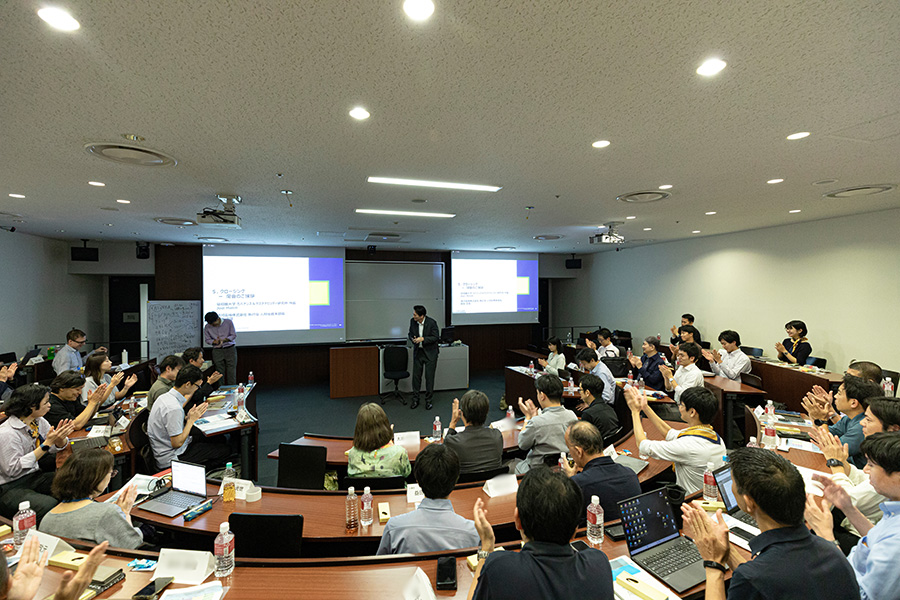
The 25th Green Phoenix Project (GPP) Lecture & Workshop was held at Waseda University on September 12, 2025. This joint project integrating industry, government, and academia was launched as a learning community in 2021 by Yokogawa and the Waseda University Governance and Sustainability Research Institute (Waseda University GSRI). In this time of increasing chaos, the GPP is a co-creation forum generating new value through creativity and collaboration by envisioning a future through multifaceted perspectives transcending industry and positions. At present, it has 39 organizational members.
Participation for this event was a total of 53 individuals from 22 organizations. Early- to mid-career professionals from Japan were joined by online participants from overseas, including the UK and Saudi Arabia. This three-part feature spotlights both insights and dialogue from the event.
The GPP story: A forum for open discussion of the future
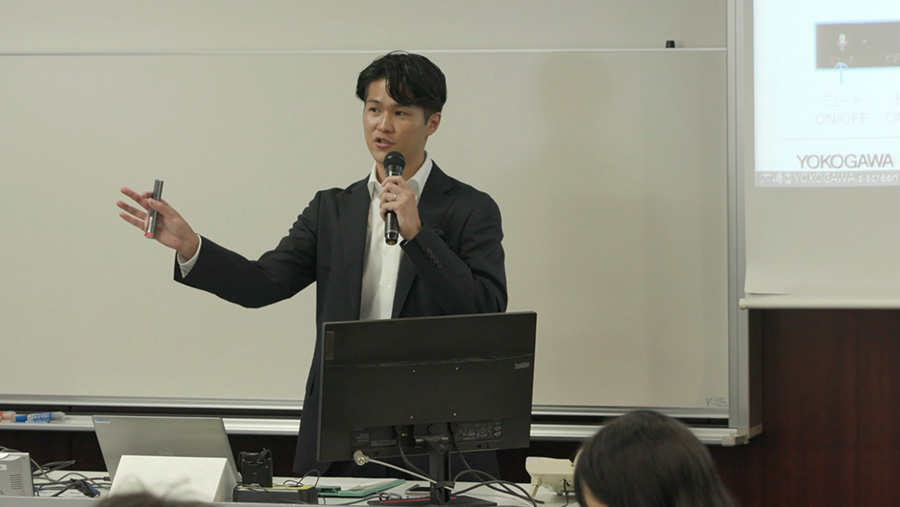
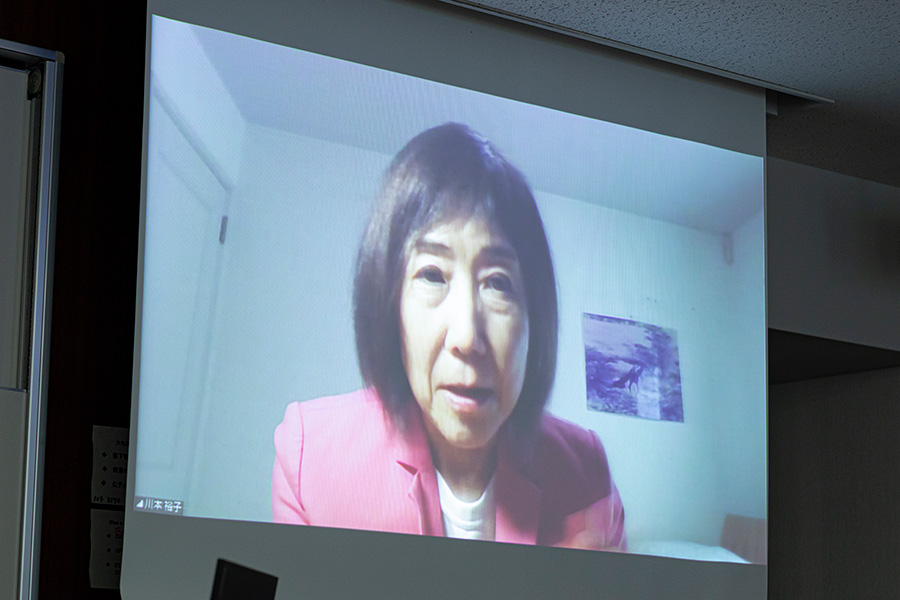
Future Co-creation Initiative Scenario Ambassador* Shogo Ohsaki (Human Resources & General Affairs Headquarters, Yokogawa Electric Corporation) moderated the event. The welcoming address was delivered by Waseda University GSRI Founding Director Yuko Kawamoto, a cofounder of the GPP and current President of Japan’s National Personnel Authority.
*Scenario Ambassadors are millennials (aged late 20s to early 40s) selected from each department; they form the core of the Future Co-creation Initiative.
“I was in total agreement when Nobuyuki Tamaki launched the project four years ago, harnessing scenario planning to cultivate holistic-minded talent. It was all so utterly innovative—even the note-taking style in meetings—and I thoroughly enjoyed every session. I’ll never forget what he said: Scenario planning is a rehearsal for the future. This opportunity feels exceedingly critical given the era of rapid change and uncertainty in which we live.”
The next speaker was Professor Jusuke Ikegami (Dean of Waseda University Business School, Graduate School of Business and Finance), a strong supporter of the GPP since its inception, who took the stage with a smile and provided an overview of the organization.
“GPP members conventionally study and explore diverse fields, such as economics, technology, geopolitics, and management trends. The GPP affords a space for participants to freely exchange ideas and mutual insights without regard to corporate position. To ensure this, we established three operating principles: Constructive Conflict, which encourages accepting opposing views and discussing them constructively; Contribution Mindset, which values not only taking but also giving; and the Chatham House Rule, which prevents speakers from being identified.
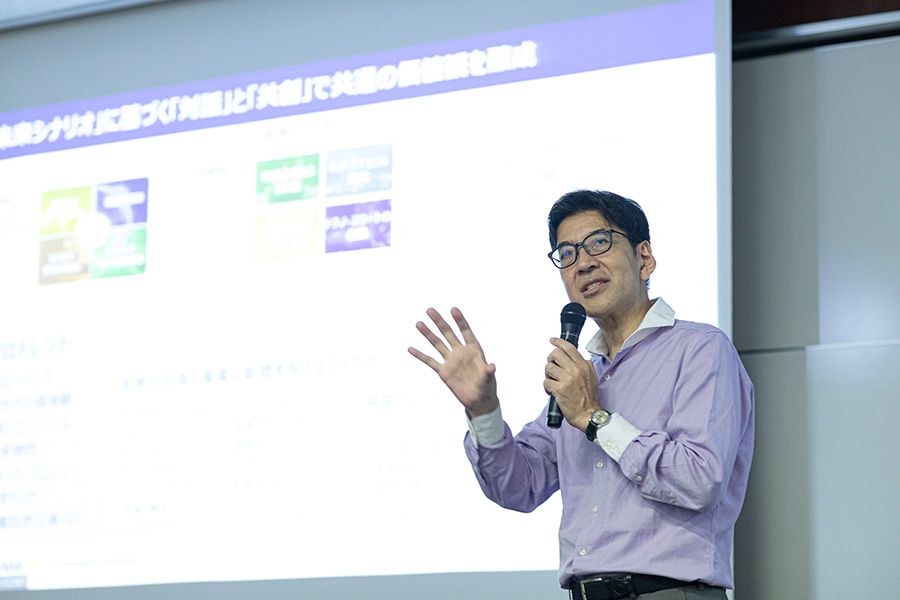
An open co-creation platform
Next, Nobuyuki Tamaki, cofounder of the GPP with Professor Ikegami and Future Co-creation Initiative Project Leader, explained the objectives of the initiative.
“Through our activities, we seek to foster co-creational leaders and cultures, promoting systemic change through stakeholder dialogue both within and beyond the company. Rather than relying on planning carried out in secret, the program stands out because young professionals engage in open dialogue to create future scenarios that are shared with the public.
“However, the real aim is not the creation of future scenarios but rather the unique approach of scenario planning to foster co-creational leadership and networking.
“Each session welcomes executives, management, and next-gen leaders from a range of industries. Participants vary, depending on the topic at hand, enjoying both discussion and insights.”
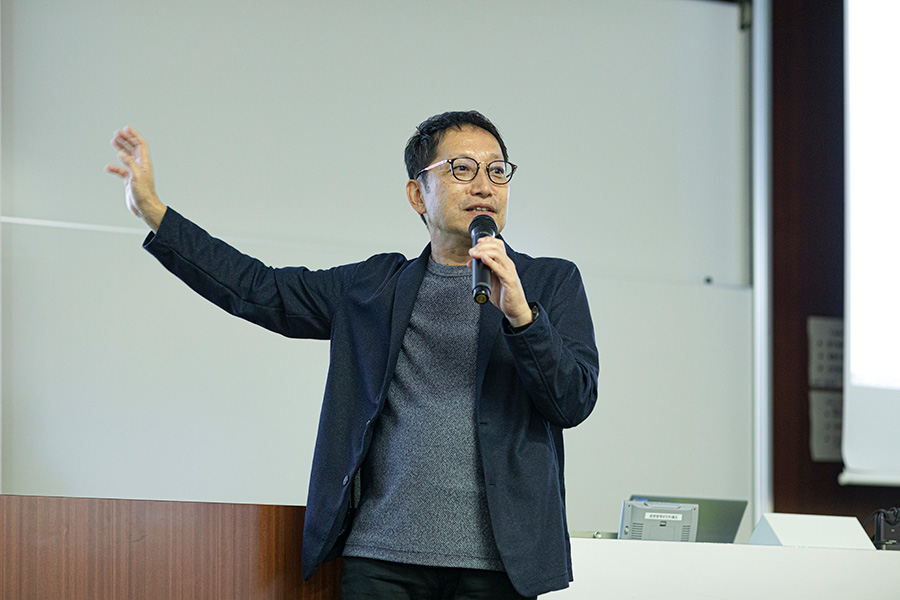
The Future Co-creation Initiative is a Yokogawa in-house effort, while the GPP embraces corporate partners from multilateral sectors. Linking these two has yielded an open co-creation business platform.
Future Scenario 2040: A white paper born from dialogue with executives and experts
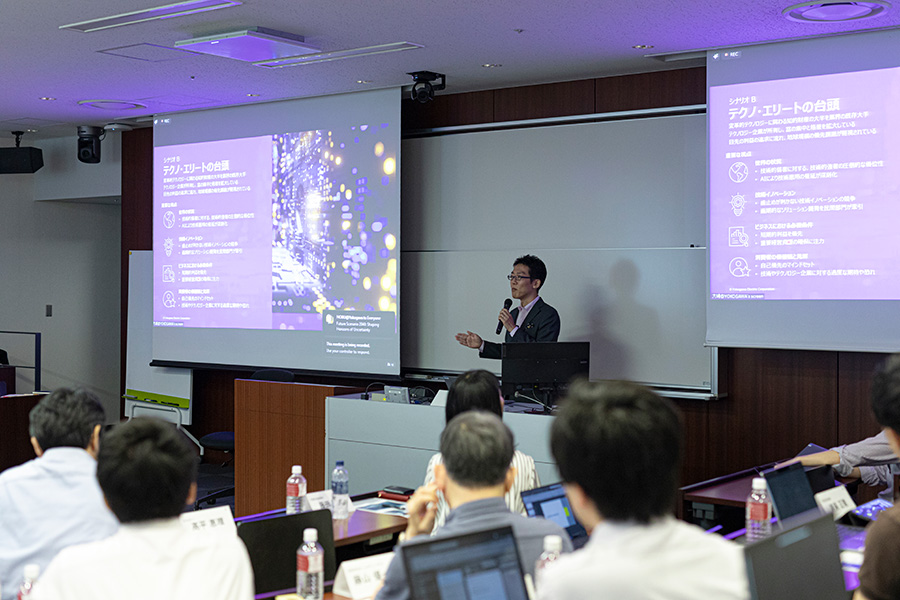
Opening addresses were followed by an overview of Future Scenario 2040, presented by Scenario Ambassador Shinichi Chiyoda (Marketing Headquarters, Yokogawa Electric Corporation).
“Yokogawa primarily develops solutions for manufacturers in the B2B domain. However, to envision our customers’ future, we expanded the scope of our scenario planning to B2B2C because we also felt the necessity to depict the future of end consumers—the general public.”
The first step in this process is an analysis of the external environment.
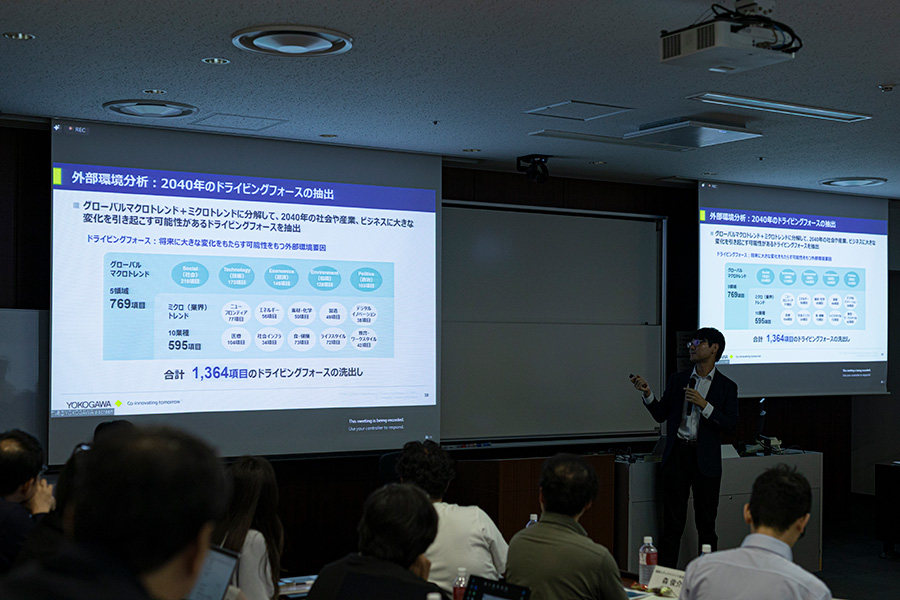
“We began by enlisting external environment analysis frameworks such as STEEP and Five Forces, delineating key macro-level change variables rendering long-term social impact. Next, we identified micro-level change variables for ten industries selected based on the future economic landscape. That process yielded 1,364 driving forces. We separated that enormous number of driving forces into abstract clusters, subjectively evaluating their impact and uncertainty. That in turn produced five megatrends which are likely to occur and generate a major impact.”
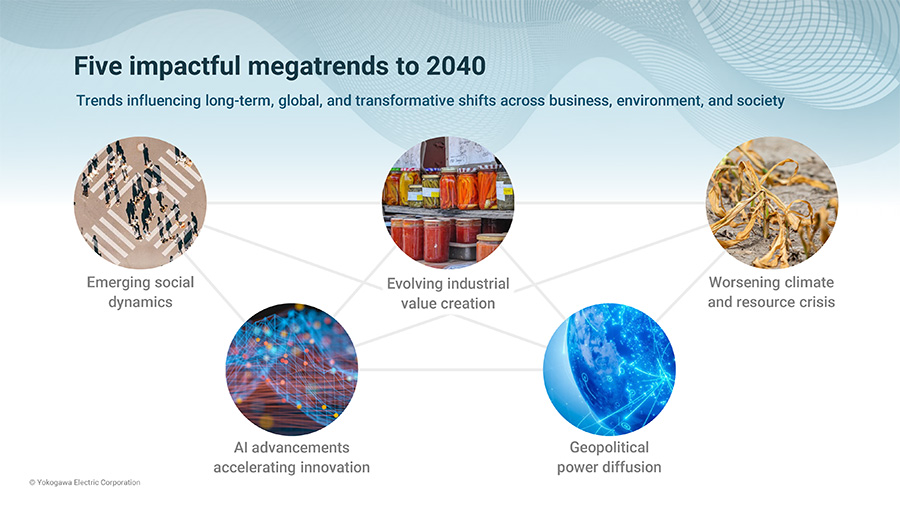
Scenario Ambassador Jun Kobayashi (Marketing Headquarters, Yokogawa Electric Corporation) took over, providing an overview of the scenario drivers.
“Scenario drivers are the key uncertain variables significantly impacting directionality. Because differing combinations produce diverse scenarios, these factors were carefully and thoroughly examined. With material growth reaching its limits, we debated how to position less quantifiable factors, such as sustainability and happiness, and ultimately established dual axes representing the biosphere and technology.”
The first axis was “strategies for addressing biospheric risks,” while the second was “approaches to governing transformative technologies.” Ikegami offers insights into these two scenario drivers.
“While other companies incorporate scenario drivers beyond human control, Yokogawa’s distinctive strategy is to focus on those within human sway, demonstrating a belief in human potential.”
Combining these two scenario drivers on vertical and horizontal axes generates the following four scenarios.
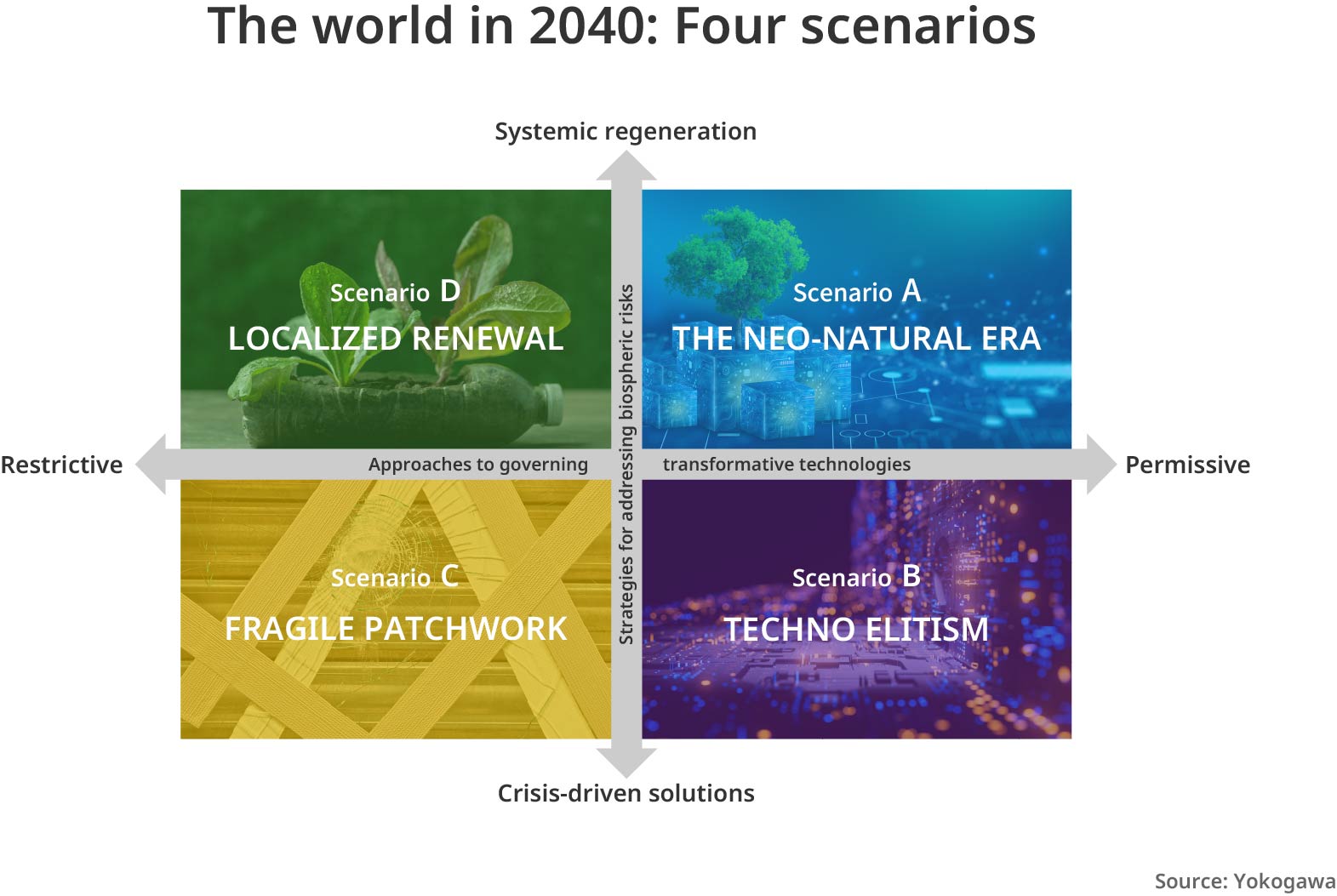
See Future Scenario 2040 for details.
Kobayashi offered concluding remarks.
“Those of us functioning as scenario ambassadors actively leverage AI and consult with external executives and experts as we craft scenarios. Thanks to your support, we have gained invaluable insights into the very core of our scenarios.
“Going forward, the future vision developed through dialogue between Future Co-creation Initiative members and management should translate into strategy through expanded collaboration among business sectors and industry-government-academia and through transformation of our business portfolios. With each member acting as a boundary spanner within and beyond the company, we can ignite the transformative spirit of others. At the same time, expanding “weak ties,” those that are outside our own corporate chain of command, will lead to new insights and initiatives.”
Japan’s corporate leadership model
Part 2 of our three-part series on the 25th GPP Lecture & Workshop features a keynote address by GPP cofounder Jusuke Ikegami, Dean of Waseda University Business School (Graduate School of Business and Finance).
Professor Ikegami began by referencing his latest book, Resolute Japan.
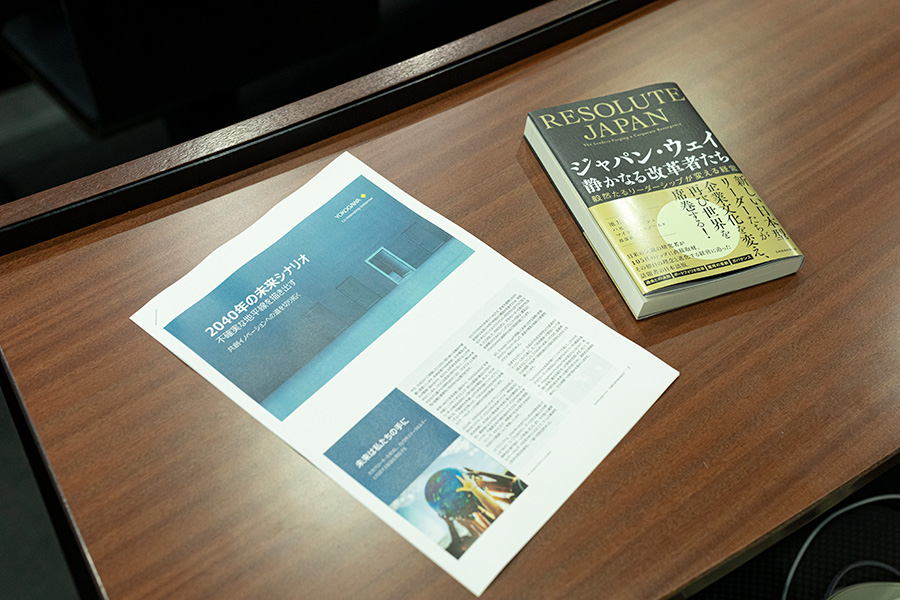
“Our research initiated in 2019, tracing Japan’s recovery from the lost thirty years. My coauthors, Professors Harbir Singh and Michael Useem, are superstars at the University of Pennsylvania’s Wharton School, which ranks number one globally among business schools. These gentlemen are world-renowned authorities on strategy and international management, respectively.”
The three experts researched Japanese firms which achieved remarkable recovery in recent years, articulating their findings as explicit knowledge for global entities to reference. The authors interviewed 105 executives from companies such as Hitachi, NTT Data, Asahi Breweries, Lawson, and Sony—all of which successfully diversified or transformed their businesses—unearthing the essence of each corporate comeback. Yokogawa was one of the companies studied.
What emerged was a new Japanese leadership model worthy of study by global companies. Ikegami and his coauthors named the model “Resolute Japan” (RJ) and identified its key components.
- Fusing traditional Japanese management methods (such as stressing internal resources and adopting long-term perspectives) and innovative management
- Transforming business portfolios through ambidextrous management, which deepens ongoing business while exploring new opportunities, leveraging the strengths of (1) above
- Exhibiting executive leadership combining resolute decisiveness and personal integrity, with an openness toward employees
- Maintaining a multi-stakeholder perspective, viewing internal/external stakeholders (including shareholders) as complementary partners
- Transitioning from employment security and seniority-based systems to talent mastery–oriented organizational management that emphasizes capability development.
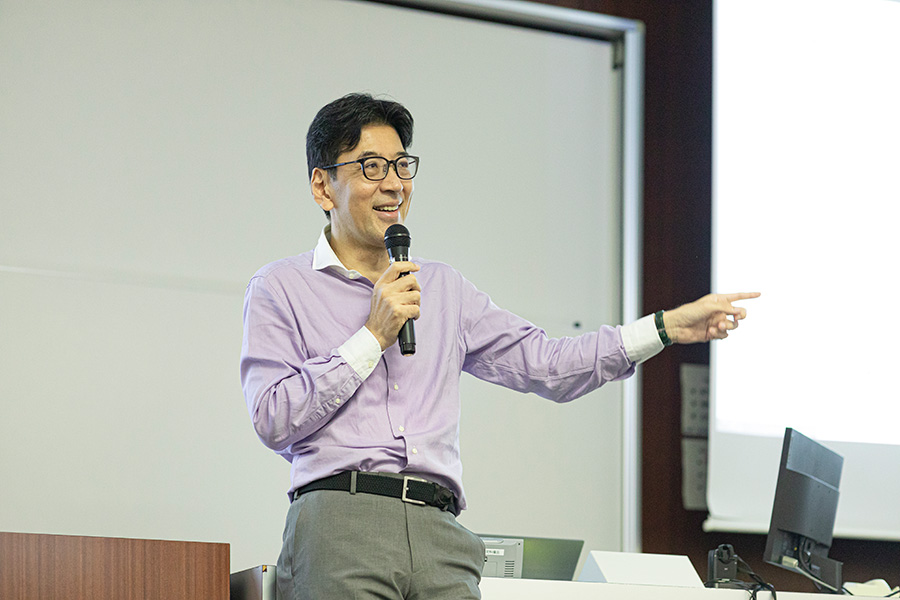
Ikegami elaborates on these points.
“Companies worldwide struggle with stakeholder governance. However, those adhering to the RJ leadership model follow a multi-stakeholder approach which includes their shareholders. Contented employees generate quality products and services, satisfying customers and elevating sales and profit. That in turn produces consistently higher share prices, pleasing shareholders and allowing for corporate-based social contributions. This cycle also has a positive impact on business partners and employees.”
What global entities can learn from Japan’s corporate RJ leadership model
RJ-style executives are equipped with resolute decisiveness and personal integrity, and while they may be inconspicuous, they demonstrate leadership that is deeply rooted in the organization, driving transformation with solid strategic thought and sustained execution.
Professor Ikegami interviewed an illustrative RJ leader, former Yokogawa President and Representative Director Hisashi Nara (currently Chairman of the Board and Representative Executive Officer). Nara was one of the first to spot shifting values among young professionals—who prioritized social contributions and their relationship with society—and to empower each employee. However, he felt that corporate support remained inadequate, and senior management failed to understand younger employees.
About that time, Tamaki proposed establishment of a new project: the Future Co-creation Initiative. Nara, supporting the future-oriented and co-creation aspects of fostering young leaders, provided support from behind the scenes as the project’s first owner.
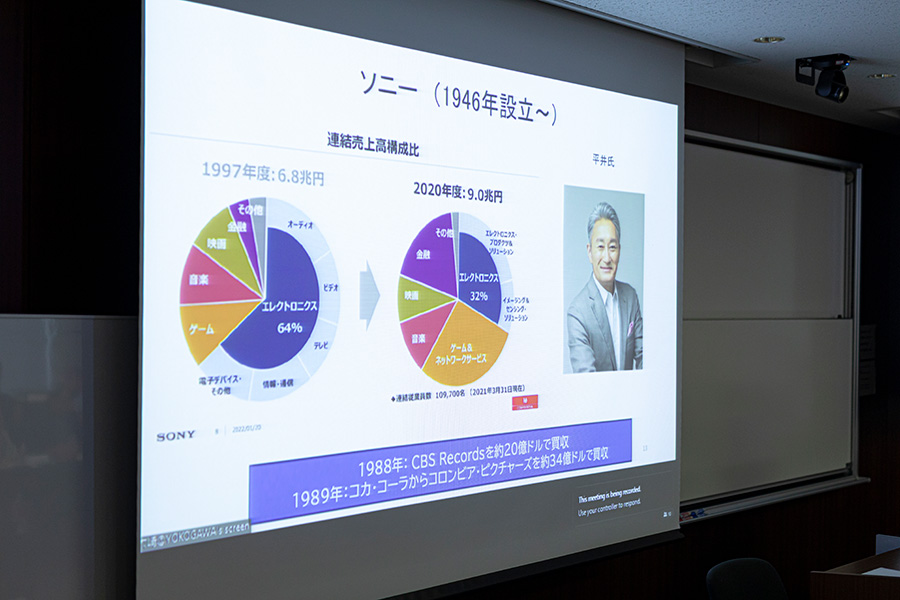
Ikegami pointed to former Sony CEO Kazuo Hirai as another example of the RJ leadership model. When Hirai assumed the reins of Sony as President and CEO in 2012, the firm was aggressively bleeding red ink and subject to rumors of a management crisis.
“The key factor in Sony’s comeback was a major business portfolio shift from electronics to movies, music, games, and network services. They executed a huge transformation. Today, Sony’s growth is in entertainment and content. Hirai’s “people power” remains his leadership strength, as he retains his strong ties with employees.
New resources and personnel are sought for new businesses launched in Western countries, whereas existing resources are leveraged in Japan. To run an ambidextrous business, leveraging existing resources while exploring new areas, employees must be motivated to do the same. This takes time and requires a visionary leader.”
Toyota Tsusho was introduced as another RJ leadership model. A general trading firm under the Toyota umbrella, the company operates a global automotive-related business.
“When Jun Karube assumed the presidency in 2011, both performance and growth rate were on a roll. Although the majority of the company’s revenue had come from Toyota, one of the most stable companies in Japan, he announced a policy to reverse this dependence, not due to concerns over Toyota’s future but because he felt bringing in new partners was crucial to sustaining Toyota Tsusho’s corporate growth. He was surely a visionary focused on the future.”
Japan has a wealth of promising industries
Ikegami points out that Japan also has “industries with potential for growth.”
“Japan ranked near the top (3rd) both in automobile production volume and in the World Economic Forum’s Travel and Tourism Index. Japan’s automobile industry represents a 400-trillion-yen market. The travel industry represents a quadrillion-yen market, with inbound tourism accounting for 300 trillion yen—projected to reach 400-500 trillion yen in the next decade—making it comparable in scale to the auto industry.”
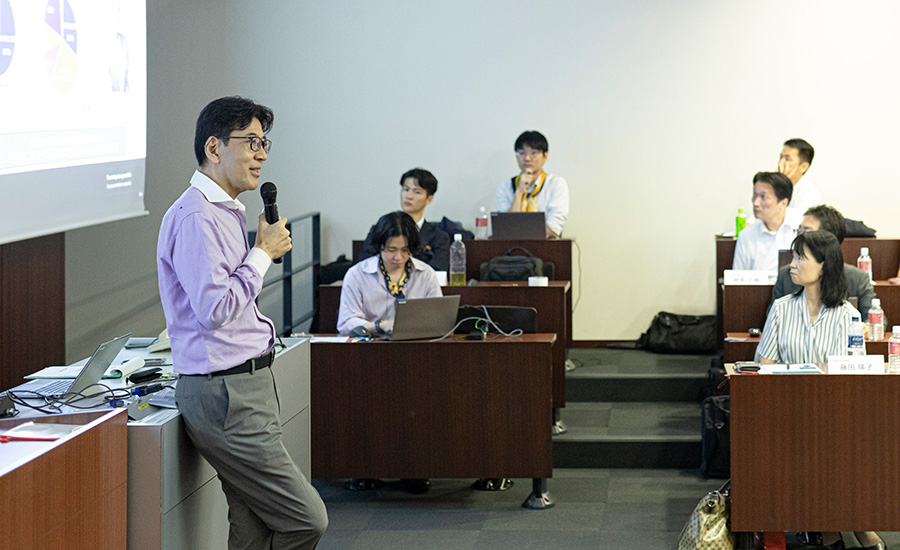
Ikegami suggests that the energy and educational resources directed at Japan’s tourism industry account for only 5% of the total directed toward manufacturing. This is precisely why the tourism industry, with its large market size, is a highly competitive and promising sector globally and is therefore a significant opportunity for Japan.
“Japan holds five of the world’s top ten globally recognized character-content IPs. How can we give due futuristic consideration to these opportunities? This is where scenario planning comes into play,” concludes Ikegami.
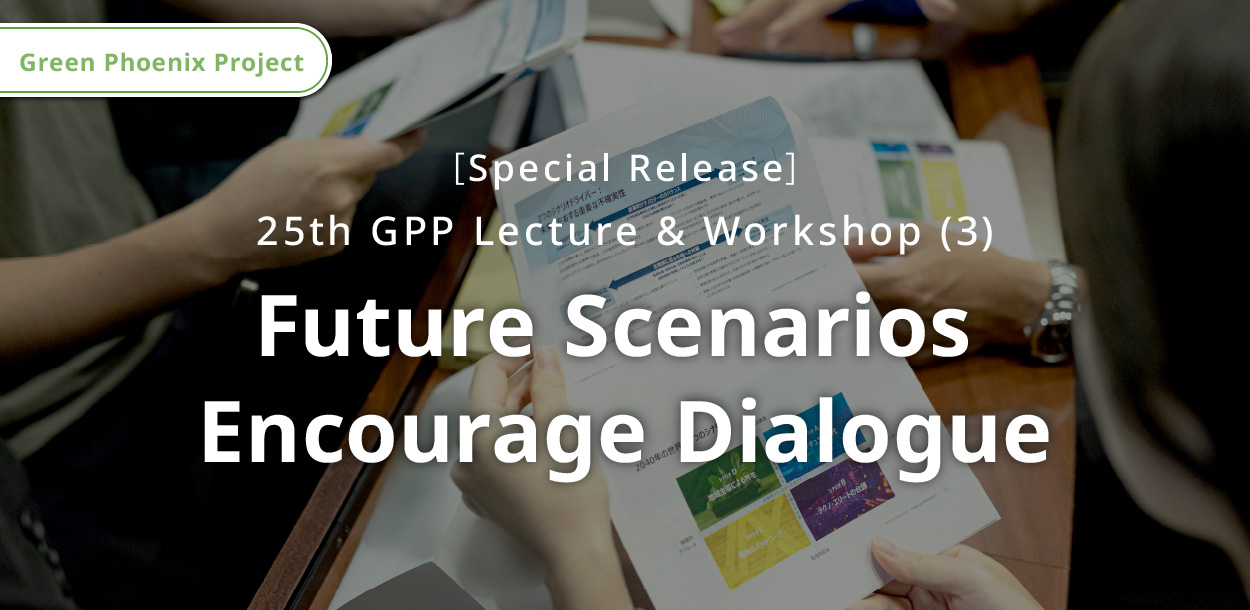
Group discussion: Dialogue transcending generations and industries
The final segment of our three-part series on the 25th GPP Lecture & Workshop features group discussions by participants on “The world in 2040: Four scenarios.”
Following some 45 minutes of future-oriented discussion, each group spokesperson presented team findings and possible responses to diverse topics, including the population issue, AI usage, craftsmanship, behavioral change through religion, intergenerational exchange, value networks, and geopolitical risks. The following are some examples of the shared insights.
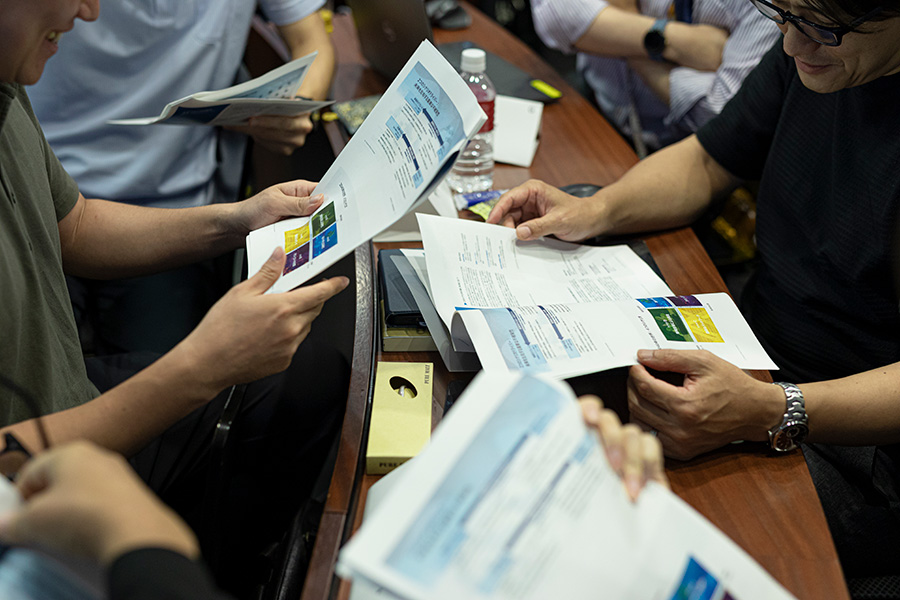
“Japan has been slow to integrate AI into society, yet it is a highly developed nation facing critical issues such as population decline and rapid aging. How can we leverage our technological strengths to address these issues? Japan offers an ideal testing ground for AI-driven solutions. I hope we can rise to this challenge and revitalize the nation’s industrial strength."
“It is said that Japan’s manufacturing has no future as things now stand, though the nation retains its top global spot in the Economic Complexity Index. Japan must ensure the transfer of skills and expertise to sustain this competitiveness. Surely Japan can preserve its manufacturing industry if those with experience and technology leverage AI."
“Regardless of AI’s future creative capabilities, there will always be those who prefer creation by humans. For example, although we can easily download music, people still pay vast sums to attend concerts by renowned overseas singers. Others would shell out 10 or 100 times more money for Edo Kiriko cut glassware, a designated traditional craft of Tokyo, over a similar product made by a robot."
“If AI takes over our jobs, and humans no longer need to work, how will we live? If we lose human interactions and opportunities to experience and fail, won’t life become dull as humans cease to grow?"
“Won’t religion play an even more significant role as the population surges? Patterns of behavior and economic activity will surely change as Islam, as well as Christianity, exerts increasing cultural and social influence. Shouldn’t we begin focusing more on literacy levels and ethical education rather than on intergenerational issues?”
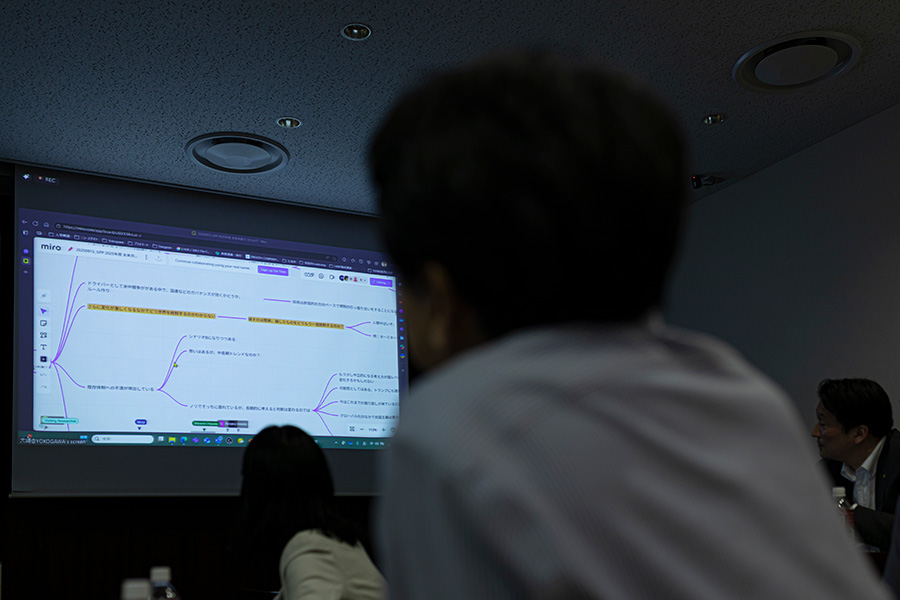
Event participants from the UK and Saudi Arabia added their opinions to the mix.
“The future scenarios introduced today can serve as tools for discussing organizational growth strategy with management. Furthermore, I felt this clear description of the qualities required to become a co-creation leader will surely be useful when discussing human capital.”
“Corporate activity is borderless, but individual countries set regulations. For example, no global framework exists for issues which require global deliberation, such as AI. We envisioned an ‘Earth metaverse’—a space to consider and discuss AI regulation using a narrative which will resonate universally.”
The Future Co-creation Initiative: A “never-ending journey”
The event was wrapped up with concluding remarks by Associate Professor Joel Baker Malen, Waseda University GSRI Research Director.
“These scenario megatrends influence us, but our actions influence them as well. We should keep in mind that micro impacts macro in addition to the other way around.”
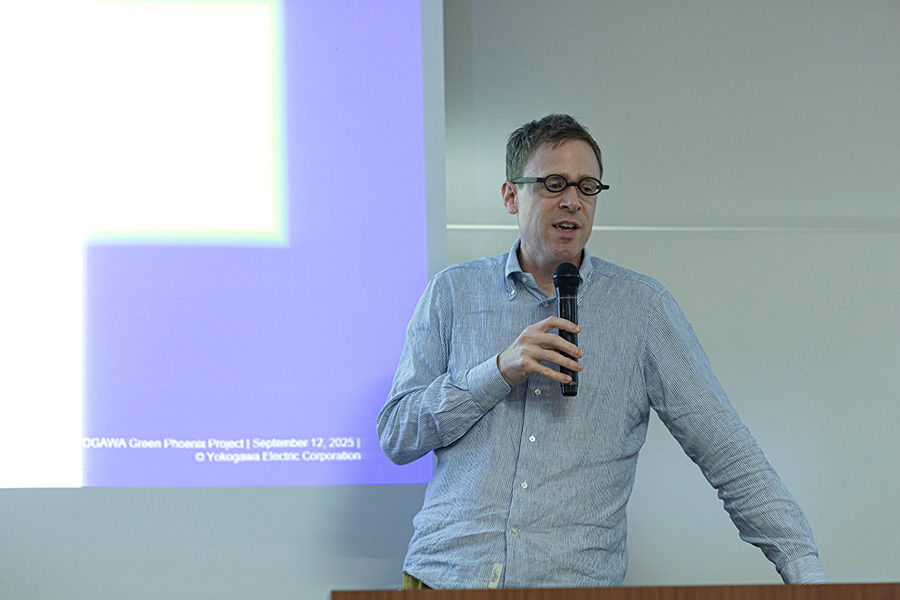
Participants followed up with questions about the future of GPP.
“Does this series of events have an endpoint?”
Ikegami responded with these words.
“The future we now see will continue to evolve, so it might be odd to say the activities will end. In other words, the GPP is a ‘never-ending journey’ which will continue to subdivide, develop, and converge.”
Masataka Tomonaga, Vice President & Executive Officer and Head of Human Resources and General Affairs Headquarters at Yokogawa Electric Corporation, offered additional concluding remarks.
“The Future Co-creation Initiative is a co-creation platform led primarily by young professionals. Today’s event reaffirmed the importance of creating opportunities like this to connect with partners in industry, academia, and various organizations. Professor Ikegami described this initiative as a ‘never-ending journey,‘ and as organizers, we hope to carry that spirit forward. We look forward to continuing this ‘never-ending’ journey together."
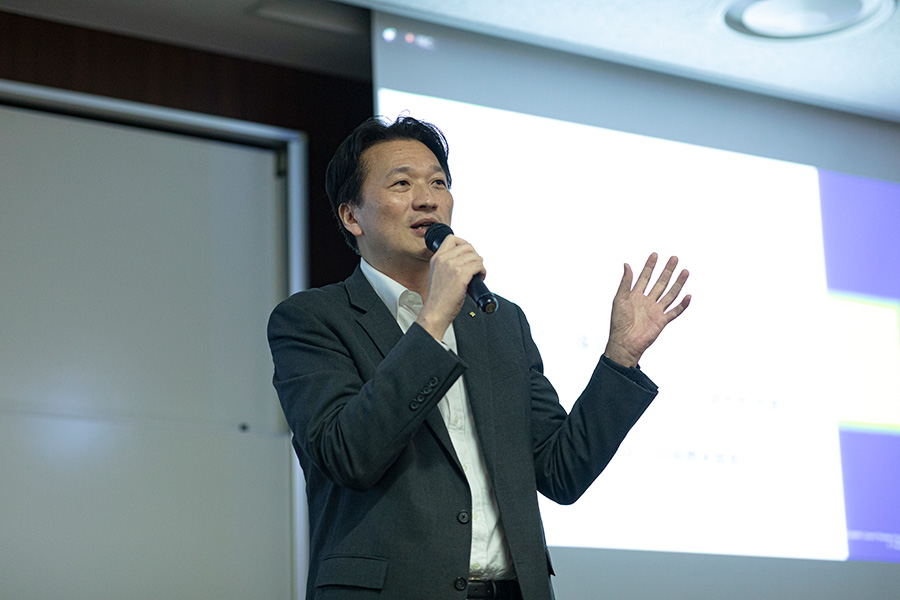
The event welcomed over 50 participants, including online participation from overseas. Global events have continued to shift rapidly since the GPP founding in 2021.
The value of co-creative communities, such as the GPP, which connect individuals across industry-government-academia as well as generations and national borders, will continue to increase and be sought in these uncertain times.
“Utilizing our ability to measure and connect, we fulfill our responsibilities for the future of our planet.” As stated in the Yokogawa corporate purpose, the company’s goal is to create sustainable value through the GPP, guided by autonomy and coexistence. As members of a future-focused global society, Yokogawa aims to lead the search for solutions on a worldwide scale.
Details
Future Co-creation Initiative Menu

HOME
Top page of Yokogawa’s “Future Co-creation Initiative”

Interviews
Our collaborators discuss the value and meaning of “Future Co-creation Initiative” from various perspectives.
Activity Overview
Introduction of our next-generation leadership development and a co-creation network beyond the scope of business.
Activity Objectives
Background and aspirations behind launching co-creative activities in an age without clear answers.
Future Scenarios
Future scenarios generated by young leaders of the future through scenario planning and co-creative dialogue.
Scenario Ambassadors
Introduction of Scenario Ambassadors—representatives selected from each Yokogawa department enjoying growth and learning.

Collaborator Networks
Fostering “weak ties” among our supporters, partners and individual companies, while building an industry-government-academia network.

Sponsor Article
Article published by WIRED, the US-based tech culture magazine.
Looking for more information on our people, technology and solutions?
Contact Us