*Insights shared in this dialogue are personal and do not represent those of any organization.
*Affiliations and positions are current at the time of this writing (November 2025).
*Continued from Interview Part 1
Leaders set the pace and share their enthusiasm
As companies struggle to understand today’s younger generation, Kanama warns against the outdated approach of urging young employees to work harder.
“It’s best for managers not to take an interest in the younger generation. Their focus should be on themselves, their own work, and the future. Not on the younger staff.”
Companies always seem eager to pressure young employees to take things on. That approach will backfire, warns Kanama.
“Bosses tend to foist tasks they dislike or can’t do well, and company-mandated work, on young employees. Their mantra is ‘take on challenges’ or ‘you’ve got to struggle while you’re young,’ sentiments which drive young people into full self-defense mode.”
So, what is the ideal leadership style?
“Leaders should enjoy their own hands-on work, commenting on challenges they’d like to take on the following year or inviting younger employees to participate or help. Demonstrating enthusiasm for their own work will passively encourage the younger employees to show interest.”
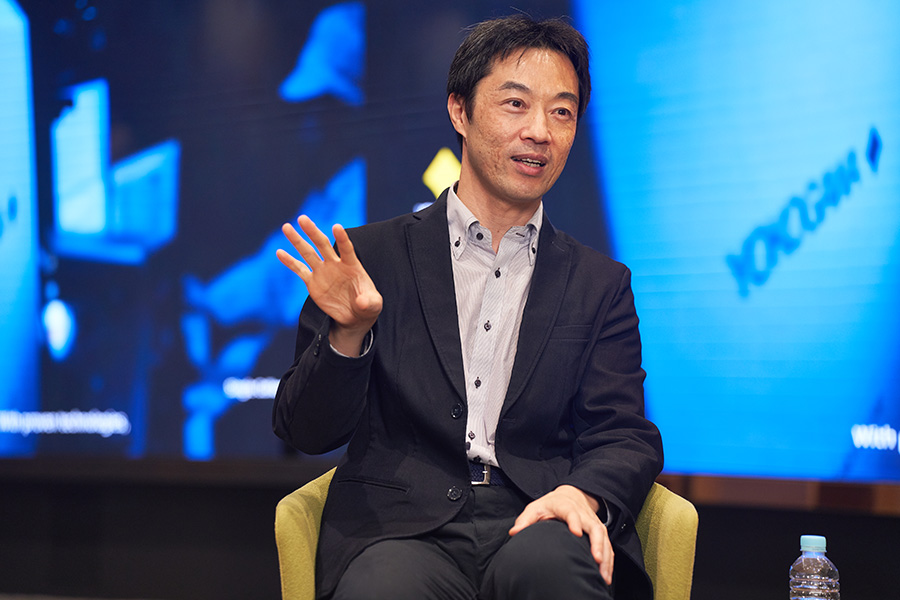
“I generally don’t ask others to do what I don’t want to do,” says Tamaki. “I’ll always give something a try, but if it’s not enjoyable, there’s no motivation. So, I transform unwanted tasks into jobs I wouldn’t mind taking on myself before handing them off to others.”
Fumiko Sasaki (Manager, Human Resources & General Affairs Headquarters), a first-generation member of the Future Co-creation Initiative, nods in agreement.
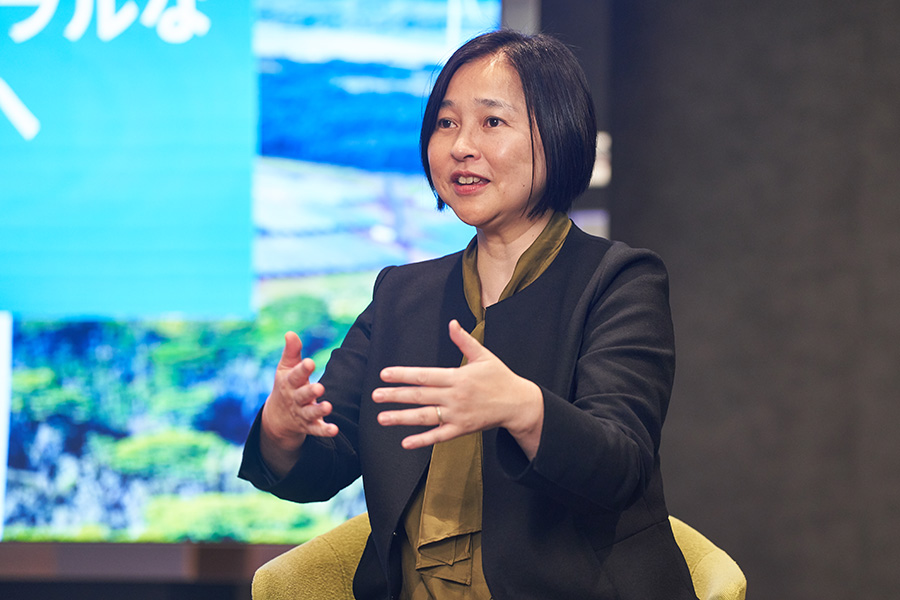
“The Future Co-creation Initiative involves a group of people all interested in the activity at hand. Tamaki, our leader, takes genuine enjoyment in pursuing the tasks he has chosen, and the program’s structure allows that enthusiasm to be shared as others pitch in. In turn, we experience growth through roles we have chosen for ourselves.”
Dialogue while working in tandem
Tamaki proactively engages in one-on-one dialogue with Scenario Ambassadors, listening to concerns they express over their career or current work responsibilities. Kanama is impressed with Tamaki’s approach of remaining engaged with younger members and offering close, ongoing support.
“Tamaki promptly shares with others what he would like to try. This is an important point. It enables young people to respond to what they are interested in. The two don’t face off against each other; rather, they are oriented in the same direction, with one invited to participate in the other’s activity. This enables the other to join in with a sense of security.”
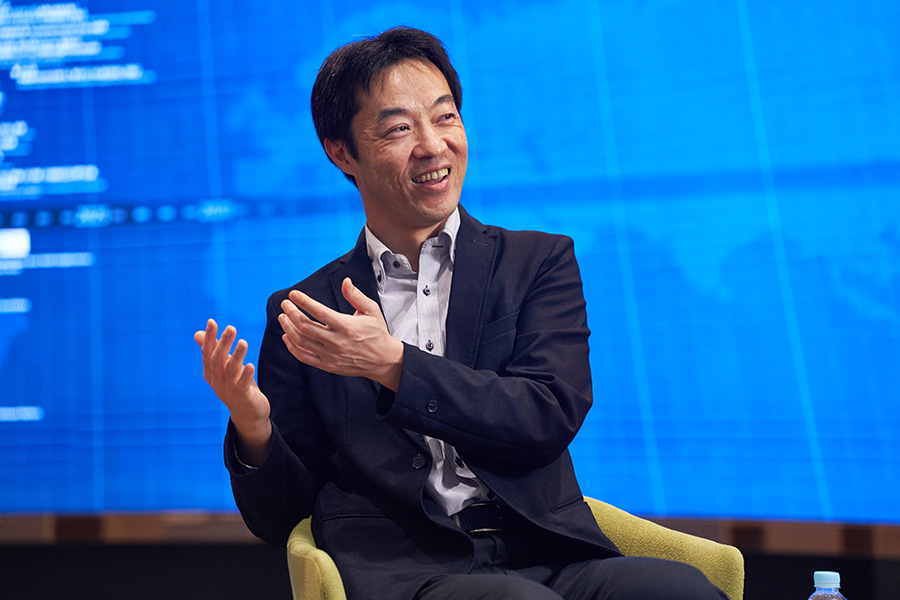
Kanama also points out that adopting this approach of working in tandem can also present challenges.
“Working in tandem offers great insight into the other’s strengths and areas of interest. However, it requires considerable energy and can’t be accomplished with every single young person.”
Storytelling sparks job satisfaction
Kanama also emphasizes how storytelling can foster empathy in young people.
“Corporate histories often adorn office walls, but they are just stories and thus insufficient. The key to the stories is in the ‘telling.’ When a live storyteller brings them to life with bona-fide emotion, that excitement shines through and resonates with young people, sparking job satisfaction and a desire to work in tandem.”
Kanama insists that storytelling has the power to be understood across national borders. The problem is that while Japanese companies have stories, storytellers are not held in high esteem. This is why sharing stories between superiors and subordinates, or among teammates, is critical in forging connections and garnering empathy.
Tamaki serves as a storyteller within the Future Co-creation Initiative. He has imparted neither success stories nor tales of valor but rather his own experiences, thoughts, and values as well as those of his Yokogawa colleagues. Kanama captures this sentiment succinctly.
“Storytelling comes naturally to Tamaki. He offers a compelling example!”
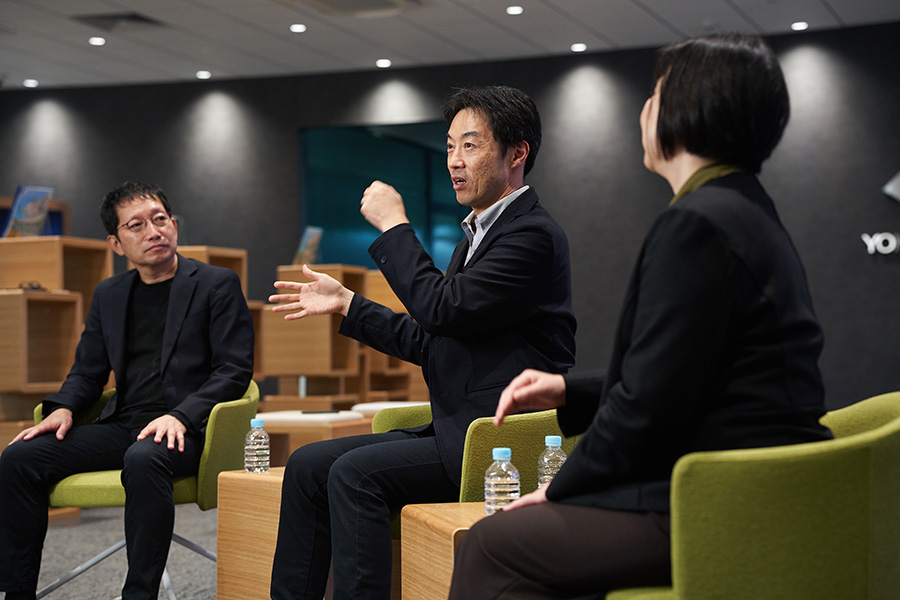
Just like a movie premiere ...
Tamaki has personally experienced the significance of superiors and subordinates being on the same page. While his goal in past presentations for corporate executives was the evaluation of content, he tried switching to a “movie-premiere” style and found that it made all the difference.
“Executives typically fall into ‘decision-making’ or ‘review’ mode in these situations. However, I tried emphasizing the importance of a different mode, requesting that the executives participate as though we were previewing a movie together. As a result, I received more constructive feedback than ever before.”
Kanama pointed out that this episode captured precisely what he wished to convey.
“It hits the nail on the head. Tamaki’s story might make a terrific opening for this article!”
In closing, we present the words of Professor Kanama regarding the Future Co-creation Initiative.
“I would say Yokogawa is one of Japan’s leading companies when it comes to workplace comfort. Stress levels are low, and you’ll find good people there. I believe that the Future Co-creation Initiative enhances these values even further. It challenges individuals to see how far they can develop their potential.”
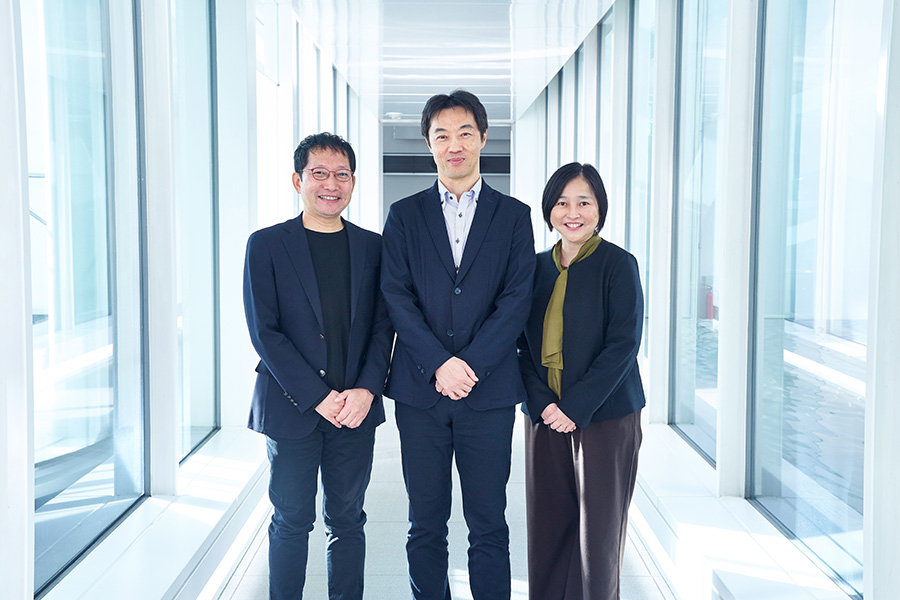
From left: Nobuyuki Tamaki (Yokogawa), Daisuke Kanama (Professor, Kanazawa University), Fumiko Sasaki (Yokogawa)
Work usually revolves around performers and evaluators. However, challenging endeavors, such as those incorporating innovation, leave evaluators without clear answers, which is why leaders need to be in sync conceptually, share enthusiasm, and work in tandem with the younger generation based on each individual’s perspective.
Every individual has a different set of skills and interests. The Future Co-creation Initiative turns individuality into a plus as it continues embracing the challenge of fostering job fulfillment.
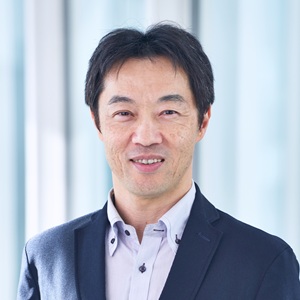
Daisuke Kanama, PhD
Professor, Faculty of Transdisciplinary Sciences, Institute of Philosophy in Interdisciplinary Sciences, Kanazawa University
Vice Representative, WE AT General Incorporated Association
Director, Intellectual Property Association of Japan
Hobbies: swimming, skiing, driving, movies, and (above all!) research
Details
Future Co-creation Initiative Menu

HOME
Top page of Yokogawa’s “Future Co-creation Initiative”

Interviews
Our collaborators discuss the value and meaning of “Future Co-creation Initiative” from various perspectives.
Activity Overview
Introduction of our next-generation leadership development and a co-creation network beyond the scope of business.
Activity Objectives
Background and aspirations behind launching co-creative activities in an age without clear answers.
Future Scenarios
Future scenarios generated by young leaders of the future through scenario planning and co-creative dialogue.
Scenario Ambassadors
Introduction of Scenario Ambassadors—representatives selected from each Yokogawa department enjoying growth and learning.

Collaborator Networks
Fostering “weak ties” among our supporters, partners and individual companies, while building an industry-government-academia network.

Sponsor Article
Article published by WIRED, the US-based tech culture magazine.
Looking for more information on our people, technology and solutions?
Contact Us