By reducing emissions throughout its supply chain, our company is striving to achieve net zero greenhouse gas emissions by fiscal year 2050.
Yokogawa has received certification of its Net-Zero*1 targets from the Science Based Targets Initiative (SBTi), an international organization that evaluates corporate efforts to reduce greenhouse gas emissions, which has found that Yokogawa's greenhouse gas (GHG) reduction targets and the processes taken to achieve them are in line with the 1.5°C target*2 set forth in the Paris Agreement.
Under the SBTi criteria, the company is required to achieve a 90% reduction in Scope 1 and Scope 2 emissions by 2030, and Yokogawa has received certification based on this threshold. In addition, as a sustainability indicator under Yokogawa’s medium-term business plan, Growth for Sustainability 2028, we are promoting emission reduction projects across the Group with the goal of achieving virtually zero Scope 1 and Scope 2 emissions (a 100% reduction) by fiscal year 2030.
*1 Pursuant to SBTi's net-zero standards, Yokogawa will prioritize direct reductions in all Scope1, 2, and 3 GHG emissions from the base year, and achieve this goal by taking neutralization measures such as absorbing and removing residual emissions that are difficult to reduce.
*2 A target to limit the increase in the global average temperature to no more than 2°C above pre-industrial levels, and to keep this increase as close as possible to 1.5°C
Yokogawa’s GHG Reduction Targets
| Indicators | Target (Total Emissions) |
|---|---|
| Scope 1 + Scope 2 |
|
| Scope 3 Categories 1 and 11 (Emissions from purchased products and services and from the use of sold products) |
|
| Scope 1 + Scope 2 + Scope 3 |
|
*3 Targets certified by SBTi
Scope1 and 2
Reduction Targets and Achievements
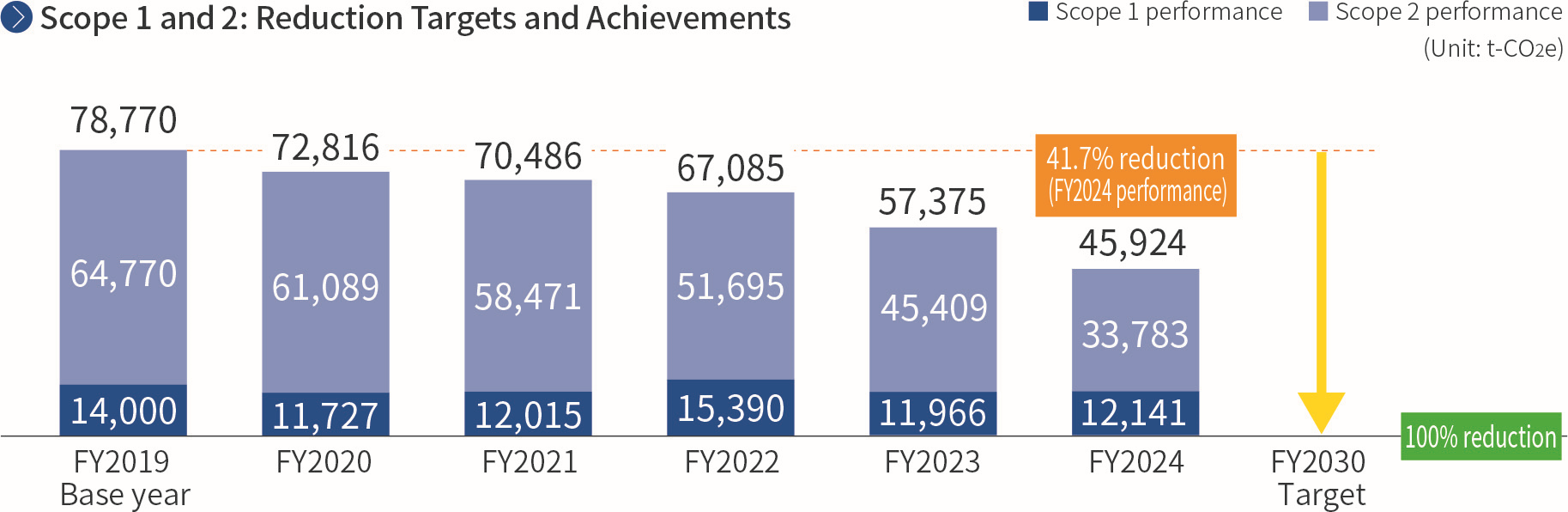
In fiscal year 2024, while our business activities expanded year-on-year, the Yokogawa Group achieved significant reduction in GHG emissions (Scope 1 and 2) by approximately 14% year-on-year and around 42% compared to the base year of fiscal year 2019. This progress was driven by key initiatives involving “Reduce” initiatives aimed at lowering energy consumption, and “Replace” initiatives focused on transitioning to clean energy sources. These results were made possible through the group-wide investments of around 320 million yen across 75 projects to support these initiatives, which reflect our collective efforts to advance technology, develop knowledge, and promote emission reduction projects throughout the Group.
| Metric | GHG emissions Scope1 and 2 (base year FY2019) |
|---|---|
| Target | 100% reduction (FY2030 target) |
| Perfomance | 41.7 reduction(FY2024) |
Initiatives to Reduce GHG Emissions
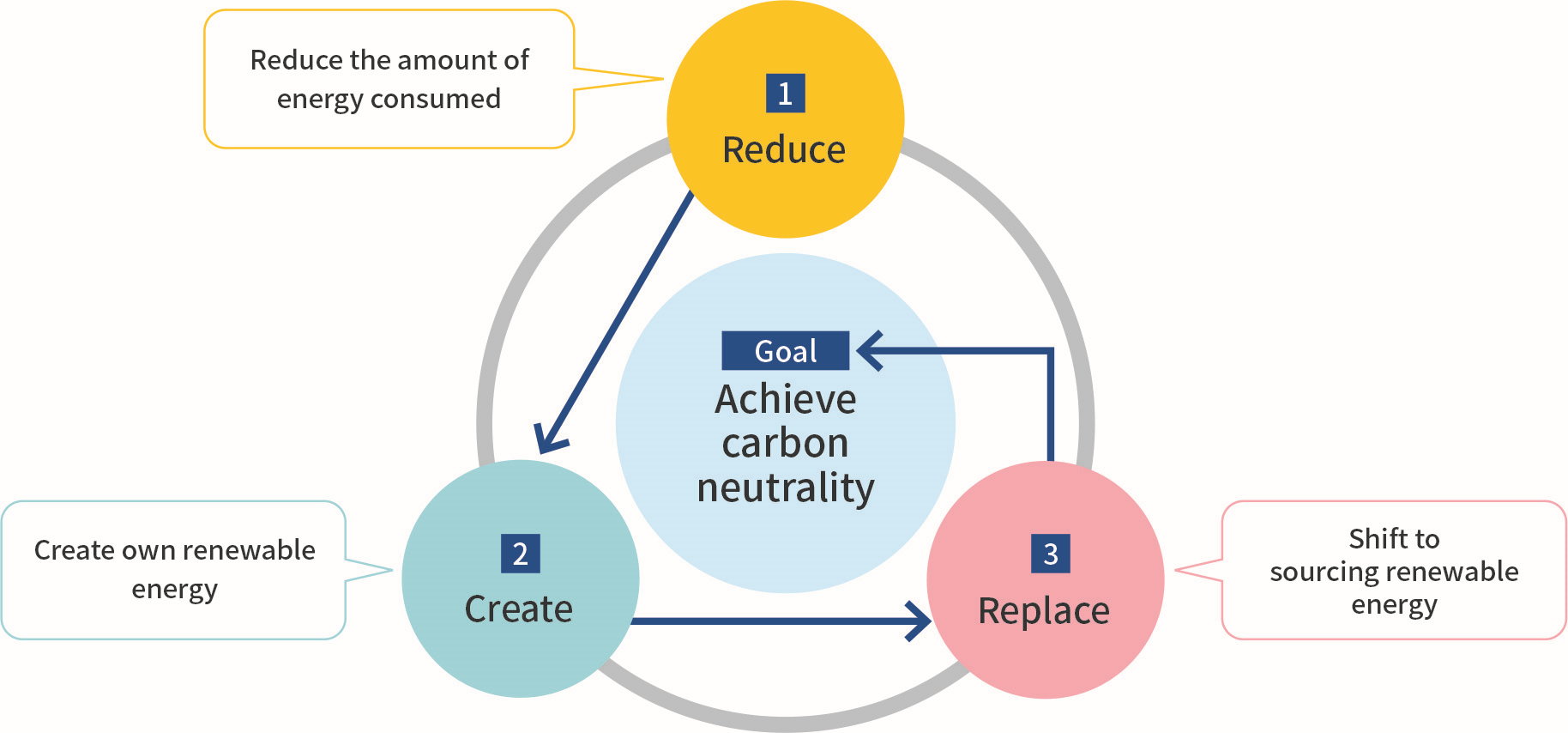
Yokogawa aims to achieve the targets for carbon neutrality through three key initiatives: to “Reduce” our energy consumption, “Create” our own renewable energy, and “Replace” sources of energy procurement with clean energy. To achieve the targets, we have clarified group-wide initiatives and roadmaps, and applies Internal Carbon Pricing (ICP) as a metric to evaluate the economic rationality of investments. In addition, GHG- and energy-related metrics are incorporated into both the executive compensation system and the employee performance management framework.
Group-wide Initiative
| “Reduce” Energy-Saving |
|
|---|---|
| “Create” Create own renewable energy |
|
| “Replace” Shift to sourcing renewable energy sources |
|
Roadmap for Reducing GHG Emissions
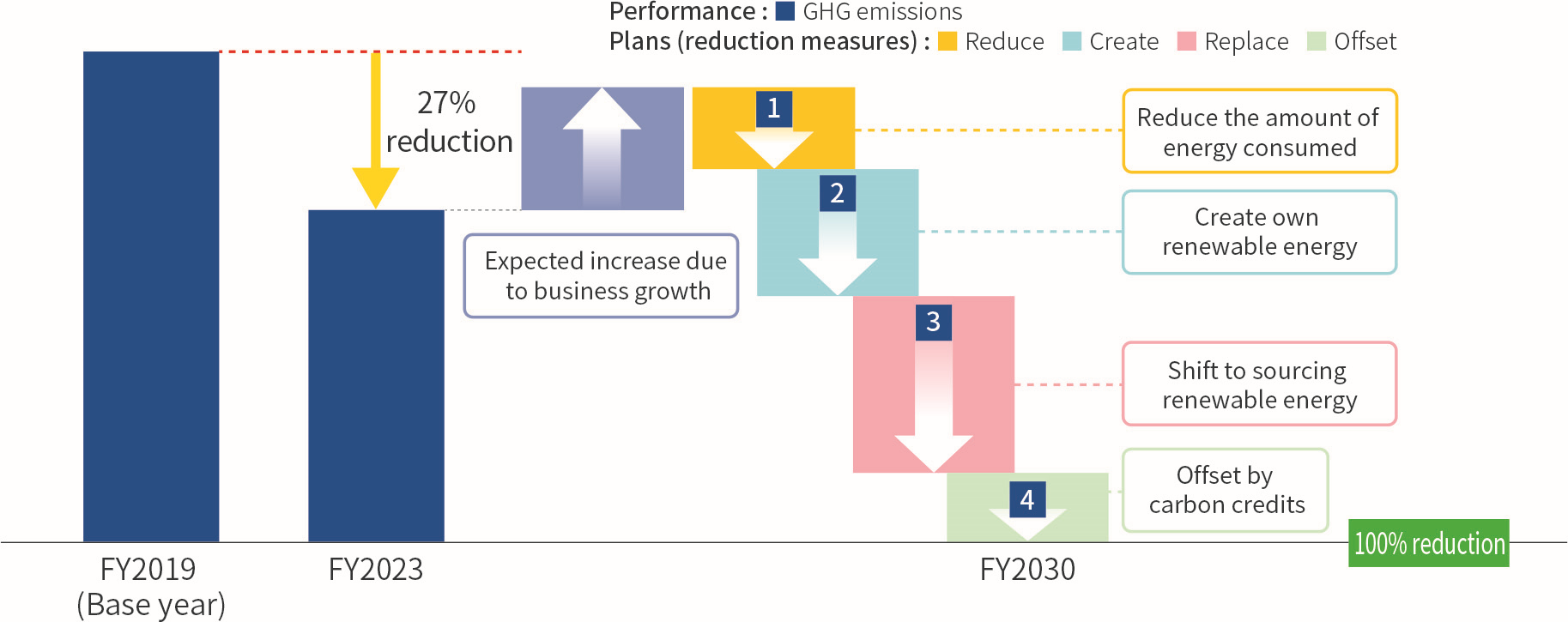
By promoting three key approaches — ‟Reduce,” “Create,” and “Replace” — we will steadily advance emissions reductions and aim to achieve carbon neutrality by Fiscal year 2030.
The roadmap formulated in Fiscal year 2023
(1) Reduce Energy Consumption
Metric and Target for Energy Consumption Efficiency
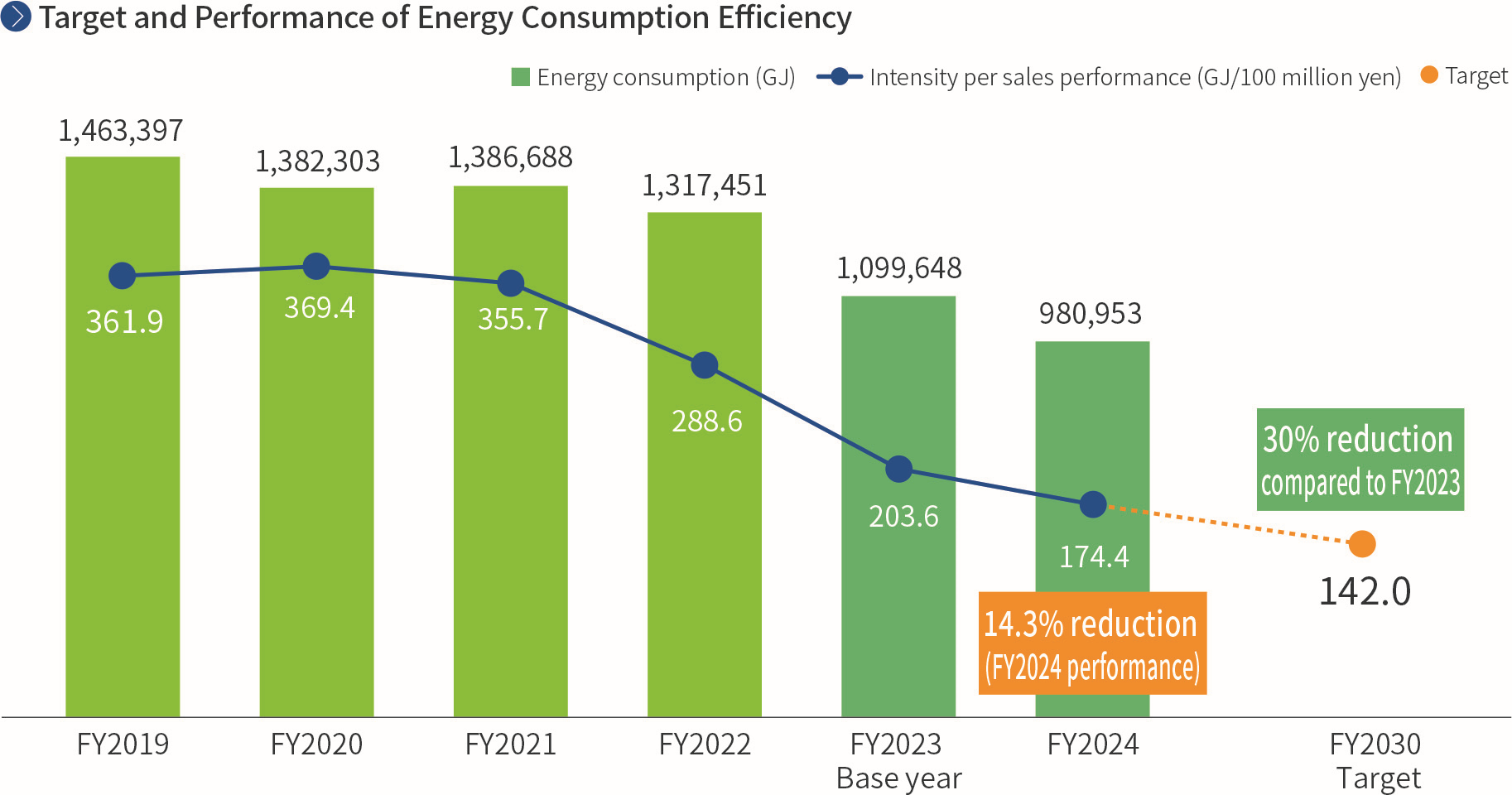
Yokogawa is planning to expand facilities to support business growth toward fiscal year 2030, and anticipates a significant increase in energy consumption. Meanwhile, in response to rising global expectations for improved energy efficiency and increasing energy procurements costs, we need to continue generating greater value with less energy. To drive efficiency improvements across the Group, Yokogawa has introduced an energy efficiency metric and set a target to reduce energy consumption (intensity per sales)*4 by 30% by fiscal year 2030, compared to fiscal year 2023. In fiscal year 2024, we achieved 14.3% reduction in energy consumption (intensity per sales) compared to the previous fiscal year, and reduced annual energy costs by 100 million yen by implementing energy reduction measures across the Group company. We will continue to pursue both “energy efficiency improvement” and “value expansion” at the same time as part of our initiatives to achieve the target.
*4 Calculated based on energy consumption converted to primary energy and consolidated sales
| Metric | Energy consumption (Intensity per sales, base year FY2023) |
|---|---|
| Target | 30% reduction (FY2030 target) |
| Perfomance | 14.3% reduction (FY2024) |
(2)Create and (3)Replace : Creation and Procurement of Power from Renewable Energy Sources
Actual Consumption of Power from Renewable Energy Sources
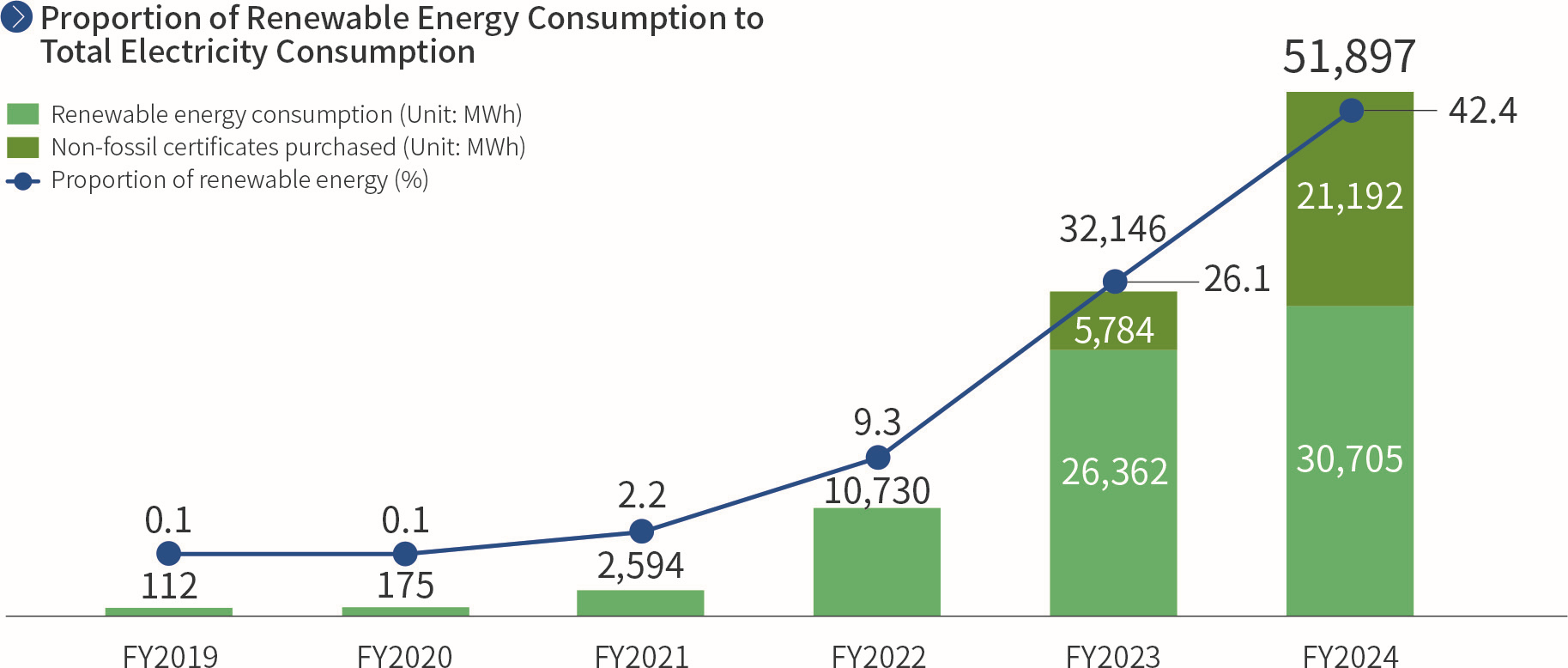
As of the end of March 2025, renewable energy-sourced power is used across 36 sites in 21 countries: Germany, Netherlands, the United Kingdom, Belgium, Spain, Italy, China, South Korea, Thailand, Singapore, Indonesia, Malaysia, Australia, Brazil, India, Bahrain, Saudi Arabia, the United Arab Emirates, the Republic of South Africa, Oman, and Japan. The proportion of group-wide electricity consumption from renewable energy sources increased dramatically to 42% in fiscal year 2024.
Implementation of Internal Carbon Pricing(ICP)
Since fiscal year 2022, we began operating the ICP to advance economically rational GHG emissions reduction initiatives. We make decisions based on the impact of GHG emissions by incorporating the expected changes in emissions into our financial evaluation when planning GHG and energy reduction measures. We set a carbon price (ICP type: implicit price; price: 2,000 yen/t-CO2) across the entire Group to promote investments in renewable electricity procurement that significantly contribute to reducing Scope 2 emissions. The ICP policy and carbon price are approved after deliberation by the Sustainability Committee. We will progressively apply the ICP by setting carbon prices for Scope 1, Scope 3, and business planning processes such as capital investment decisions.
Incorporation into the Compensation and Target Management Systems
The targets for reducing Scope 1 and 2 emissions and improving energy consumption efficiency are incorporated as key indicators within the compensation system for Vice President & Executive Officers. Through the performance management process, these targets are cascaded from Executive Officers to relevant organizational members and drive coordinated efforts across the Group to achieve the goals.
Please see the Executive Compensation here
Scope3
Reduction Targets and Performance
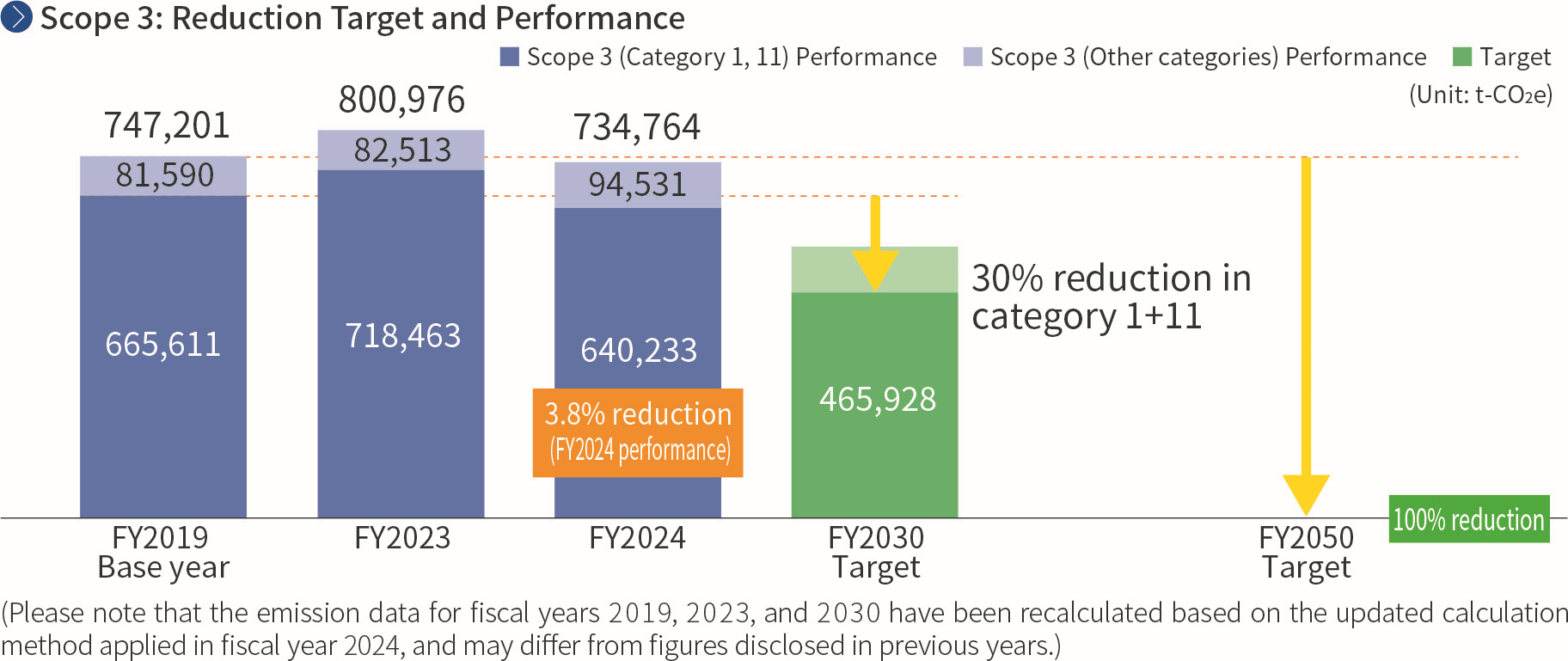
Yokogawa aims to reduce the combined emissions from purchased goods and services (Category 1) and use of sold products (Category 11) by 30% by fiscal year 2030 compared to fiscal year 2019 level. We also target to reduce 100% in all categories of Scope 3 by 2050.
In fiscal year 2024, we achieved 3.8% reduction in total emissions from Category 1 and Category 11 compared to the baseline year of fiscal year 2019. This represents 10.9% decrease from the previous fiscal year. Yokogawa has focused on collaborative initiatives with suppliers to mitigate the increase in emissions. From fiscal year 2024, we have updated the methodology for calculating Category 1 emissions. The scope now covers resale products, and actual emissions data (primary data) obtained directly from some major suppliers has been incorporated into the Group’s overall emissions accounting.
| Metric |
Scope 3 GHG emissions (Base year: FY2019) |
|---|---|
| Target | 100% reduction (FY2050 target) 30% reduction (FY2030 target)*5 |
| Perfomance | 3.8% reduction (FY2024)*5 *5Emissions from Category 1+11 |
Initiatives to Reduce GHG Emissions
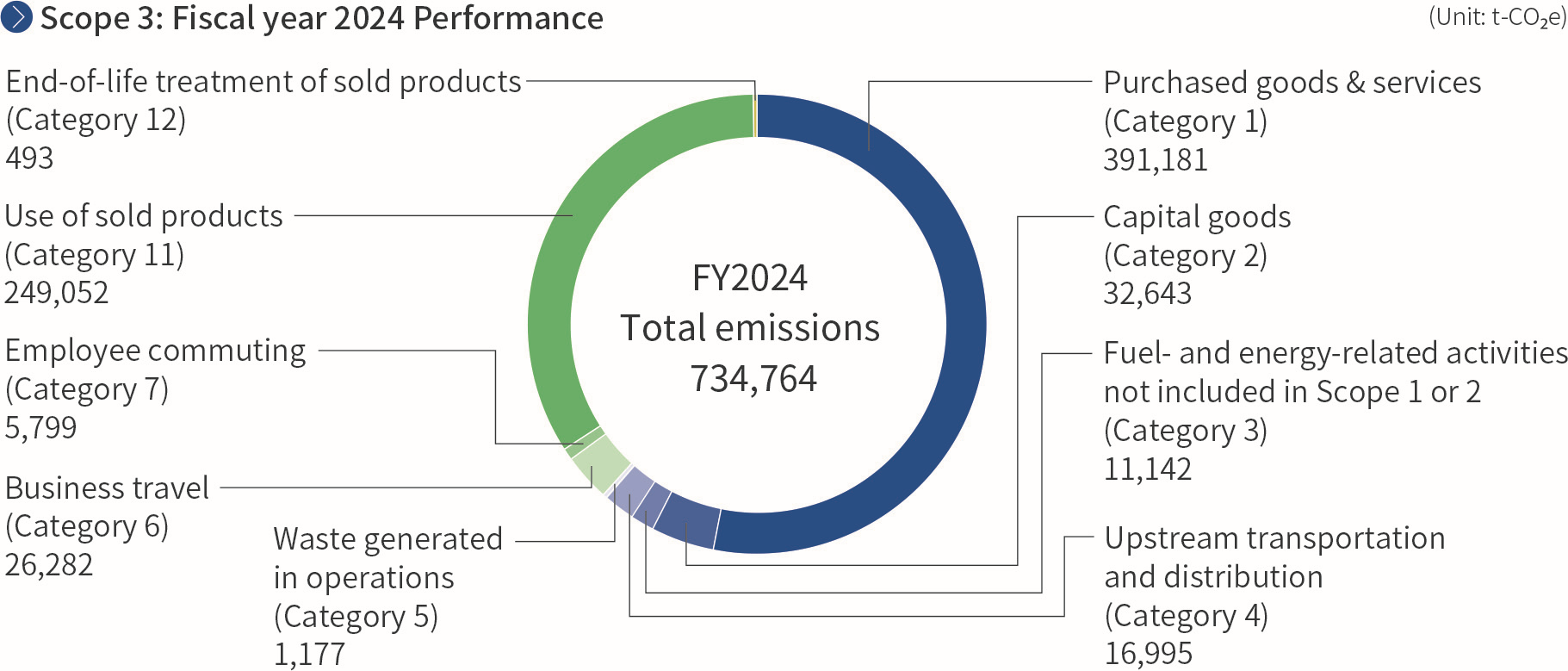
At Yokogawa, approximately 87% of overall Scope 3 GHG emissions are from Category 1 and Category 11, addressing these areas is essential to achieving carbon neutrality goals. To achieve our fiscal year 2050 targets, we are advancing initiatives to reduce GHG emissions through collaborate with suppliers, reduce the power consumption of existing products, and develop low-emission products and solutions. Since Scope 3 reductions are difficult to achieve in a short term, we will formulate a roadmap and work with a long-term perspective to achieve our targets.
Purchased goods & services (Category 1)
Until fiscal year 2023, Category 1 emissions were comprehensively calculated by multiplying procurement spending by emission factors published in external databases (so-called secondary data). However, this approach had the limitation that greenhouse gas (GHG) emission reduction efforts made by suppliers were not adequately reflected in the calculation results.
To gain a more accurate understanding of actual emissions and to promote more concrete dialogue and engagement toward emissions reduction, Yokogawa introduced a hybrid calculation method from fiscal year 2024 onward that incorporates GHG emissions data calculated by suppliers themselves (primary data).
Going forward, Yokogawa will gradually expand the use of primary data and work together with suppliers to reduce emissions across the entire supply chain.
Use of sold products (Category 11)
Yokogawa promotes energy-saving designs in both redesigns of existing products and the development of new products. In addition, we have improved the accuracy of calculations for the amount of energy used by products for Category 11 emissions by using actual operational energy consumption instead of maximum power consumption values. In fiscal year 2024, Yokogawa prioritized the redesign of products with large emissions in Category 11. The measures under consideration include the use of lower-power components, weight optimization, and the addition of energy-saving modes. The “OpreX Battery Web Gauge ES-5” launched in January 2025, features newly designed frame structure that significantly reduces weight and total energy consumption to less than half that of conventional models.
Battery Web Gauge ES-5 | Yokogawa Electric Corporation
Information Disclosure Based on TCFD Recommendations
In February 2019, Yokogawa expressed its support for the recommendations of the Task Force on Climate-related Financial Disclosures (TCFD), which was established by the Financial Stability Board (FSB) to promote the disclosure of climate-related financial information. Yokogawa makes disclosures based on the TCFD framework.
Information Disclosure Based on TCFD Recommendations | Yokogawa Electric Corporation