
Executive Summary
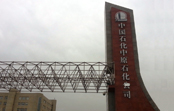
Sinopec Zhongyuan Petrochemical, China
Coal is an important resource of energy in China, and the conversion of coal to a wide range of chemicals has become increasingly important in recent years. Sinopec Zhongyuan Petrochemical Co., Ltd. (hereinafter referred to as "ZPC") is a large joint venture between China Petroleum & Chemical Corporation (hereinafter referred to as "Sinopec") and the government of Henan province. With significant support from its parent organizations, ZPC has built a new 600,000 t/y methanol to olefins (MTO) plant and a 100,000 t/y polypropylene plant, along with all the necessary utility and auxiliary facilities, in Puyang. These plants became operational in October 2011 and are of great strategic significance to the development of Sinopec's coal-chemical business.
An MTO plant uses catalysts to convert coal-derived methanol into olefins such as ethylene and propylene. This MTO project uses Sinopec's proprietary S-MTO process, which is characterized by high olefin selectivity, high methanol conversion, and low catalyst consumption. To ensure safe and stable operations at this MTO plant, which handles materials that are highly flammable and explosive, delicate process control is required.
For this large-scale greenfield MTO plant, ZPC and Sinopec Engineering Inc. (an engineering, procurement and construction company referred to henceforth as "SEI") selected Yokogawa China Co., Ltd. as the main control system supplier. For this project, Yokogawa China delivered the CENTUM CS 3000 process control system (PCS) and the Plant Resource Manager (PRM) software package for plant asset management (PAM).

The Puyang MTO plant
The Challenges and the Solutions
1. Quick implementation
Because the control logic for the S-MTO process is so complicated, the engineering work for this project was very complex and time consuming. Yokogawa engineers made good use of their deep knowledge and experience in the ethylene and coal chemical fields to expedite work on this project and deliver ahead of schedule very high quality work, which helped to ensure a successful and efficient commissioning and startup. ZPC, SEI, and Yokogawa all took a team approach and worked closely from start to end. Thanks to their good synergy, they were able to complete this project ahead of schedule.
2. Safe and stable operation
To ensure safety at these plants, ZPC needed to closely monitor and control its processes, especially those involving chemical reactions and heat exchange. For this S-MTO project, Yokogawa's PCS was integrated with a third-party safety instrument system, compressor control system, and online process analyzer system via Modbus, which allows operators at the human machine interface (HMI) stations in the central control room to monitor and control operations throughout the plant, ensuring that they can respond quickly when faced with an abnormal situation. Plant safety and stability are thus assured.

The MTO plant's central control room
3. Efficient maintenance
The MTO plant has a large number of HART-enabled pressure transmitters, flowmeters, valves, and other devices from different suppliers. Having real-time diagnostics for these devices helps operators keep close track of their status and identify maintenance issues before a device fails. For central management of these devices, they are all integrated with the Yokogawa PCS via the PAM software package. Using the HART protocol and the PCS network, the PAM system gathers all the device data and diagnostic information into a single database. If a device problem is identified, engineers are able to check the device in time and clarify the cause. This centralized asset management minimizes trips to the field and ensures a more proactive maintenance approach. During plant startup, this system also helped the engineers check all loops.
Customer Satisfaction
The Director of the Instruments Department at ZPC points out the following three factors about this project: "First, Yokogawa's CENTUM CS 3000 has excellent reliability and stability. We particularly appreciate its online maintenance capability. Configuration changes are immediately shown on the HMI without interrupting the control function. This is important in completing startup in a short time and improving and optimizing process control. Second, this is an S-MTO pilot project using Sinopec's proprietary technology. During control engineering, Yokogawa's engineers showed that they have a deep understanding of control solutions and a lot of experience in dealing with complex problems. They made good use of their know-how from the petrochemical industry and, working together with engineers from ZPC and SEI, were able in a very short time to produce high quality engineering. Third, ZPC's personnel have considerable experience operating Yokogawa's CENTUM CS 3000 system, enabling the project partners to perform to the best of their abilities during the project implementation phase. At the same time, Yokogawa's engineers were fully involved in the control engineering, FAT, SAT, and startup. Above all, the key to the success of this short-term project was the good cooperation and teamwork of ZPC, SEI, and Yokogawa."
相關業種
-
大宗化學與石化
無論是生產石化品、無機化學品或中間體,化工企業都面臨成本與利潤壓力,需要在安全、符合法規的前提下,及時且高效率地交付產品。同時,化工企業也必須因應原料與能源價格波動,並提供最具利潤的產品組合。
Yokogawa 長期滿足全球大宗化學市場的自動化需求,並被公認為該市場的領導者。憑藉產品、解決方案及產業專業知識,Yokogawa 深入了解市場與製程需求,並將與您合作,提供可靠且具成本效益的全生命周期解決方案。
-
化學工廠
化學工廠依賴連續生產與批次生產流程,兩者對控制系統的需求各不相同。連續流程需要具備高穩定性與可靠性的控制系統,以避免故障導致生產線停機;而批次流程則強調控制系統的彈性,能靈活調整配方、作業程序等。這兩種類型的系統都需能管理產品的可用品質歷史,並執行非常規操作。憑藉完整的產品組合、經驗豐富的系統工程師,以及全球銷售與服務網絡,Yokogawa 能為每一個工廠製程提供解決方案。
相關產品&解決方案
-
分散式控制系統(DCS)
我們的分散式控制系統 (DCS) 可自動化和控制製程,提高績效。 已經超過 10,000 家工廠利用Yokogawa DCS 實現生產目標。
-
工廠資源管理系統 (PRM)
設備需要經過適當管理才能實現高可靠性和穩定的工廠運營。 PRM能幫助提升維護計劃的品質,並在整個工廠生命週期內將維護成本最佳化。