Offshore exploration and production requires maximum uptime under harsh conditions. Manned and unmanned facilities need reliable integrated control and safety systems (ICSS) with advanced remote monitoring capabilities. Yokogawa has state-of-the-art technology and extensive experience in executing offshore projects of all sizes and automation levels of complexity.
In addition, operators are increasingly seeking digital technologies that improve operational efficiency, reduce offshore manning requirements, enhance safety, and support sustainable operations. Yokogawa combines automation, digitalization, wireless technologies, AI, robotics, cybersecurity, lifecycle services, etc, to help customers maximize asset value throughout the entire facility lifecycle.

Challenges
Customer Challenge
System Integration, Digitalization and Workforce Optimization
Our Solutions
As a supplier of integrated control and safety systems (ICSS) for FPSO, Yokogawa delivers solutions, including CENTUM distributed control system and ProSafe-RS safety instrumented system for hull and topside control, subsea control and turret mooring systems with interface solutions and the Plant Resource Manager (PRM) package for instrument management. These are integrated with third-party systems such as machine monitoring systems, process data servers and operator training and maintenance systems.
ICSS performs the monitoring and control of processing facilities, including associated topside facilities, regulatory control and on/off controls. It also generates production data reports, interfaces with other subsystems and human machine interface (HMI) consoles, archives, records and transmits data to other interface systems and management reporting systems.
ICSS enables centralized plant supervision and management of all control and safety functions.
Customer Benefits
Reliable & Efficient Operation
Enabling Technology
Distributed Control System (DCS)
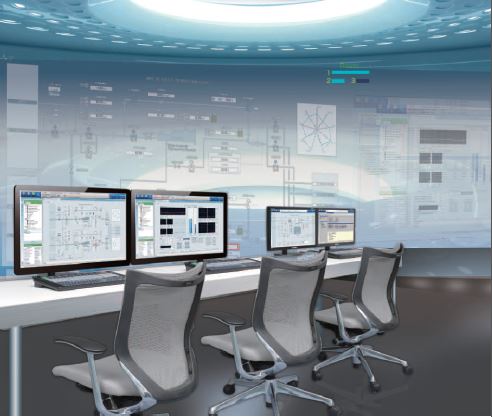
CENTUM is Yokogawa's distributed control system (DCS). CENTUM has a more intuitive human machine interface and more powerful field control stations capable of processing data faster and more reliably. Thanks to features such as a pair and spare CPU configuration, CENTUM achieves 99.99999% (seven-9s) availability.
Safety Instrumented System (SIS)
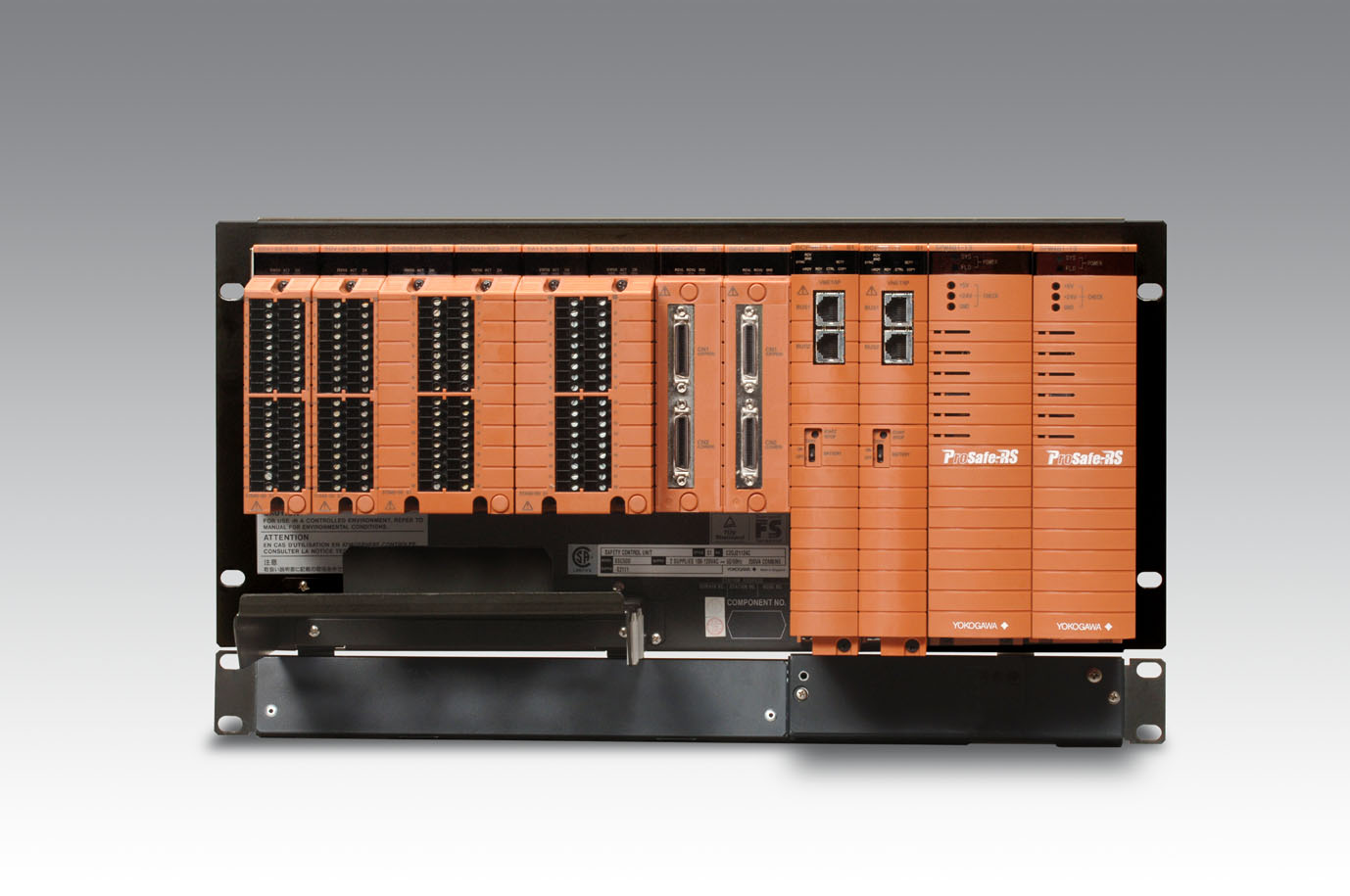
Yokogawa puts an end to DCS-SIS incompatibility with ProSafe-RS, the world’s first truly integrated "safety PLC" for the process industries.
Customer Challenge
System Integration by Flexible and Modular Approach
Our Solutions
Yokogawa ICSS architecture and solution for FLNG utilize the technology in a flexible and modular approach. We are using our distributed ICSS architecture to its full extent when designing a Total Integrated Modular System to minimize risk during design, installation and commissioning up to “The first LNG”.
Autonomous control and safety/fire & gas systems for different process modules are ensured by utilizing dedicated network segments and controllers, as well as distributed I/O modules for each autonomous system.
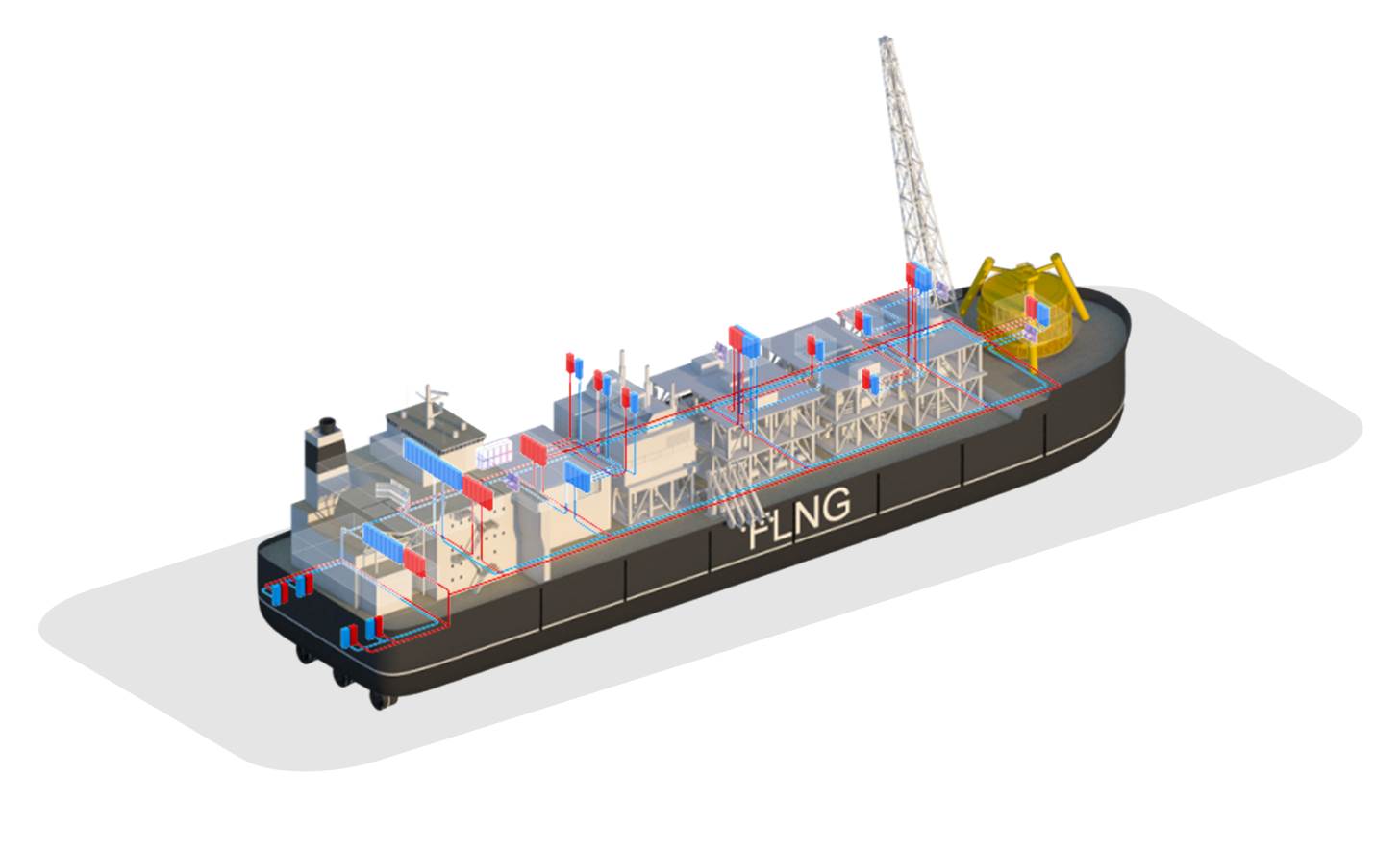
In large modules, dedicated operator stations supporting each segment are installed in the Local Equipment Room (LER).
Our concept for implementing an ICSS onboard an FLNG facility, is based on a modular design. Cost-effective and time-saving execution can be carried out in multiple locations, with systems delivered to each module on schedule. Each module can be tested locally before being shipped to the assembly yard for final integration.
The Hull ICSS can be implemented separately from the topside process modules and put into operation in due time before installation of topside. This is also applicable to Subsea ICSS, for which Yokogawa is able to integrate the Subsea Master Control in the same manner.
Customer Benefits
Minimize Risk During Design, Installation and Commissioning
Enabling Technology
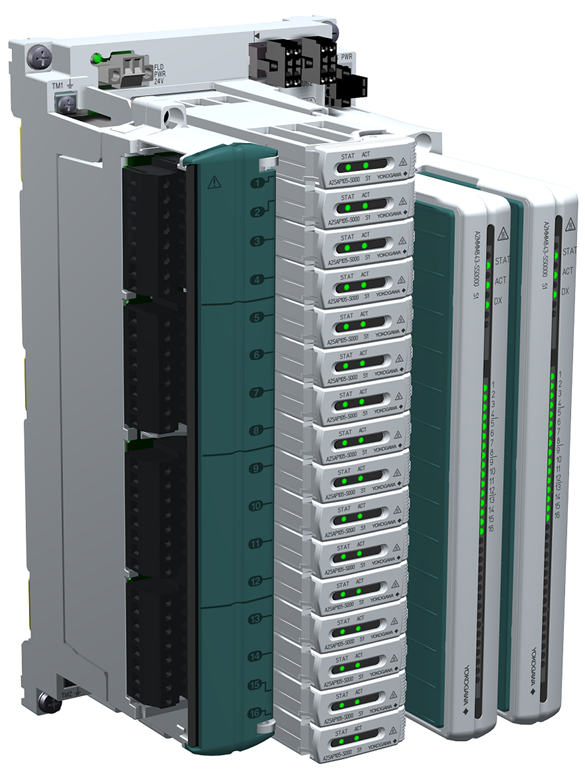
Yokogawa's ICSS with N-IO (Network I/O), the next-generation smart configurable I/O, allows flexible I/O assignments.
Combined with the FieldMate validator, our commissioning tool, this enables significantly faster project completion and reduced costs without compromising on quality.
Details
Floating Production Storage and Offloading (FPSO)
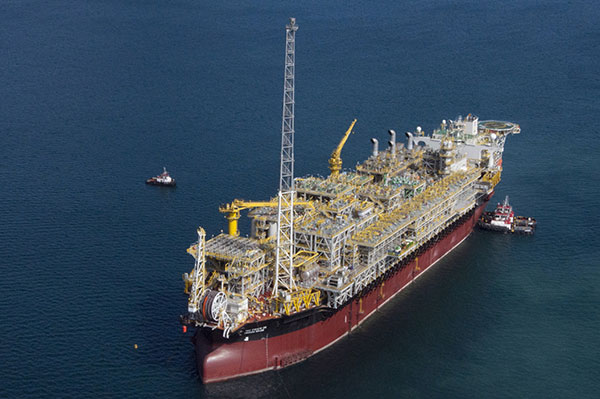
Photo courtesy of MODEC, Inc.
A Floating Production, Storage, and Offloading (FPSO) unit is a floating offshore production facility that stores both processing equipment and storage for produced hydrocarbons. Hydrocarbons are produced by platforms or subsea templates, and then passed to the FPSO facility. The FPSO facility then processes the oil and stores it until it can be transported via a pipeline or oil tanker. Floating Production Storage and Offloading (FPSO) units are used by oil companies make it economically feasible to produce oil in remote areas and in deeper water.
Floating LNG (FLNG)
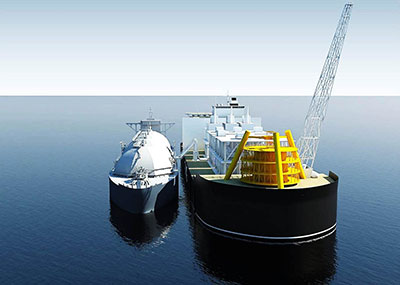
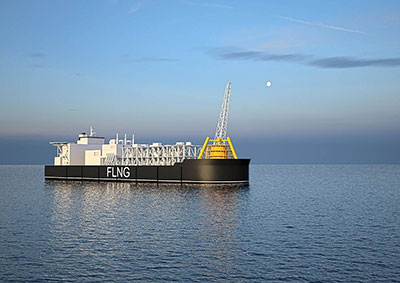
Yokogawa has more than 30 Years’ experience in executing LNG projects, and has acquired significant engineering knowledge through the whole chain. Combining Yokogawa’s knowledge from Liquefaction, Regasification and LNG transportation, together with the rich experience in offshore production facilities, Yokogawa provides unique know how and capabilities in executing global FLNG projects throughout the lifetime of the facility.
Floating Storage and Regasification Unit (FSRU)
Years of study have shown that large floating production, storage, and off-loading (FPSO) vessels are increasingly feasible solutions for LNG projects. Even though offshore and onshore natural gas liquefaction and regasification plants have different requirements, both must rely on proven liquefaction and regasification processes. Ballast and cargo loading/unloading control are also very similar on LNG carriers. Based on its rich LNG liquefaction, regasification, and carrier experience and its expertise in various kinds of floating production systems, Yokogawa is confident in its ability to provide a full range of production management, asset management, safety management, power management, compressor control solutions, and High-integrity pressure protection system (HIPPS) for floating LNG (FLNG) and floating storage and regasification unit (FSRU) projects.
Resources

- Completion of First FPSO Project for Prosafe Production Services Pte Ltd
- Integrated Control & Safety System (ICSS) makes possible centralised plant supervision and management of all control and safety functions on this FPSO.

- Yokogawa's integrated solution contributed to reliable and efficient operation.
- All the instrument information is fully integrated with the instrument management system.

- Yokogawa provides CENTUM VP subsea and topsides integrated control systems to Stones subsea wells in the Gulf of Mexico.
- The high reliable CENTUM VP system was ideally suited for the world's deepest subsea facility.

STARDOM field control node (FCN) autonomous controllers allow both Modbus master and slave functions to run simultaneously.

Operators must receive diagnostic information before a line block leads to a malfunction. Yokogawa provides predictive diagnostics based on trend analysis of the blocking factor, which improves maintenance efficiency and reduces maintenance costs.

One of the most common applications for differential pressure transmitters is flow measurement. DPharp differential pressure transmitters have some unique signal conditioning features to eliminate instability at low flow rates.

The paperless recorder DX series instruments allow you to determine temperature and humidity, and manage the results as manufacturing and quality data at a reasonable cost with a simple configuration.

Yokogawa provides controller embedded flow calculation library based on AGA (American Gas Association) reports.

Reverse osmosis (RO) is a separation process that uses pressure to force a solution through a membrane that retains the solute on one side and allows the pure solvent to pass to the other side. More formally, it is the process of forcing a solvent from a region of high solute concentration through a membrane to a region of low solute concentration by applying a pressure in excess of the osmotic pressure.


- Effeciently controls the inlet valve and blow-off valve when the compressor starts and stops.
- During steady operation, controls the inlet valve so that the amount of discharged compressed air becomes constant (flow control)
- Surging: Load decreases, the amount of discharge flow and pressure drop, and a limit is exceeded, possibly destroying the compressor.

Industrial Combustion sources such as thermal cracking furnaces and, process heaters play a critical role in the process industry.

Recently, several ARC Advisory Group analysts and management team members had a chance to sit down with the new Yokogawa President and COO, Mr. Takashi Nishijima, and several other top Yokogawa executives to discuss the company's burgeoning presence in the worldwide upstream and midstream oil & gas industry.

Alarm management is not just a project that has a start and end date; it's a continuous cycle. Once the alarm system has been reviewed and improvements have been identified, we must check that controls are in place to ensure the alarm system remains functional. The key is to ensure that the system is continuously monitored and any changes are fully documented. There are seven key steps for alarm management. Rationalization is one of those critical steps.

Tuning PID controllers can seem a mystery. Parameters that provide effective control over a process one day fail to do so the next. The stability and responsiveness of a process seem to be at complete odds with each other. And controller equations include subtle differences that can baffle even the most experienced practitioners.

The world of process automation is governed by procedures. While we like to refer to the process industries as being largely "continuous", this could not be further from the truth. Process manufacturing is constantly in flux.
Downloads
Brochures
Looking for more information on our people, technology and solutions?
Contact Us