- Broad Coverage, Deep Insight Using a 4-Channel Wireless Vibration Sensor -
1. Introduction: Background
In recent years, equipment aging has become a growing concern in plants and manufacturing environments, as an increasing amount of equipment remains in service for extended periods. Rotating equipment, such as pumps, fans, and compressors, is typically operated over long periods, resulting in a higher risk of failure due to deterioration over time. Against this background, condition monitoring and maintenance technologies are becoming increasingly important to support stable operation and help extend equipment life.
Conventional maintenance practices have mainly relied on time-based periodic inspections and scheduled maintenance shutdowns, as well as visual inspections and operator rounds conducted by field personnel. In addition, single-point vibration measurements using portable devices are commonly applied. In these approaches, equipment condition is assessed based on data collected at fixed intervals while checking operating conditions.
However, such approaches make it difficult to continuously monitor equipment condition. As a result, signs of anomalies may not be identified between inspection intervals, and abnormalities are often recognized only after they become apparent. In practice, disassembly inspections and component replacement involving equipment shutdowns are carried out when necessary.
Against this background, the limitations of conventional maintenance approaches for rotating equipment have become increasingly apparent. The following section summarizes these issues.
2. Issues
In conventional maintenance approaches, measurements are typically performed only during inspections, making it difficult to continuously understand the condition of equipment. As a result, signs of anomalies that develop between inspections may not be captured and may continue to progress until the next inspection. In some cases, equipment condition is only recognized after measurable changes—such as increased vibration levels, abnormal noise, or operational impact—become evident.
For rotating equipment in particular, bearing-related issues are among the typical causes of failure.
In the early stages, signs of anomalies associated with bearing damage may appear as very small changes in vibration. If such changes are not captured at the appropriate time, there is a higher risk that they may be overlooked as they continue to develop.
Furthermore, conventional measurement methods are typically applied at limited points, making it difficult to obtain a comprehensive understanding of overall equipment condition or to narrow down potential causes of abnormalities. As a result, identifying the cause may take time. In addition, condition assessment may rely on the experience and knowledge of operators, which can lead to variations in judgment.
To confirm abnormal conditions, disassembly inspections and component replacements that require equipment shutdown may be carried out. Such actions can result in production losses and may affect maintenance planning.
In addition, even when continuous monitoring is considered, installation barriers such as wiring work and activities in elevated or hazardous locations can limit practical implementation and make it difficult to expand monitoring coverage.
3. Challenges
Based on the issues described above, the following challenges can be identified in condition monitoring of rotating equipment:
- Continuous visibility of equipment condition without relying on inspection intervals (reducing the risk of missed changes)
- Early identification of signs of anomalies in rotating equipment, such as those associated with bearing-related issues (capturing subtle variations)
- Monitoring multiple points across equipment to support identification of abnormal locations and facilitate quicker identification of potential causes
- Understanding equipment condition during operation without relying on equipment shutdown or disassembly inspections
- Reducing installation and implementation burdens by minimizing wiring work and hazardous or high-elevation activities
- Supporting data-driven decision-making to reduce reliance on individual experience and to minimize variation in judgment
In response to these challenges, this paper proposes a monitoring and diagnostic approach that achieves both broad coverage of equipment and deeper insight into equipment condition.
4. Solution
The approach proposed in this paper is intended to achieve both broad coverage of equipment condition and deeper diagnostic insight.
“Broad coverage” refers to expanding monitoring coverage to include equipment and measurement points that were previously difficult to monitor, including locations where sensor installation has traditionally been challenging, thereby providing a broader view of condition changes across equipment.
In contrast, “deeper diagnostic insight” refers to the use of vibration waveforms and various condition indicators to support detailed analysis of the nature of abnormalities and their possible causes.
To realize this approach, this paper proposes a multi-point monitoring technique using a 4-channel wireless vibration sensor. By monitoring multiple measurement points on equipment, the technique expands monitoring coverage to include locations that have traditionally been difficult to instrument. In addition, the collected data can be used to support more detailed analysis of equipment condition and signs of anomalies.
Yokogawa has long applied an integrated wireless vibration sensor (XS770A) for condition monitoring of rotating equipment in industrial facilities. The sensor can be installed easily and continues to be widely used as a practical tool for routine condition monitoring and basic equipment assessment.
The technology proposed in this paper builds on knowledge gained through such field applications and aims to enhance monitoring capabilities according to monitoring objectives and diagnostic requirements. Rather than replacing conventional integrated wireless vibration sensors, it extends their application by adding multi-point monitoring and detailed diagnostic capabilities, thereby expanding monitoring coverage and providing deeper insight into equipment condition.
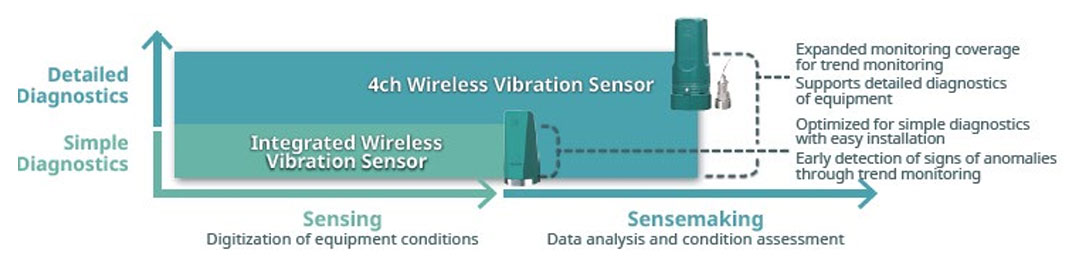
Figure 1. Positioning of Wireless Vibration Sensors by Application
5. Technical Approach
This section describes the specific means used to achieve the concepts of “broad coverage” and “deeper diagnostic insight” introduced in the previous section.
The proposed solution consists of a 4-channel wireless vibration sensor and a host system. Together, they enable continuous monitoring of equipment condition at multiple points and provide diagnostic capabilities based on the collected data.
5.1 Solution Configuration
The solution consists of the following components and a host system.
(1) 4-Channel Wireless Vibration Sensor
The 4-channel wireless vibration sensor consists of a vibration measurement module (XS540), vibration pickups (XS01VT), and a wireless communication module (XS110A). It measures vibration and temperature at multiple points on equipment.
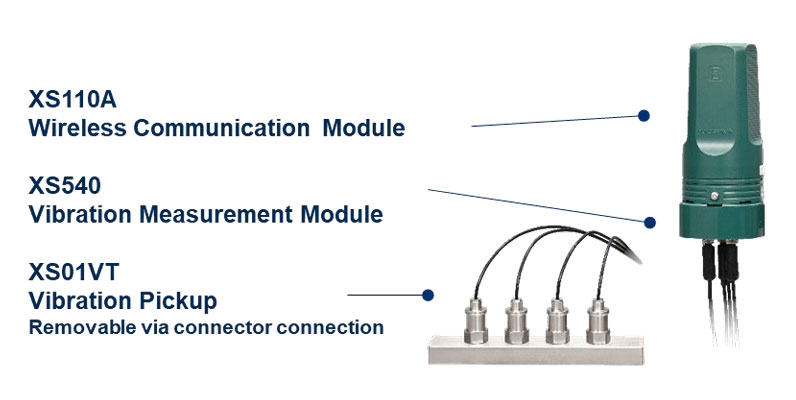
Figure 2. 4-Channel Wireless Vibration Sensor
(2) Host System
The host system collects, stores, and monitors the acquired data. It can be used for trend monitoring, abnormality detection, and diagnostic analysis.
The system can be flexibly configured according to application requirements and may be deployed either on-premises or in a cloud environment.
By utilizing LoRaWAN wireless communication, the solution eliminates the need for communication wiring during sensor installation, facilitating deployment on existing equipment. As a result, monitoring coverage can be expanded to equipment that includes elevated or hazardous locations while reducing installation effort.
The collected data can be used for trend monitoring to observe changes over time, automatic detection of abnormal conditions, and detailed diagnostic analysis based on waveform data.
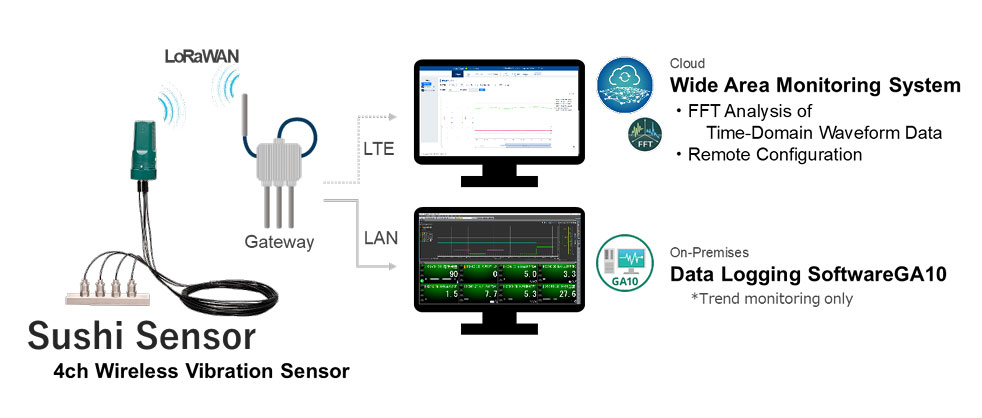
Figure 3. Wireless Vibration Monitoring Solution Configuration
5.2 Features
The proposed solution provides the following features to support a comprehensive understanding of rotating equipment condition.
(1) Expanded Measurement Coverage (Pickup Configuration)
By utilizing vibration pickups (XS01VT), the solution can be applied to locations where installation of conventional integrated wireless vibration sensors has traditionally been difficult, such as confined spaces and areas surrounded by metal structures.
This expands monitoring coverage by enabling application to equipment that has traditionally been difficult to monitor.
(2) Multi-Channel Monitoring (4 Channels)
A single 4-channel wireless vibration sensor can measure vibration and temperature at up to four locations, enabling multiple points on equipment to be monitored under the same operating conditions.
This facilitates comparison of conditions between measurement points and supports identification of abnormal locations as well as analysis of potential causes.
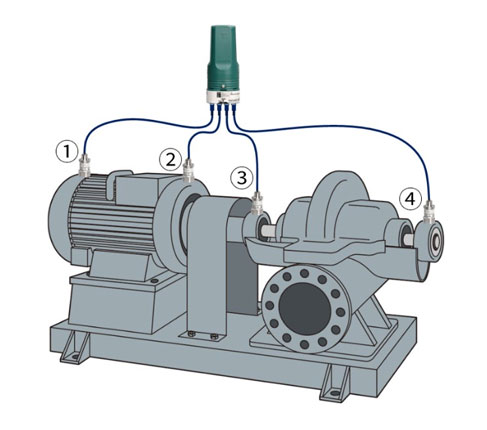
Figure 4. Example Installation of 4-Channel Vibration Pickups
(3) Continuous Monitoring (Wireless)
By acquiring data periodically through wireless communication, the solution enables continuous monitoring of equipment condition without relying solely on scheduled inspection intervals.
In addition, long-life battery operation helps reduce sensor maintenance requirements after installation.
(4) Detailed Diagnostic Analysis (Deep Insight)
In addition to acceleration and velocity vibration values, the solution can acquire time-domain waveform data and supports detailed diagnostic analysis using techniques such as FFT analysis.
Figure 5 shows examples of a time-domain waveform, its corresponding frequency spectrum, and a waterfall waveform.
Furthermore, Crest Factor (CF), an indicator sensitive to impact events, can help identify impacts caused by damage developing during the early stages of bearing degradation.
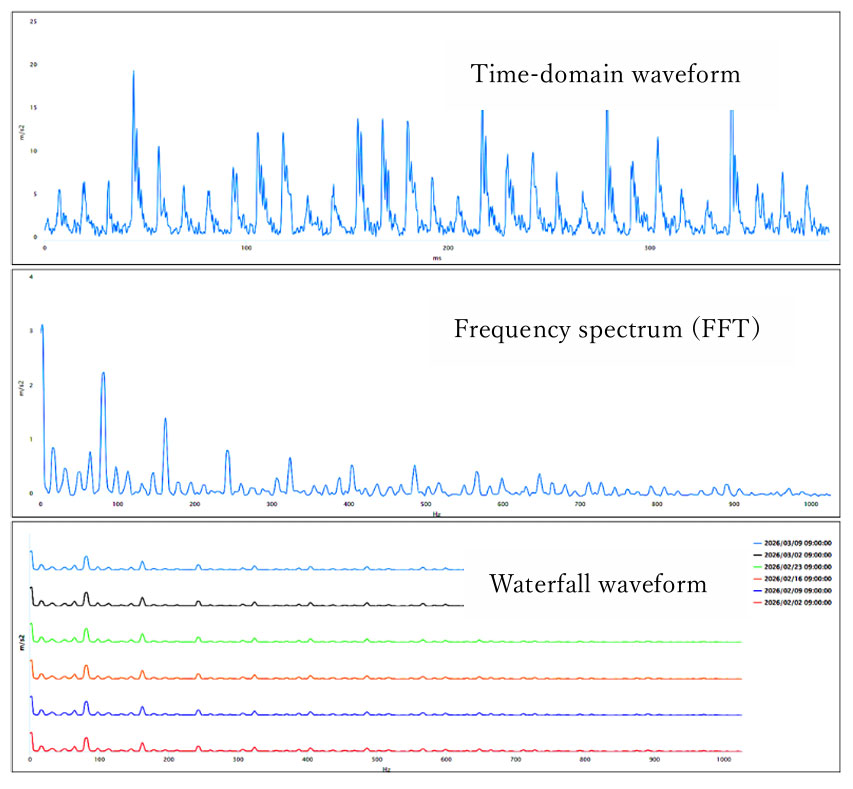
Figure 5. Time-domain Waveform, Frequency Spectrum, and Waterfall Waveform
(5) Support for Narrowing Down Abnormal Locations Through Multi-Point Data Comparison
By comparing data collected from multiple measurement points, differences in vibration levels and condition trends can be identified.
This helps narrow down locations where abnormalities may be occurring and supports the identification of potential causes.
6. Benefits
The adoption of the proposed solution can provide the following benefits for maintenance of rotating equipment.
6.1 Extended Equipment Life and Prevention of Unexpected Failures
By enabling earlier detection of signs of anomalies associated with rotating elements such as bearings, appropriate maintenance actions can be taken before significant damage develops.
This can help avoid unexpected equipment shutdowns and contribute to long-term stable operation and extended equipment life.
6.2 Improved Maintenance Efficiency
In conventional operator rounds, equipment must be accessed periodically to confirm its condition.
By enabling continuous monitoring, the proposed solution can reduce the frequency of operator rounds.
This can help reduce maintenance workload and also contribute to reducing inspection activities in elevated or hazardous locations.
6.3 Faster Identification of Failure Causes
By comparing and analyzing vibration data collected from multiple measurement points, it becomes possible to obtain a more comprehensive understanding of equipment behavior.
This can support faster identification of abnormal locations and more efficient analysis of potential causes, which can be difficult to achieve using conventional single-point measurements.
6.4 Enhanced Utilization of Equipment Data
Collected data can be utilized for trend monitoring, abnormality detection, and waveform analysis, providing greater visibility into equipment condition and supporting the sharing of diagnostic evidence.
This can help reduce variations in maintenance decisions that may arise from differences in individual experience and contribute to more standardized and data-driven maintenance practices.
6.5 Reduced Installation and Operational Burden
By utilizing wireless communication, the solution eliminates the need for communication wiring during sensor installation, reducing installation effort compared with conventional wired monitoring systems.
In addition, the solution can be retrofitted to existing equipment with relative ease, allowing monitoring coverage to be expanded while minimizing operational impact.
Furthermore, the pickup-based configuration enables sensor installation in locations where conventional sensors have traditionally been difficult to deploy, supporting more comprehensive monitoring across equipment.
Example Application
For example, in a pumping system, vibration monitoring may traditionally be performed through monthly operator rounds. By implementing the proposed solution, continuous monitoring becomes possible.
As a result, signs of anomalies associated with bearing degradation may be identified at an earlier stage, supporting planned maintenance activities and helping reduce the risk of unexpected failures.
In addition, multi-point monitoring provides a broader view of vibration behavior throughout the equipment, supporting more efficient identification of abnormal locations and analysis of potential causes.
Furthermore, the wireless architecture eliminates the need for wiring work and can reduce inspection activities in elevated locations, helping to reduce overall maintenance workload.
7. Future Challenges
The multi-point monitoring technique proposed in this paper enhances condition monitoring and supports more advanced predictive maintenance practices.
At the same time, several challenges remain to be addressed to further expand practical adoption and utilization of the technology.
7.1 Advancement of Diagnostic Technologies
Current diagnostic approaches primarily rely on the analysis of vibration values and time-domain waveform data.
In the future, greater automation of diagnostic processes through the use of anomaly detection algorithms and AI-based technologies is expected.
In addition, establishing standardized criteria for anomaly assessment that can be applied across different types of equipment and applications remains an important challenge.
7.2 Advancement of Data Utilization and Processing
As continuous monitoring increases the volume of collected data, efficient data management and analytical methodologies become increasingly important.
In particular, detailed diagnostic analysis based on time-domain waveform data often requires specialized expertise. Developing mechanisms that enable such analysis to be utilized more easily and effectively remains a key challenge.
7.3 System Integration and Operational Deployment
To further improve overall equipment maintenance efficiency, integration with existing systems such as CMMS (Computerized Maintenance Management Systems) and SCADA (Supervisory Control and Data Acquisition systems) is important.
In addition, successful field deployment requires the establishment of operational procedures, appropriate training and organizational support structures.
7.4 Further Expansion of Field Applications
To maximize the value of the proposed technology, it is important to establish application methodologies that take into account the characteristics and operating conditions of individual equipment.
In particular, developing methods for quantitatively evaluating implementation benefits and accumulating practical application examples are important challenges for broader adoption in the future.
8. Conclusion
This paper proposed a multi-point monitoring technique using a 4-channel wireless vibration sensor to support more advanced maintenance practices for aging rotating equipment.
The proposed approach enables monitoring of equipment behavior from multiple measurement points, providing broader visibility of equipment condition than conventional single-point and intermittent monitoring methods. In addition, detailed diagnostic analysis using time-domain waveform data can support earlier identification of signs of anomalies and more efficient analysis of potential causes.
Furthermore, the adoption of wireless communication reduces installation and operational burden and facilitates application to existing equipment, providing a practical approach to condition monitoring.
The proposed technology can contribute to reducing the risk of unexpected failures in rotating equipment and improving maintenance efficiency, while supporting long-term stable operation and extended equipment life.
Trademark Notice
- The names of corporations, organizations, products and logos herein are either registered trademarks or trademarks of Yokogawa Electric Corporation and their respective holders.
- Trademark symbols such as ™ and ® are omitted in this paper.
Based on the article published in “Keisoku Gijutsu”
English version prepared by Yokogawa Electric Corporation
Related Products & Solutions
-
4ch Wireless Vibration Sensor
This product acts as a wireless vibration sensor with a separate architecture and is suitable for Industrial IoT (IIoT) applications. The 4ch Wireless Vibration Sensor monitors up to four channels of Z-axis vibration data, along with surface temperature and Crest Factor, and transmits the data wirelessly.