Introduction
To defray energy costs, many industrial plants have their own boilers to generate steam in order to produce a portion of their energy needs. In addition to generating power, the steam may also be used directly in plant processes or indirectly via heat exchangers or steam jacketed vessels.
Problems
The raw water used to feed the boilers contains varying levels of impurities that must be removed to protect the boiler and associated equipment. Pre-treatment processes such as reverse osmosis, ion exchange, filtration, softening, and demineralization may be used to reduce the level of impurities, but even the best pretreatment processes will not remove them all and will continuously carry some dissolved mineral impurities into the boiler.
These dissolved impurities accumulate in the boiler water when steam is made; only pure water leaves the boiler. The increasing concentration of dissolved solids leads to carryover of boiler water into the steam, damaging piping, steam traps, and other process equipment. The concentration of dissolved solids increases until the boiler water can no longer hold all of them in solution and a saturation point is reached. They then begin to drop out becoming suspended solids and forming a sludge or scale on the boiler walls and piping.
Boiler problems are avoided by periodically discharging or “blowing down” water from the boiler to reduce the concentrations of suspended and total dissolved solids. Surface water blowdown is often done continuously to reduce the level of dissolved solids, and bottom blowdown is performed periodically to remove sludge or suspended solids from the bottom of the boiler. The frequency and level of blowdown required each day depends upon the concentration of impurities and the rate at which they build up in the boiler water.
Boilers operating on soft water will require more top or skimmer blowdown to remove dissolved solids, whereas boilers operating on hard water will require more bottom blowdown to remove the settled solids. While control of suspended and dissolved solids in the boiler is critical, care must be taken to avoid excessive blowdown, as this would increase the demand for make-up (feed) water, treatment chemicals, and fuel.
Benefits/Solutions
The benefits for proper boiler blowdown control include the following:
- Reduced operating costs (less feedwaterconsumption, chemical treatment, and higher heating efficiency).
- Reduced maintenance and repair costs (minimized carryover and deposits).
- Cleaner and more efficient steam.
- Minimized energy loss from boiler blowdown can save about 2% of a facility’s total energy use with an average simple payback of less than one year.
The most common methodologies used for boiler blowdown control include: (1) continuous, (2) manual and (3) automatic.
Continuous blowdown utilizes a calibrated valve and a blowdown tap near the boiler water surface. As the name implies, it continuously takes water from the top of the boiler at a predetermined rate to reduce the level of dissolved solids. The rate is usually set slightly greater than necessary to maintain safety protocols.
Manual blowdown is accomplished at most plants by taking boiler water samples once a shift and adjusting the blowdown accordingly. This grab sample approach means that operators cannot immediately respond to changes in feedwater conditions or variations in steam demand and scaling conditions can occur and go undetected until the next sample check.
Automatic blowdown control is achieved by constantly monitoring the conductivity value of the boiler water, adjusting the blowdown rate, and the duration based on a specific conductivity set point. This provides control of the water chemistry.
Manual blowdown control cannot maintain this level of control more than 20% of the time. Upgrading from manual blowdown control to automatic control can reduce a boiler’s energy use by 2 – 5 percent and blowdown water losses by up to 20 percent.
Feed water usually contains one limiting component such as chloride, sulfate, carbonate, or silica. Even if the component is not conductive, as is the case with silica, its concentration is usually proportional to a component that can be measured by conductivity. Therefore, conductivity is a viable measurement for monitoring the overall total dissolved solids present in the boiler. A rise in conductivity indicates a rise in the “contamination” of the boiler water.
Summary
The frequency and duration required for boiler blowdown is significantly affected by the water quality. Improving feedwater quality through makeup water, chemical treatment and proper blowdown control can significantly reduce treatment and operational costs including:
- Reduced operating costs
- Reduced maintenance and repair costs
- Cleaner and more efficient steam
- Energy savings
Increased efficiency and reduced operating costs can be achieved by using the Yokogawa Conductivity Series line of products. Control configurations will carry with the application and the customer’s requirements.
Product Recommendations
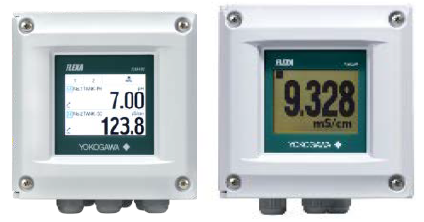
Conductivity Measurement System:
Process Liquid Analyzer:
2-wire FLXA202 Conductivity Analyzer
4-wire FLXA402 Conductivity Analyzer
Sensor Selection:
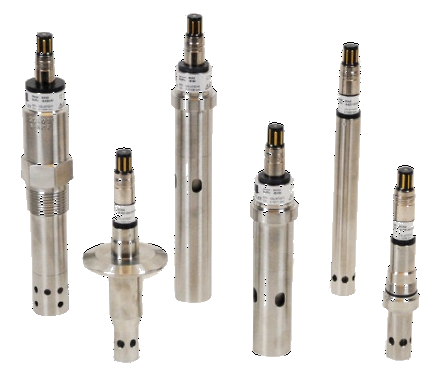
Analog and Digital SMART sensors are available. Analog options allow users to interface with a system that has been used historically. SENCOM™ technology, which allows sensors to transmit and receive data when connected to a transmitter/analyzer or a PC. The SMART digital sensors maintain specific measurement and calibration data on an integrated chip along that is an integral part of the sensor providing easy plug and play solutions. The data management software optimizes the performance of sensors for enhanced reliability and process safety.
Option #1:
SC42-S*34 Large-Bore Conductivity Sensor
(fittings available for Flow-Thru, Insertion, or Immersion installations)
Option #2:
SC4A Conductivity Sensor
(fittings available for Insertion, Sanitary, or Retractable installations.)
Another alternative would be Toroidal or Inductive Conductivity Sensor:
ISC40 Inductive Conductivity Sensor (fittings available for Flow-thru, Insertion, or Immersion installations)

相關業種
-
電力
1970 年代中期,Yokogawa 隨著 EBS 電力控制系統的推出,正式投入電力產業。此後,Yokogawa 持續深化相關技術與能力的研發,致力於為全球客戶提供最佳的服務與解決方案。
為在瞬息萬變的全球電力市場中發揮更積極的角色,Yokogawa 建立並營運全球電力解決方案網絡,強化集團內部的協同合作,整合全球資源與產業專業。Yokogawa 的電力產業專家攜手合作,為每一位客戶量身打造最符合其高度專業需求的解決方案。
-
石油和天然氣
石油和天然氣
-
化學工廠
化學工廠依賴連續生產與批次生產流程,兩者對控制系統的需求各不相同。連續流程需要具備高穩定性與可靠性的控制系統,以避免故障導致生產線停機;而批次流程則強調控制系統的彈性,能靈活調整配方、作業程序等。這兩種類型的系統都需能管理產品的可用品質歷史,並執行非常規操作。憑藉完整的產品組合、經驗豐富的系統工程師,以及全球銷售與服務網絡,Yokogawa 能為每一個工廠製程提供解決方案。
-
食品 & 飲料
在食品製造業中,除了需要應對「食品安全」、「糧食安全」、「降低成本」這些傳統挑戰,還需要面對病菌和減少勞動力的挑戰。
橫河Yokogawa與客戶密切合作、共同應對挑戰、提出理想工廠的解決方案,幫助生產廠商創造更舒適的工作環境。 -
石油和天然氣下游
近年來,石油和天然氣下游產業面臨著越來越多的挑戰。這些挑戰包括待加工原料的特性變化、工業設施及設備的老化、能源成本的上升、缺乏能夠使煉油廠安全有效運行的熟練技術工人,以及市場和客戶的需求不斷變化。
多年來,橫河與許多下游公司合作,致力於提供應對這些挑戰和問題的工業解決方案。橫河的解決方案幫助工廠投資者盡可能實現最大的盈利能力和工廠內可持續的安全。
相關產品&解決方案
-
SC42/SC4A(J)接觸式電導率感測器
橫河電機有全系列精密感測器和儀器測量水中雜質,即使在極端條件下也穩定精準。
-
SENCOM™ SMART 數位Sensor
橫河電機的SENCOM SMART感測器平台是一個創新的分析計平台,最佳化維護、減少配定時間並簡化現場維護和校正作業。
-
兩線式Dual Channel分析儀 FLXA21
FLEXA™ 系列分析儀用於工業裝定的連續線上測量,具有單感測器或雙感測器測量選項,是目前最靈活的兩線式分析儀。
-
兩線式液體分析計FLXA202
FLEXA™ 系列分析儀用於工業裝定的連續線上測量,具有單感測器或雙感測器測量選項,是目前最靈活的兩線式分析儀。
-
四線式液體分析計 FLXA402
The FLEXA™ 系列分析計是模組化設計的分析計,用於工業裝定中的連續線上測量。提供單一或多sensor測量。
-
導電度分析儀
可測量自來水、污水等水質,以及各種製程液體的導電度和電阻率測量。另有衛生型及方便型可供選擇。
-
導電度感測器
導電度感測器與電極用於測量製程導電度、電阻率、WFI、去離子水、反滲透水、濃度百分比、鍋爐排污水及總溶解固體(TDS)。提供多種安裝方式,包括可伸縮型、流通型、浸入型及直接插入型。選擇合適的電極或感測器對取得最佳測量結果至關重要。
-
感應式(環形、無電極)導電率感測器 ISC40
ISC40 型感測器專為搭配 FLEXA ISC 分析儀使用而設計。此組合在可靠性、精確度、量程範圍及價格效益方面,均超越導電率測量的所有預期。
-
數位 SMART SENCOM™ 轉接器: SA11
可重複使用的 SMART 轉接器,只需在感測器達到其使用壽命時進行處理。橫河電機的SENCOM 4.0平台,可降低營運成本和資源浪費,同時貢獻永續未來的長期業務目標。
-
純水(低電導率)傳感器 SC4A(J)/SC42
這些感測器專為半導體、電力、水處理及製藥等產業的低導電度應用而設計,使用方便,外型小巧。