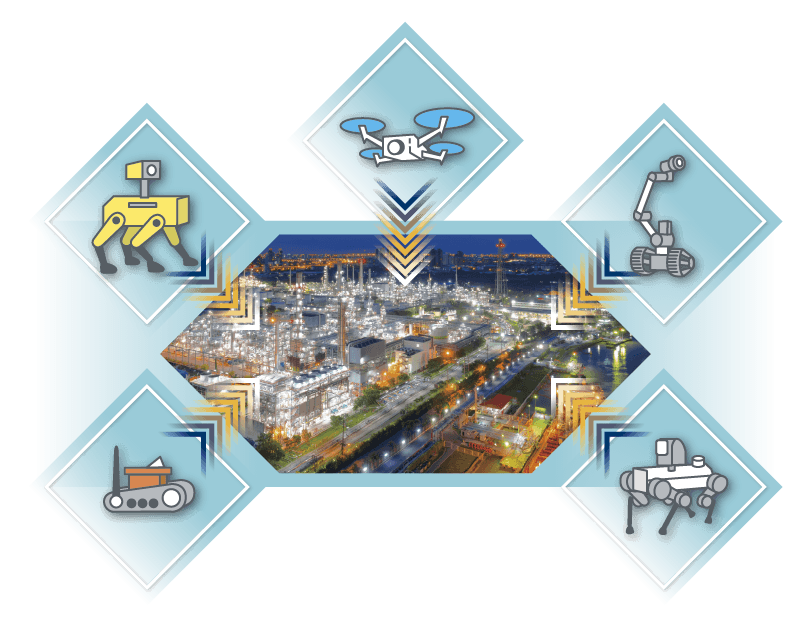
Background
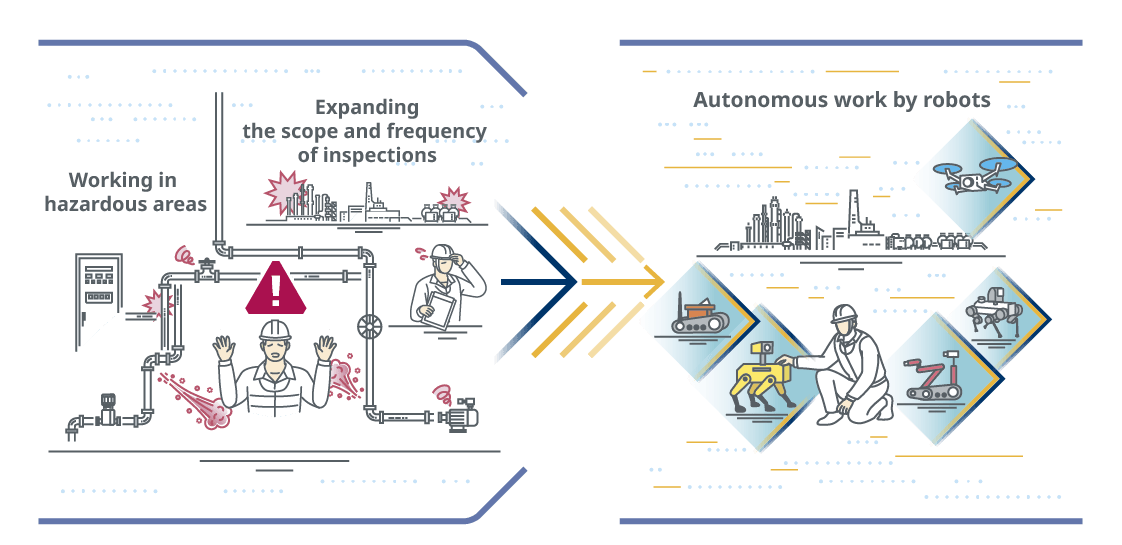
At plant sites, labor shortages and safety issues are exacerbating, as companies need to reduce manual work in hazardous areas and address the increased labor hours that come with an expansion of inspection targets and an increase in inspection frequency. To address these issues, efforts are underway to achieve operational autonomy through digital transformation, and robotics is attracting attention as one of the core technologies to achieve operational autonomy.
Technology
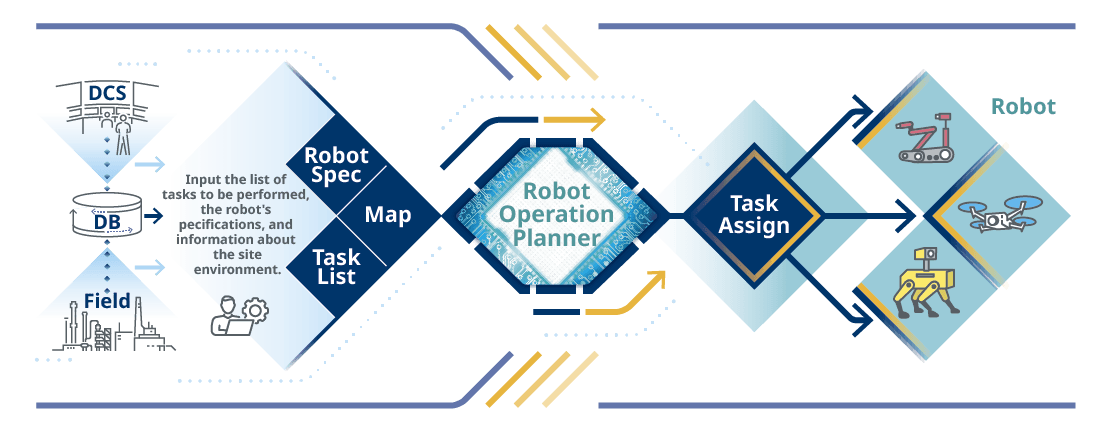
To support the autonomy of plant operations, we are developing technology that automatically plans efficient operations using a variety of robots. At the plant site, there is a list of tasks including inspections, and the tasks and movement routes are designed according to the functional constraints of each robot, the remaining battery level, and other conditions, and actions are executed based on this list. In addition, to maintain operations, it is necessary to respond to unexpected tasks and unexpected robot failures. Therefore, it is required that robot operations planned in advance can be updated quickly according to the situation. By introducing this technology, we aim to automate the operation of a large number of robots, greatly reduce the burden on the site, and improve the efficiency and autonomy of operations such as plant inspections.
Strengths of the technology
・This method is suitable for conditions such as the time of operation and the contents of inspections required for plant patrol inspections.
・In consideration of the operational constraints of the entire plant or factory, we plan the operation of the robots and assign tasks, and automatically reschedule in response to changes in the situation.
Future vision
In the future, it is expected that the robots will be able to make autonomous decisions and actions based on a bird's-eye view of the entire plant operation. This will free workers from working in dangerous areas and allow them to focus on high-value-added tasks. Furthermore, by automating everything from anomaly detection to maintenance, plant safety and productivity will be dramatically improved. The realization of smart plants where humans and robots work together will lead directly to accelerating digital transformation and strengthening competitiveness.