Introduction: Why Yokogawa Is Engaging in Africa
When you hear the word “Africa,” what image comes to mind?
For many people, Africa may seem distant and unfamiliar, far removed from everyday life in Japan. However, Africa is deeply connected to our daily lives. Many of the technologies we use every day, including smartphones, electric vehicles, and the energy solutions that support a decarbonized society, depend on Africa’s resources and are closely linked to its growth and development.
Africa is a diverse market made up of 54 countries, with a current population of approximately 1.5 billion. According to United Nations estimates, this is expected to grow to around 2.5 billion by 2050, meaning that more than one in four people worldwide will live in Africa. The continent’s youthful population is one of its greatest strengths, offering significant potential for the expansion of both the labor force and consumer markets in the years ahead. Indeed, urbanization and rising income levels are progressing in many countries, and economic growth is expected to accelerate.
Africa is also increasingly important as a major supplier of critical minerals. These mineral resources are used in products such as smartphones, electric vehicles, and wind power generation facilities, which are essential for our daily lives and the realization of a decarbonized society. Africa holds approximately 30% of the world’s mineral resources, but that potential is not being fully utilized. According to the United Nations Conference on Trade and Development, only about 40% of the potential revenue obtainable from these resources is actually being realized. These untapped resources will play a crucial role in supporting the energy transition and driving industrial development in the years ahead.
In addition, amid global decarbonization efforts and the accelerating energy transition, Africa has significant potential to emerge as a key supplier of clean energy. Development of renewable energy that harnesses the continent’s abundant solar and wind resources is moving forward, and Africa is also expected to grow into a hub for producing green hydrogen and ammonia. These could become new pillars of energy exports in the future.
From the multifaceted perspectives of demographics, resources, and energy, Africa is now attracting global attention as the next growth market.
Key Initiatives of the Africa Business Promotion Center
Yokogawa entered the African market in 1978. Today, it has local subsidiaries in South Africa, Nigeria, and Mozambique, operates nine sales and maintenance service offices and three engineering centers, and has approximately 200 employees active across Africa. Yokogawa Middle East & Africa, the regional headquarters located in Bahrain, holds ownership of the African business and drives business development rooted in the region.
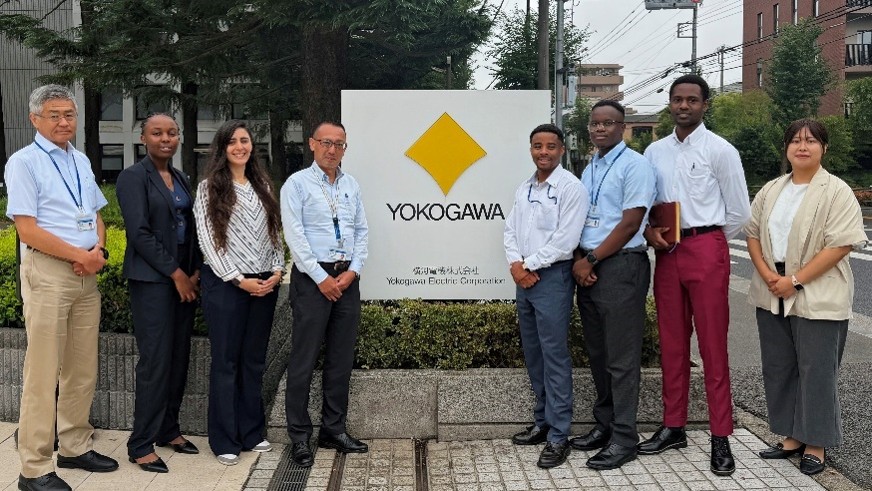
The Africa Business Promotion Center, established in 2022 in Tokyo, is a specialized organization that treats Africa as a single market and strategically promotes the creation of business opportunities and market development for Yokogawa in Africa from a global, medium- to long-term perspective. The Center has five African nationals whose local knowledge, perspectives, and networks help drive and support business activities. In light of the high growth potential of the African region, the Center focuses on three priority areas — resources, energy, and consumer markets — to expand business and create new business opportunities.
First is our work on strategic mineral resource projects. Africa is richly endowed with critical minerals such as cobalt and lithium that are indispensable to realizing a decarbonized society, and efforts to secure a stable supply of these minerals and to increase their added value have become important. The Africa Business Promotion Center pursues strategies tailored to the characteristics of each country. For example, in the Democratic Republic of Congo, Yokogawa is working with NGOs, international organizations, and government agencies to contribute to society through initiatives such as training local engineers and expanding access to education for vulnerable children, while also building relationships and partnerships that may support future business opportunities in the country. Through these efforts and strategic partnerships, Yokogawa aims to contribute to the country's sustainable resource development by utilizing our solutions to support operational improvement and enhance safety.
Second are initiatives related to green hydrogen and ammonia. Blessed with renewable energy resources, Africa is strongly positioned to serve as a future clean energy supply hub. Against this backdrop, the Africa Business Promotion Center is strengthening its involvement in green hydrogen and ammonia projects advancing in various locations, centered on the six member countries of the Africa Green Hydrogen Alliance. In particular, countries including South Africa, Namibia, Morocco, and Mauritania are advancing green hydrogen and ammonia development plans, and market expansion is expected going forward. In light of these trends, the Center is building partnerships with a wide range of stakeholders — local operators, private companies, government agencies, universities, and others — from a medium- to long-term, global perspective.
Third is the expansion of intra-African investment projects and of business with medium-sized food and beverage companies. Against the backdrop of population growth and an expanding middle class, demand in the daily necessities sector, beginning with food and beverages, is steadily expanding, and Africa is expected to grow into an even larger consumer market. In addition, with the start of the African Continental Free Trade Area, tariffs are scheduled to be eliminated in the future on approximately 90% of goods covered by the agreement, and intra-African investment by African conglomerates and major local companies is expected to become much more active. For example, fertilizer production facilities are essential to improving agricultural productivity but require large-scale investment. Major African conglomerates are therefore moving forward with investment plans, and we believe that building relationships with such companies will become increasingly important. Furthermore, the food and beverage industry is a core industry that supports people’s daily lives, and it is also an area where there will be a growing need for quality control, productivity improvement, and energy savings.
Yokogawa has strengths that can contribute to solving issues such as the stable operation of production facilities, quality improvement, and energy efficiency improvement. We can do this by leveraging the measurement and control technologies and digital solutions that the company has cultivated to date. While capturing these trends, the Africa Business Promotion Center is building relationships with local companies and industry associations, aiming to create medium- to long-term business opportunities.
Expanding Partnerships and Collaboration Opportunities
In developing business in Africa, collaboration with national governments, international organizations, and private companies is indispensable. Because many institutional and infrastructure-related challenges exist, there are limits to developing business alone, and a cooperative approach with diverse partners is required.
With this understanding, the Africa Business Promotion Center is actively building relationships with government agencies, development finance institutions, and international organizations in various countries. In this way, we accurately grasp information on policy trends and the regulatory environment, while creating opportunities to participate in local projects. We also aim to build a sustainable business foundation from the standpoint of human resource development and technology development through collaboration with universities and research institutions.
Furthermore, we actively participate in events such as the Ninth Tokyo International Conference on African Development (TICAD 9) and the United Nations-hosted International Conference on Financing for Development, using these opportunities to strengthen networks with relevant organizations and to create new business opportunities.
Strengthening partnerships and expanding collaboration opportunities on a foundation of cooperation with diverse stakeholders is vital not only for business expansion in Africa, but also for advancing value creation toward the realization of a sustainable society.
Human Resource Development
For many years, Yokogawa has worked with African universities to develop local engineers, making use of its engineering centers in South Africa and Nigeria. Building on this track record, the Africa Business Promotion Center is further strengthening the human resource base that supports the sustainable growth of the African business.
Specifically, since 2024 we have hired five African employees at our head office in Japan who graduated from Japanese universities, and we are developing them as candidates for future leadership of the African business while they deepen their understanding of Japanese corporate culture and our company’s values.
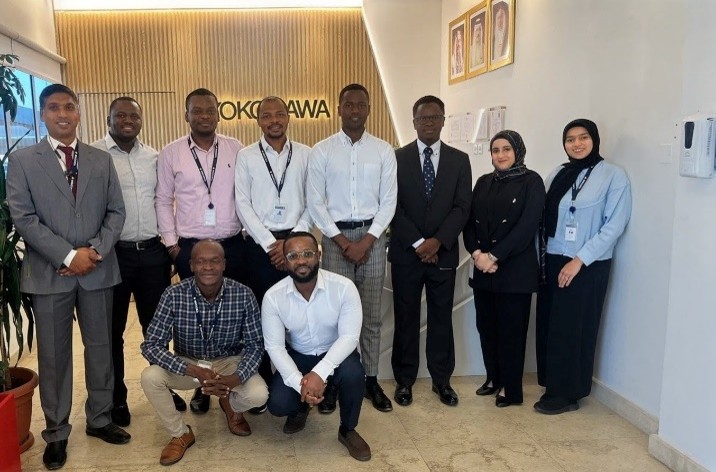
In addition, in collaboration with the Middle East and Africa regional headquarters, we conduct an internship program in Bahrain for graduates of the Egypt-Japan University of Science and Technology from various African countries in order to develop sales engineers equipped with specialized knowledge of our products and solutions and ability to make proposals based on customers' project requirements
In this way, Yokogawa is developing the human resources that support its African business through talent development that leverages the respective strengths of its bases in Africa, Japan, and Bahrain.

Addressing Social Issues
In addition to advancing its business activities, Yokogawa is also working to solve the social issues that Africa faces.
As part of this, in the Democratic Republic of the Congo, Yokogawa has concluded memoranda of understanding with the Congo Children Trust and the Kumi Foundation to provide educational and protective support for children in mining areas. By donating digital learning equipment to schools and training centers, we support the expansion of educational opportunities, and we also back activities that support children in need of protection and street children. In the Democratic Republic of Congo, which is attracting attention as a global supplier of mineral resources, Yokogawa is looking beyond the resource business to the education of children and the development of local communities.
Also, at TICAD 9, we concluded a Memorandum of Understanding with the International Organization for Migration concerning the development of labor migration and preliminary study of a cooperation framework aimed at making use of African human resources. Through this, we are strengthening collaboration toward creating an environment that supports African talent in playing an active role.
Through such activities, the Africa Business Promotion Center works to solve social issues while aiming to achieve the Sustainable Development Goals and contribute to the sustainable development of Africa.
Conclusion: Practicing a Long-Term Africa Strategy Built on Trust
The Africa Business Promotion Center is pursuing multifaceted initiatives across the areas of resources, energy, partnerships, and human resource development. Underlying these measures is not mere business expansion, but long-term value creation founded on relationships of trust with local communities.
Business in Africa is closely tied not only to pursuing rational economic goals, but also to addressing social issues and contributing to local communities. For this reason, Yokogawa places great importance on contributing to sustainable development by promoting business activities and social contributions in an integrated manner. In the resource development and energy businesses, Yokogawa is also working to realize responsible business operations premised on environmental and social considerations.
In addition, by proactively incorporating the perspectives of African talent active in the region, we aim to solve issues in ways suited to local realities. Our policy is to accurately grasp the differing needs and issues of each region and to provide the optimal solution for each, thereby leading to the creation of new value.
Going forward, Yokogawa will continue to contribute to Africa's long-term growth and the realization of a sustainable society while further deepening partnerships based on trust.
The names of corporations, organizations, products and logos herein are either registered trademarks or trademarks of Yokogawa Electric Corporation and their respective holders.