挑战
客户面临的挑战
提高发电厂的效率
我们的解决方案
横河电机通过优化燃料、蒸汽和给水的控制,助力电厂实现更高效运行。
赋能技术

集散控制系统
CENTUM VP集散控制系统使工厂实现无中断的“正常运行时间”性能,在发电领域实现更高的生产率和盈利能力。

变送器
DPharp系列数字压力变送器采用差压高精度谐振式压力传感器,代表了变送器技术具有革命性的进步之一。

氧化锆氧分析仪
横河电机的氧化锆氧分析仪用于燃烧监测和控制,并广泛应用于多种行业,以优化燃烧并降低氮氧化物排放。

工厂服务(FS)
调试、操作员培训、运行、维护及仿真服务
客户面临的挑战
安全高效地启动锅炉,这是一个需要相当高技能的复杂过程。
我们的解决方案
横河电机的系统通过自动化诸如燃油加热、切换至生物质燃料等过程,使启动更安全、更高效。图形显示为操作员提供每个过程状态的实时窗口。
赋能技术

集散控制系统
CENTUM VP集散控制系统使工厂实现无中断的“正常运行时间”性能,在发电领域实现更高的生产率和盈利能力。

Exapilot操作效率提升软件包
Exapilot是一款在线导航工具,可逐步指导操作员完成工厂操作程序。它能自动化标准操作程序(SOP),并及早发现过程及设备异常。

仿真器
高保真、全复制型培训仿真器
客户面临的挑战
提高燃烧效率,减少/消除有害的烟气排放
我们的解决方案
横河电机的氧分析仪测量烟气中的氧气(O2)浓度。利用该信息,可调整空燃比以优化燃烧。同样,横河电机的烟气分析仪通过测量烟气中氮氧化物和硫化物的浓度,有助于减少有害排放。
赋能技术

ZR系列氧化锆氧分析仪
横河电机的氧化锆氧分析仪用于燃烧监测和控制,并广泛应用于多种行业,以优化燃烧并降低氮氧化物排放。
客户面临的挑战
通过燃烧掉烟气中的残余气体成分,减少一氧化碳、氮氧化物、二噁英等物质排放至大气
我们的解决方案
横河电机的气体分析仪测量烟气中的氧气浓度,从而调整氧气供应,提高燃烧效率,烧掉更多残余气体成分。
赋能技术

集散控制系统
CENTUM VP集散控制系统使工厂实现无中断的“正常运行时间”性能,在发电领域实现更高的生产率和盈利能力。

协同信息服务器(SCADA)
协同信息服务器软件包优化可再生能源应用性能。它确保高可用性和高性能,并支持在线配置。

ZR系列氧化锆氧分析仪
横河电机的氧化锆氧分析仪用于燃烧监测和控制,并广泛应用于多种行业,以优化燃烧并降低氮氧化物排放。
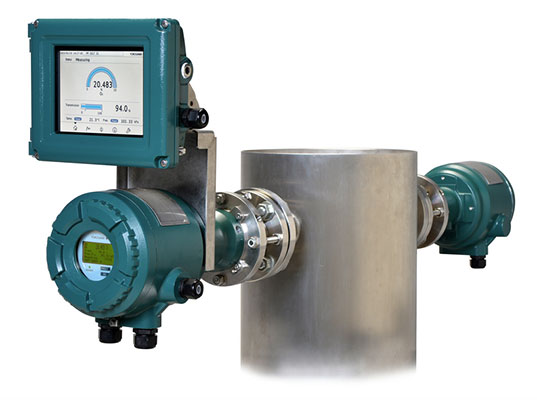
TDLS激光气体分析仪
TruePeak TDLS气体分析仪采用专利的峰面积积分方法,非常适用于严苛过程环境下的原位分析。它能显著提高锅炉运行效率。
客户面临的挑战
预防煤场、输煤系统及其他设施发生火灾事故
我们的解决方案
横河电机的分布式温度传感器(DTS)有助于火灾检测、泄漏/堵塞检测、热点(冷点)监控及设施预防性维护。
赋能技术

分布式温度传感器(DTS)
横河电机DTSX200/3000可实现无间隙的检测与监控。
详细介绍

参考


- Steady power supply and safe operation thanks to reliable Yokogawa CENTUM CS 3000 and transmitters
- Environmentally optimized operation by fine-tuned boiler combustion control and strict monitoring and control of CO, NOx and SOx in flue gas and pH of water from cooling towers
- Full replica plant simulator for effective plant operation and engineering staff training
- Annual maintenance contract


At the age of approximately 30 years the plant underwent $A 72 million technology upgrade in 2001, to improve operating reliability and performance. Macquarie Generation, Yokogawa Australia and Ralph M Lee concluded an alliance agreement to supply and install the replacement control system at Liddell.

The CENTUM CS 3000 / UOI was selected for this project. The control platform in the UOI is the GE Fanuc CIMPLICITY Human Machine Interface (HMI) system, which fully integrates the controls for the turbine and BOP auxiliaries and uses the same screens/formats at both the turbine and BOP HMI displays. The CIMPLICITY HMI used in the UOI is a SCADA based design that fully supports the customer's requirement for remote operation capability.


The construction of Tuas Power Station started in the mid 1990s. The plant has steadily grown to be a significant player in the competitive Singaporean electricity market. Stage One of Tuas Power Station is equipped with the country's largest steam generators which are capable of producing 600 MW each.


The Bahia de Bizkaia Plant is one of the most significant power projects to be carried out in this region. The project has been led and financed by Ente Vasco de la Energia, Repsol-YPF, British Petroleum, and Iberdrole S.A., with the total investment coming to approximately 600 million euros.


The Itoigawa Power Plant was constructed adjacent to a cement plant in Itoigawa City, Niigata Prefecture, and is operated by an IPP that supplies electricity to Tohoku Electric Power, one of Japan's major power companies. The use of a 149 MW coal-fired CFB boiler in this power plant is a first for an IPP in Japan, and this effectively reduces NOx emissions.


Recently, air pollution legislations such as the Clean Air Act to reduce the amount of air pollution are increasing worldwide. The Clean Air Act address numerous air quality problems. One of these problems is acid rain caused by sulfur dioxide and nitrogen oxide emissions from fossil-fueled power plants and other industrial and transportation sources.


Seawater leak detection is the post-condensation water quality management processes. Damage to the ion exchange resin, which deionizes the supplied water, is also monitored during this process, and both of these applications are executed by a conductivity analyzer. (AN10D01P01-01E)


The ammonia (NH3) gas is injected to remove the NOx and thus reduce the NOx concentration in the stack flue gas. With conventional NH3 analyzers that perform measurements indirectly, NH3 concentrations are obtained through a sampling system. Therefore, there are problems with the maintenance and running costs of the sampling system, and time delays in measurement. The TDLS8000 Laser Analyzer is the solution to all these problems.


Current trend for increasing mercury awareness throughout the public sector has caused the government to take action. Recently, the Environmental Protection Agency (EPA) has focused their efforts on controlling mercury levels produced in various coal fired power plants. Based on information from several case studies, the EPA developed the Mercury and Air Toxics Standards to cut back mercury emissions. The most popular technology utilized by coal plants to meet the new standards is a scrubber which cleans the off gas from the combustion process. ORP sensors can further monitor the effluent from these scrubbers to ensure optimal mercury emission levels are achieved. By closely monitoring the mercury concentrations in the effluent, plant managers will be able to easily confirm their plants are meeting the EPA's standards.

The worlds of process automation and production management have been converging for some time. What once used to be islands of automation and production management functionality connected through highly proprietary integration schemes that were costly to maintain have developed into integrated platforms that provide seamless data exchange between the world of automation and the plant floor, the functions of production and operations management, and integration with business level systems.

Power plants concerned with lowering NOx emissions are making tremendous changes to accommodate EPA regulatory requirements. A substantial number of these changes include the expansion and upgrade of the plant combustion oxygen measurement equipment. There is a striking relationship between the number of NOx reductions projects and the sales quantity of insitu oxygen detectors.

From engineering to installation, commissioning, operations, and maintenance, FOUNDATION fieldbus offer significant cost reductions of 30 percent or more versus conventional analog systems. Many of these cost reductions come from the advanced functions that fieldbus offers versus analog technology.

The automation suppliers that will be successful in the long term will be those that effectively address application or industry specific problems for end users with a value proposition that cannot be ignored. These problems exist throughout the process industries today, and they won't be solved by simply offering a product, but through a combination of hardware, software, services, application expertise, and knowledge.

In ARC's view, customers need a compelling business value proposition to justify investment in any kind of automation. Vigilance and VigilantPlant were created with this in mind. Yokogawa's vision with VigilantPlant is to create an environment where plant personnel and operators are well informed, alert, and ready to take action.

Yokogawa has come a long way in making its message clear to the world of process automation. Last year, the company embarked on a full-scale global marketing campaign to make customers aware of the company's focus on system reliability, security, dependability, and robustness. Dubbed "Vigilance", the campaign created a unified message for the company and greatly helped expand awareness of the Yokogawa brand and corporate philosophy.

Process automation end users are under more pressure than ever to do more with less. The current economic climate means that many automation capital projects are on hold. With capital budgets tighter than ever, users instead focus on operational budgets (where cost cutting is also a key concern), or on automation investments with a very rapid return on investment.

In today's dynamic industrial marketplace, the only constant is change. Raw material costs, energy costs, market demands, environmental and safety regulations, technology, and even the nature of the labor force itself are constantly changing, and not always in predictable directions.
想要了解更多信息、技术&解决方案?
联系我们