From Alarm Overload to Operational Clarity
Modern plants are generating more alarms than ever. As systems are integrated and fewer operators monitor wider areas, alarm flooding becomes a serious risk—overwhelming operators and increasing the chance of missed critical events.
While standards such as ISA‑18.2 and EEMUA 191 provide guidance, many organizations lack practical tools to effectively reduce and manage alarms.
Yokogawa offers a smart, practical approach to alarm management, combining:
- Top-down standard alignment
- Bottom-up, deployable solutions
 This enables safer, more agile plant operations.
Ideal for organizations that:
- Struggle with alarm flooding
- Need capabilities beyond traditional DCS alarms
- Are consolidating control rooms
- Require ISA‑18.2 compliance
Result: Deliver the right alarm to the right operator at the right time.
-
Sequence of Events (Exaquantum/SER)
Exaquantum/SER is an event driven integrated reporting system that acquires alarm & event messages and point data from plant monitoring and control systems, and stores this information in a single database for ease of analysis.
-
Alarm Analysis (Exaplog)
The new Exaplog event analysis package facilitates the quantitative analysis of problems in the DCS event log. By alternating analysis with alarm setting adjustment and operation sequence tuning, you can continuously improve operational efficiency.
-
Dynamic Alarm Management (AAASuite)
Advanced Alarm Administrator allows alarm review, alarm optimizing, and enhancement of alarm response by simplifying the process of alarm reduction and minimizing alarm flooding.
Detalles
 Alarm Overload in Modern Plants
As manufacturing operations become more integrated and centralized, operators are responsible for monitoring larger areas and more complex processes. This evolution often leads to a rapid increase in alarms, many of which are redundant, non-actionable, or poorly prioritized.
Without a structured approach to alarm management, alarm flooding occurs, overwhelming operators (operator fatigue) with notifications. In these situations, critical alarms can be missed or delayed, increasing the risk of safety incidents, environmental events, and unplanned downtime.
From Excess Alerts to Actionable Insight
Industry standards such as ISA‑18.2 and EEMUA 191 provide a strong framework for improving alarm system performance. However, many organizations still struggle to translate these guidelines into practical, day-to-day improvements that operators can rely on.
What customers need today is not just guidance, but deployable tools and solutions that:
- Reduce nuisance alarms
- Prioritize what truly matters
- Enable faster, more confident decision-making
- Support continuous improvement across the alarm lifecycle
A Practical, End-to-End Approach to Alarm Management
 Yokogawa delivers a smart, structured approach that closes the gap between strategy and execution.
Key elements:
- Top-down governance aligned with global standards (ISA 18.2)
- Bottom-up tools that deliver immediate, practical impact
- Seamless integration with existing workflows (no disruption required)
Built on CAMS (Consolidated Alarm Management System):
While conventional systems generate and display alarms, CAMS takes a lifecycle-driven approach, integrating alarm rationalization, analytics, and continuous performance optimization into a unified framework.
By combining top-down governance aligned with ISA 18.2 standards and bottom-up operational improvements, Yokogawa enables plants to systematically reduce alarm flooding, prioritize actionable alerts, and continuously improve alarm performance. The result is a smarter, more contextual alarm environment that enhances operator effectiveness, improves safety, and drives more reliable plant operations.
What are the Benefits of Alarm Management Systems?
 Reduce alarm flooding and improve operator response times
- Enhance plant safety and regulatory compliance (ISA 18.2 / IEC 62682)
- Increase operational efficiency through data-driven optimization
- Improve decision-making with real-time alarm analytics
- Ideal for oil & gas, power, and chemical plant systems
| Service Description | Yokogawa Deliverables |
|---|---|
| Alarm & Event Analysis |
|
| Alarm Philosophy |
|
| Fundamental Nuisance Alarm Reduction |
|
| Alarm System Design (Consultation & Training) |
|
| Alarm System Design (Software & Training) |
|
| State-Based Alarm Management (Consultation & Training) |
|
| State-Based Alarm Management (Software & Training) |
|
| Alarm Monitoring & Improvement (Consultation) |
|
| Alarm Monitoring & Improvement (Software & Training) |
|
Recursos

Alarm management is not just a project that has a start and end date; it's a continuous cycle. Once the alarm system has been reviewed and improvements have been identified, we must check that controls are in place to ensure the alarm system remains functional. The key is to ensure that the system is continuously monitored and any changes are fully documented. There are seven key steps for alarm management. Rationalization is one of those critical steps.


Summarizing the standard's 10 stages into four general tasks can simplify implementation and speed up the schedule.

Modern historians do much more than just store process data. They also provide analysis, reports, and valuable operational and business information.
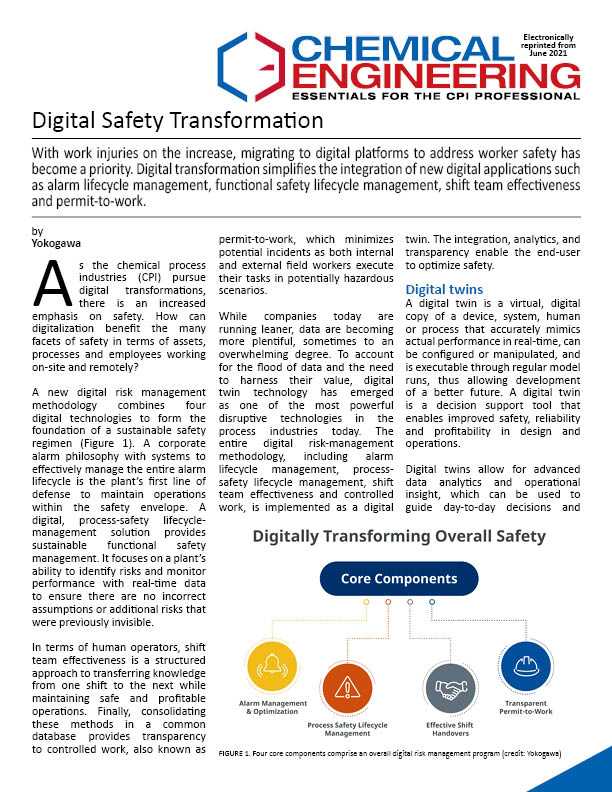
With work injuries on the increase, migrating to digital platforms to address worker safety has become a priority. Digital transformation simplifies the integration of new digital applications such as alarm lifecycle management, functional safety lifecycle management, shift team effectiveness, and permit-to-work.

March 2007
A widespread issue in manufacturing plants is alarm overload. As formerly independent systems are integrated for more effective operation by fewer operators, each operator has to monitor an increasingly wider area and consequently deal with more alarms.

March 2007
Alarm rationalisation and management is vital if plant operators are not to be overwhelmed by a rapid proliferation of alarm systems. A widespread issue in manufacturing plants is alarm overload. As formerly independent systems are integrated for more effective operation by fewer operators, each operator has to monitor an increasingly wider area and consequently deal with more alarms.
Documentos y Descargas
Catálogos
Videos
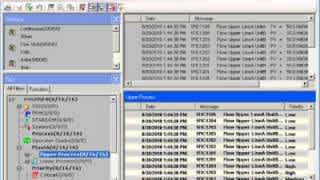
CAMS for HIS is based on recommendations for presentation of alarms to operators from EEMUA publication 191.

Alarm management is critical to ensuring the smooth running of operations and safer, more reliable plants. However, if alarms are poorly managed, they can compromise plant safety and negatively impact performance and profitability for organizations in the process industry.
Organizations rely upon the proper handling of process alarms to help ensure the smooth running of their operations and to meet industry standards.
Yokogawa provides Exaquantum alarm management solutions to help overcome these challenges. With a comprehensive alarm management solution to store and track alarm data, perform root cause analysis of events, and a master database providing a comprehensive mechanism for management of change. Users can review and assess the alarm system's performance to make necessary changes or rationalize it throughout its lifecycle.
For more information, visit: https://www.yokogawa.com/solutions/products-and-services/information/production-management/alarm-management/

UACS alarm shelving allows operators to temporarily suppress or "shelf" certain alarms. This can be useful in situations where an alarm is not critical or requires further investigation before an action is taken. Shelving an alarm typically means that it is acknowledged but not actively alarming, so it can be reviewed for later action.

This video introduces Unified Alarms and Conditions Server (UACS) for CENTUM VP. It covers some basic capabilities of UACS. UACS is a centralized alarm management system that helps to drive compliance with ISA 18.2. UACS is responsible for implementing and maintaining the alarms throughout the management life cycle.

President & CEO of Yokogawa Electric Corporation of Japan, Shu Kaihori, discusses optimizing plant performance with Andy Chatha, President & CEO of ARC Advisory Group.


This Webinar will present a detailed look at a software demonstration of how to configure Yokogawa's Consolidated Alarm Management Software (CAMS) for HIS (Human Interface Station). How users can implement CAMS to meet some of the recommendations from EEMUA 191, ISA 18.2 and other published guidelines for alarm management will also be presented.
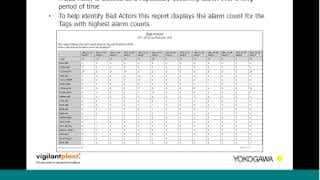
This webinar will present a detailed look at Yokogawa's solution for Alarm Reporting and Analysis and how users can implement it to meet some of the recommendations from EEMUA 191, ANSI/ISA-18.2-2009 and other published guidelines for alarm monitoring and assessment. Register now for this live webinar and find out how you can measure and report alarm rates to prevent serious problems such as: - Bad Actor Alarms - Unattended Stale Alarms - Alarm Flooding - Excessive Average Alarm Rates
Watch this live webinar and find out how a Master Alarm Database fits in ISA 18.2 reports and the ISA 18.2 Alarm Management Lifecycle Model. You will also learn: - How a well implemented Master Alarm Database can improve Alarm System Management. - What some of the objectives and benefits of a well implemented Master Alarm Database should be.

¿En busca de información adicional sobre Yokogawa Iberia, tecnología y soluciones?
Contáctenos