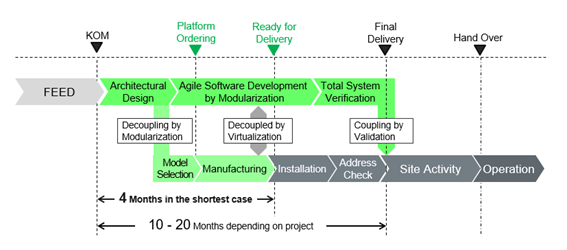
High-Level OpreX Agile Project Execution Model
OpreX Agile Project Execution은 Yokogawa가 제공하는 혁신적인 프로세스 자동화 시스템 구축 방법론입니다. 이 방식의 목표는 프로젝트를 적시에 완료하면서도 중요 경로에 영향을 주지 않는 유연한 수행입니다. 이를 통해 애플리케이션 소프트웨어 개발, 하드웨어 납품 기반의 공정 일정, 그리고 자동화 시스템의 후반부 변경까지도 유연하게 대응할 수 있습니다.
OpreX 프로세스는 애플리케이션 개발과 하드웨어 제작이 상호 간섭 없이 병행하여 수행될 수 있도록 지원합니다. 이는 위의 그림에서 보여주고 있습니다.
Executive Summary
Value Propositions
Yokogawa의 OpreX Project Execution은 표준화된 기술과 유연한 프로젝트 수행 프로세스를 활용하여 프로젝트 진행 과정에서 자동화가 중요 경로에 영향을 주지 않도록 하는 혁신적인 접근 방식입니다. OpreX 기술 기반 프로젝트를 통해 다음과 같은 효과를 기대할 수 있습니다.
- 프로젝트 수행 비용 절감
- 설치 비용 절감
- 총 소유 비용(TCO) 절감
- 프로젝트 수행 및 납품의 유연성 확보
- 프로젝트 수행 리스크 감소
Goals
OpreX Project Execution이 프로젝트 전 과정에서 추구하는 목표는 다음과 같습니다.
- 자본 프로젝트의 성공 가능성 제고
- 자본 프로젝트 수행 과정에서 자동화 실행이 중요 경로에 영향을 주지 않도록 유지
- 공급 범위에 따라 고품질의 통합 자동화 시스템 제공
- 통합 시스템을 통해 운영 우수성 실현
- 고객 만족에 대한 확고한 약속
Key drivers and Enablers for OpreX Project Execution
OpreX deivery model에는 세 가지 핵심 동력이 있습니다. 가상화, 모듈화, 검증이며, 이에 따른 실행 요인은 아래 그림에 나타나 있습니다.
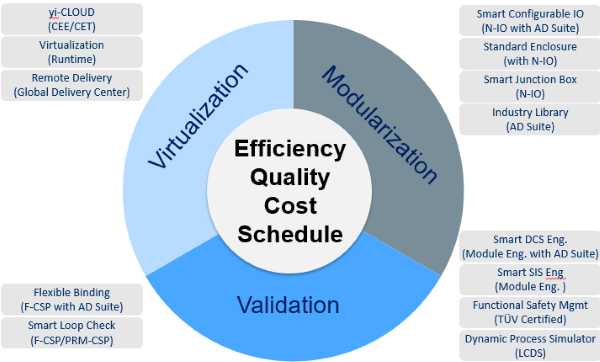
Three key drivers and Enablers
Details
Virtualization
이는 세 가지 솔루션으로 구성되어 있습니다. Remote Delivery 모델, 클라우드 기반 엔지니어링(yi-CLOUD), 그리고 Target System Virtualization입니다.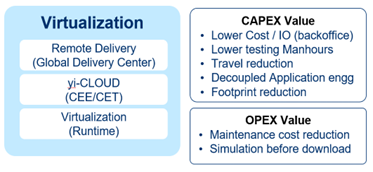
Value drivers enabled by Virtulization
Remote Delivery (GDC)
Yokogawa의 글로벌 엔지니어링 리소스 센터(Global Delivery Center)는 OpreX를 구현하도록 교육을 받은 조직으로, 프로젝트 엔지니어링을 수행하고, 제3자 시스템 테스트 및 제어·안전 시스템 테스트를 담당합니다.
yi-CLOUD (CEE/CET)
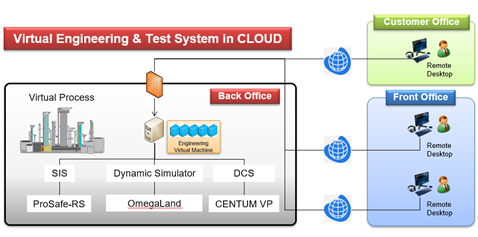
Virtual Engineering & Test System in Cloud
대상 시스템이 어디에서 개발되든, 팀 구성원이 어디에 있든 상관없이 Cloud Enabled Engineering과 Testing은 이해관계자들, 즉 Yokogawadml front office와 back-office, operations, EPC(s), 그리고 end-users가 프로젝트 애플리케이션 개발을 구현하고 테스트할 수 있는 환경을 제공합니다.
Virtualization (Runtime)
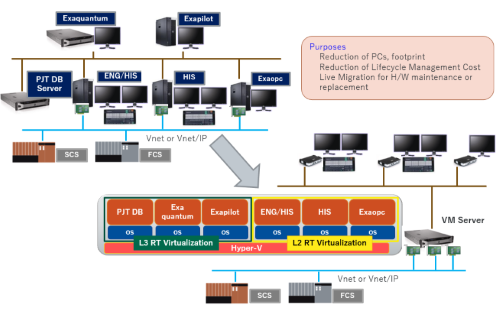
Runtime Virtualization for Yokogawa ICSS Image zoom
이 기능을 통해 하나의 물리적 서버에서 여러 개의 가상 머신을 실행할 수 있으며, 물리적 PC와 시스템 캐비닛의 수를 줄여 설치 공간, 전력과 발열, 냉각, 유지보수 비용을 절감할 수 있습니다.
Modularization
이는 Hardware Platform인 N-IO 기반 Standard Enclosure와 Smart Junction Box (Smart JB), 그리고 Industry Libraries를 포함한 Software Platform인 Automation Design Suite (AD Suite)로 구성됩니다.
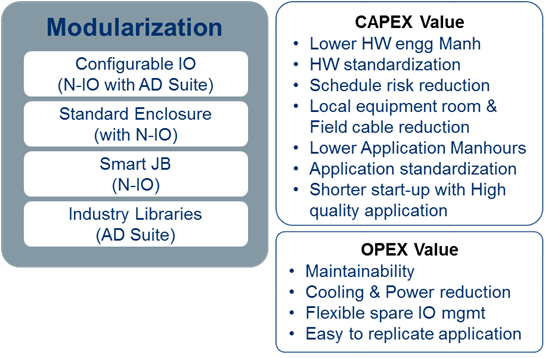
Value Drivers enabled by Modularization
Configurable I/O (N-IO with AD Suite)
AD Suite를 결합한 N-IO는 애플리케이션 개발과 하드웨어 제조를 상호 의존성 없이 병행할 수 있게 해줍니다. N-IO는 채널별로 다양한 신호 유형을 지원하며, 현장 기기 배선을 간소화하고 Marshalling System이 필요하지 않도록 하며, 유연한 바인딩을 지원합니다. 또한 N-IO는 별도의 배선 할당이 필요 없어 모듈 내 모든 포인트를 완전히 활용할 수 있도록 합니다.
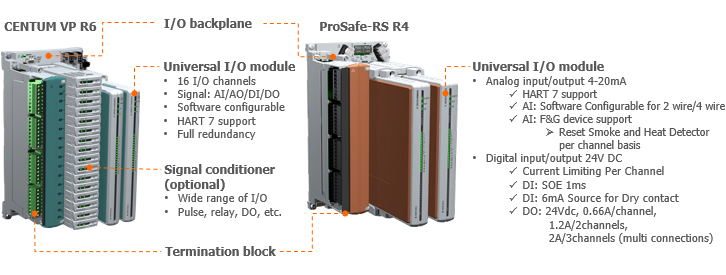
N-IO Universal I/O module
Standard Enclosure (with N-IO)
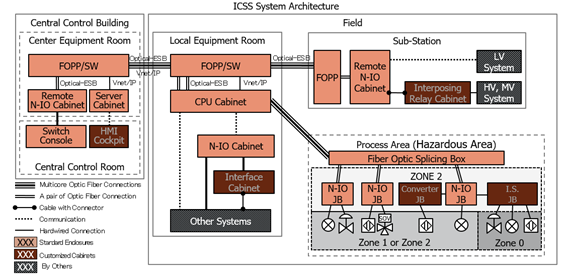
Standardized ICSS System Architecture
Standard Enclosure는 표준화를 통해 일관된 설계와 품질을 보장합니다. N-IO를 적용하면 Cross-wiring 및 Marshalling Cabinet 설계가 필요하지 않습니다. 또한 Software-configurable I/O를 적용하여 I/O Cabinet 전체를 표준화할 수 있습니다. 이러한 Standard Enclosure 기반 접근 방식은 하드웨어 엔지니어링 및 설계 승인 절차를 최소화합니다. 또한, 데이터시트만으로 인클로저를 주문할 수 있어 도면 승인 절차를 반복적으로 거칠 필요가 없습니다. 이를 통해 Yokogawa, EPC 및 고객 모두 설계 승인 과정에 소요되는 Engineering Man-hour를 줄이는 이점을 얻을 수 있습니다.
Smart JB (N-IO)
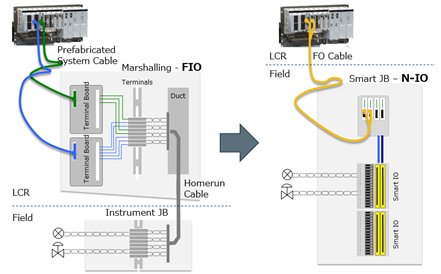
Filed Wiring Reduction by Smart JB
N-IO 구성품은 현장 설치를 고려하여 설계되었습니다. Smart JB를 통해 Field Device를 N-IO System에 직접 연결할 수 있습니다. 이러한 Smart JB 개념은 시공 단계에서 상당한 이점을 제공합니다. 두껍고 무거운 Homerun Cable을 가늘고 가벼운 Fiber Optic Cable 및 전원 케이블로 대체할 수 있습니다. 이를 통해 전체 케이블 중량과 비용을 절감할 수 있으며, Cable Tray의 규모와 관련 Field Engineering 및 문서 작업(예: Loop Diagram)도 대폭 줄일 수 있습니다.
GES Industry Libraries (AD Suite)
Industry Library는 Yokogawa의 Global Engineering Standard (GES) Toolkit을 구성하는 핵심 요소 중 하나로, Module-based Engineering 접근 방식의 기반을 제공합니다. 또한 Industrial Automation 분야의 지식 관리를 위한 실용적인 방안을 제시하고, Best Practice의 적용을 확대합니다.
GES Toolkit의 주요 목표는 다음과 같습니다:
- 검증된 구현 사례를 활용하여 기존의 경험과 지식을 공유하고 적용
- 일관된 설계 및 구현 방식 확립
- 구현 효율성 향상
- 이미 알려진 위험 요소 최소화
Validation
요구 사항을 충족하기 위한 다양한 요소를 포함하고 있습니다.
Smart DCS Engineering (Module Eng. with AD Suite)
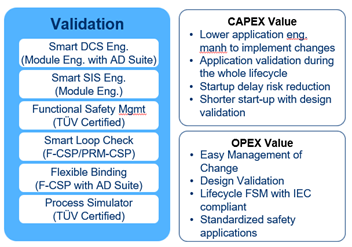
Value Drivers enabled by Validation
Yokogawa의 AD Suite를 활용한 Module 기반 엔지니어링은 OpreX Project Execution 접근 방식의 핵심을 이루는 통합 요소입니다. AD Suite는 자동화 프로젝트의 모든 측면을 지원하는 중앙 엔지니어링 애플리케이션이자 데이터베이스입니다.
Yokogawa의 엔지니어링 플랫폼은 프로젝트 수행의 유연성을 높이는 다양한 기능을 제공하며, 주요 기능은 다음과 같습니다:
- 대량 엔지니어링
- 모듈형 애플리케이션 엔지니어링
- 문서 자동 생성
- 프로젝트 후반 변경 사항 대응 및 유연한 바인딩
- 애플리케이션 자산 재사용 (GES Industry Library, 고객 표준 애플리케이션 등)
- 프로젝트 전 수명주기에 걸친 추적성을 확보하기 위한 변경 관리
AD Suite는 설계 단계부터 시운전 및 실제 운영에 이르기까지 플랜트의 전체 엔지니어링 이력을 보존합니다. 이를 통해 시스템 수명주기 전반에 걸쳐 플랜트 증설이나 하드웨어 및 소프트웨어 변경이 발생하더라도 최신 플랜트 정보를 지속적으로 유지할 수 있습니다.
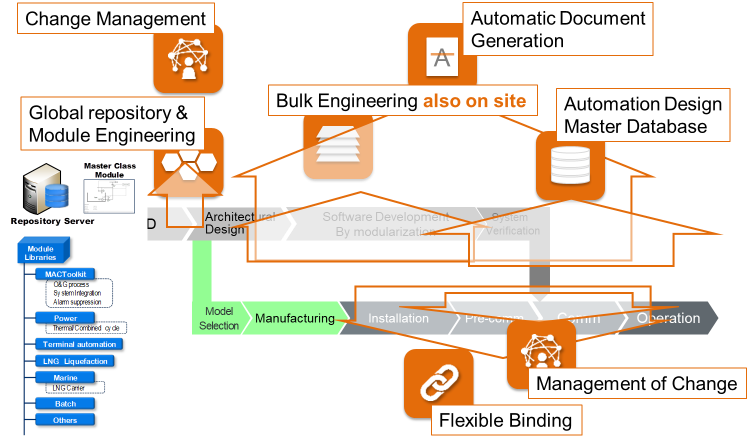
Smart DCS Engineering
Smart SIS Engineering (Module Eng.)
DCS 애플리케이션 개발과 유사한 방식으로, Safety, ESD 및 F&G 시스템의 모듈형 애플리케이션 개발 역시 OpreX의 프로세스 및 워크플로우를 기반으로 수행됩니다. 이 과정에는 Universal, Safety N-IO 및 Configurable Cabinet과 함께 Smart JB를 활용하는 방식이 포함됩니다. 하드웨어는 DCS와 동일하게 애플리케이션 개발과 독립적인 프로세스에 따라 구성되며, 현장 시공 일정에 맞춰 필요한 시점에 출하할 수 있습니다. 애플리케이션 개발 또한 앞서 설명한 것과 동일한 모듈형 개발 프로세스와 원격 연속 테스트(Remote, Continuous Testing) 프로세스를 따릅니다.
Functional Safety Management (FSM)
FSM(Functional Safety Management)은 SIS 프로젝트 수행에 필수적인 요소로, 플랜트의 Safety Life-cycle 전반에 걸쳐 인명, 환경 및 자산에 미치는 유해한 영향을 사회적으로 허용 가능한 위험 수준으로 낮추는 것을 목표로 합니다. Yokogawa는 국제 표준 IEC 61508 및 IEC 61511에 따라 Safety Solution을 구현하기 위해 FSM을 적용하고 있습니다. 이는 Yokogawa의 글로벌 절차를 엄격하게 준수하고, 국제적으로 공신력을 인정받는 TÜV Rheinland의 독립적인 인증을 통해 실현됩니다.
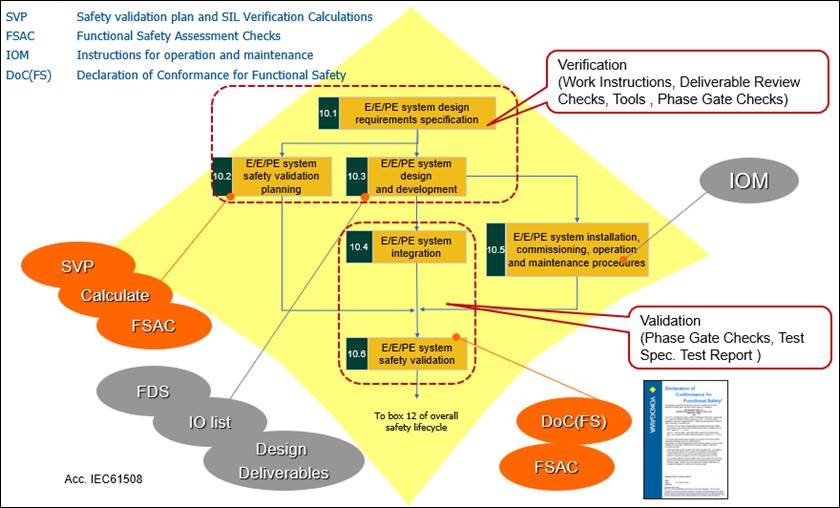
Yokogawa‘s FSM
Commissioning Support Package (F-CSP/PRM CSP)
Yokogawa의 N-IO와 F-CSP(Field Commissioning Support Package)를 활용하면 컨트롤러 설치 전에도 초기 계기 점검, 전자적 검증 및 현장 작업을 수행할 수 있습니다. F-CSP는 컨트롤러 없이도 N-IO 노드 구성, Input/Output 검증 및 HART 파라미터 다운로드를 수행합니다. 또한 현장 계기의 물리적 상태와 I/O 연결 상태를 검증합니다.
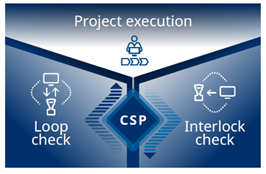
PRM CSP(Commissioning Support Tool)는 Field Control Station을 통해 HART 계기의 Loop Check를 자동으로 수행할 수 있습니다. 이 도구는 시운전 단계에서 HART 및 FOUNDATION Fieldbus H1 기반의 디지털 현장 계기를 대상으로 연결 상태, Loop Check, 측정 범위(Range), Engineering Unit, 신호 변환, Interlock check를 점검하고 검증할 수 있도록 지원하며 이를 통해 다음과 같은 효과를 달성할 수 있습니다:
- 현장 계기 시운전 시간 및 비용 절감
- 현장 계기 시운전 품질 향상
Flexible Binding (F-CSP with AD Suite)
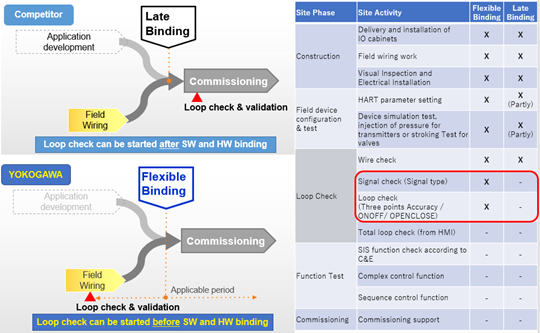
Commissioning Support Package를 활용해 현장 정보를 검증하면 해당 정보가 시스템 엔지니어링 데이터베이스에 반영됩니다. 업데이트된 데이터베이스 정보는 애플리케이션 소프트웨어에 자동으로 바인딩됩니다. 이를 Flexible Binding이라고 하며, 다음과 같은 이점을 제공합니다:
Late Binding vs Flexible Binding Image Zoom
- Field Enclosure의 조기 출하 가능
- 전체 시스템이 현장에 준비되지 않은 상태에서도 현장 작업을 조기에 완료할 수 있도록 지원
- SAT의 어느 단계에서든 DCS/SIS와 유연한 바인딩 가능
- 보다 원활한 시운전 및 Start-up 지원
- 프로젝트 후반의 변경 사항 대응
시스템은 프로젝트 전체 일정에 영향을 주지 않으면서도 프로젝트 후반에 발생하는 수정 및 변경 사항을 유연하게 수용할 수 있는 충분한 기능을 갖추고 있습니다.
Process Simulator (LCDS)
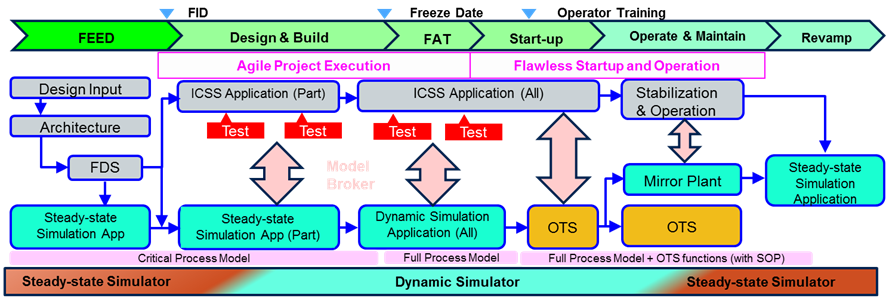
Dynamic Process Simulation은 최근 수년간 지속적으로 발전해 왔으며, 이에 따라 시뮬레이션 기술과 Life-Cycle Dynamic Simulator(LCDS)의 적용 범위가 크게 확대되었습니다. LCDS는 프로젝트 수명주기 전반에 걸쳐 다음과 같은 주요 산출물을 제공합니다:
- Dynamic Process Simulation Model: 플랜트 공정의 동적 시뮬레이션 모델 개발
- ICSS Configurations & Integration: 동적 공정 모델과 자동화 시스템 구성의 에뮬레이션 간 통합
- ICSS Checkout: 사전에 정의된 운전 시나리오(기동, 정상 운전, 비정상 상황, Alarm Management)를 기반으로 한 테스트
- Operator Training: 신규 ICSS 플랫폼 테스트, 표준운전절차(Standard Operating Procedure, SOP) 검증, 초기 교육 및 보수 교육을 통한 운전원 역량 검증
LCDS 산출물은 프로젝트의 설계 및 구축(Design & Build) 단계부터 운영 및 유지보수(Operation & Maintenance) 단계까지 점진적으로 개발하고 활용할 수 있으며, 재사용 및 지속적인 개선도 가능합니다.
Foundation for Life-Cycle Management
프로젝트가 운영팀으로 인계되면 OpreX 방법론은 플랜트 내 모든 자동화 시스템의 지속 가능한 운영을 위한 기반을 제공합니다. Sustainable Plant는 설치된 자동화 시스템을 지속적으로 유지·개선하여 안전하고 보안성이 높으며 안정적인 시스템 환경을 확보하고, 수명주기 전체에 걸친 비용을 최소화하고자 하는 Yokogawa의 개념입니다. 자세한 내용은 Sustainable Plant 및 Yokogawa System Upgrade Solution을 참조하시기 바랍니다.
기술 및 솔루션, 요꼬가와에 대한 자세한 정보를 찾고 계십니까?
견적 및 기술문의