Maintain sub-degree temperature control, eliminate thermal drift, and protect yield at advanced nodes—while minimizing HVAC energy waste.
Yokogawa digitizes cleanroom microclimates with secure, high-integrity, real-time sensing.
Introduction
As fabs push into 3 nm, 2 nm, and advanced packaging, temperature stability becomes a yield limiter—not just a facilities KPI. Sub-degree drift can drive dimensional changes, overlay error, and tool-to-tool variability that snowball into rework or scrap. At the same time, fabs face tightening expectations around energy efficiency and greenhouse gas reduction, with industry initiatives accelerating toward net-zero targets across Scopes 1 and 2.

Example of workers in a semiconductor fabrication plant, with cleanroom suits and high-tech equipment.
Operationally, the cleanroom is also governed by globally recognized cleanroom standards that define classification and the need for ongoing monitoring evidence. ISO 14644-1 defines cleanroom air cleanliness classification, while ISO 14644-2 specifies minimum requirements for a monitoring plan that provides evidence of performance over time.
Yokogawa helps fabs balance thermal precision, compliance, and sustainability by building a secure, scalable sensing and data layer that turns localized thermal behavior into actionable intelligence—without adding operator burden or compromising cleanroom discipline.
The Challenge
Why traditional thermal monitoring falls short
Cleanroom temperature monitoring often misses the operational reality of “micro-climates” created by high-density tools, localized airflow patterns, and frequent recipe changes:
- Thermal Layering & Micro-Climates: Standard HVAC sensors often overlook localized heat pockets generated by high-performance machinery, leading to undetected "hot spots.“
- Data Latency: Legacy systems lack the sampling speed to capture rapid heat spikes, preventing real-time corrective actions.
- Calibration Integrity: Maintaining traceable, high-accuracy thermal data is difficult in a 24/7 operating environment is labor-intensive and prone to human error.
- Alarm fatigue from nuisance events (e.g., brief access cycles) that desensitize operators
- Limited remote visibility that increases unnecessary gowning and response time
- Disconnected data that prevents correlation across zones, shifts, tools, and maintenance events.
- The Energy Paradox: To ensure stability, many facilities "over-cool," leading to excessive energy waste and increased carbon emissions.
The Solution
Yokogawa SMARTDAC+ & Wireless Edge Sensing
Yokogawa’s thermal monitoring architecture creates a comprehensive "digital twin" of your clean room’s climate, integrating edge sensing with advanced data management. Scalable from point monitoring to facility-wide thermal intelligence—supporting modernization, revamps, and expansion:
SMARTDAC+ GX/GP Series
The Thermal Core
The SMARTDAC+ GX20/GP20 serves as the high-precision data hub. It supports up to 100 channels of direct thermocouple or RTD inputs with industry-leading accuracy. With its modular I/O, it captures the high-fidelity data required for sub-degree stability.
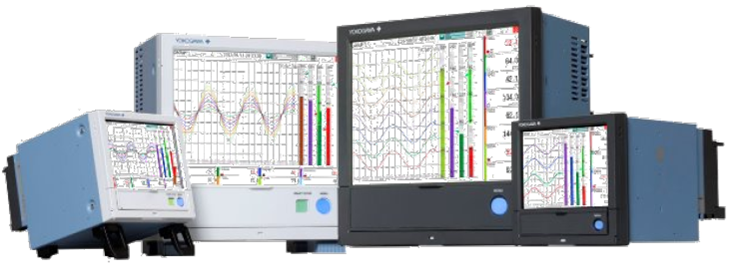
SMARTDAC+ GX Series
Advanced Analytics & Math Functions
Beyond simple logging, the GX series utilizes AI-driven math functions to calculate real-time Mean Kinetic Temperature (MKT) and thermal stability trends. This allows for predictive HVAC adjustments, neutralizing thermal drifts before they breach tolerance limits.
Sushi Sensor (Wireless IIoT): Total Visibility
For facility revamps and hard-to-reach areas, Yokogawa’s Sushi Sensor (Wireless Temperature) utilizes LoRaWAN® technology. These sensors allow operators to monitor temperature near motors or inside tight equipment enclosures without the cost of new cabling, facilitating a rapid digital rollout.
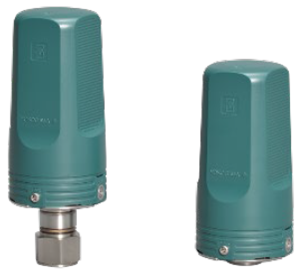
Wireless Temperature Sushi Sensors
Collaborative Information Server
(CI Server) Integration
All thermal data can be unified into the CI Server, Yokogawa’s cross-platform data orchestrator. This enables remote, secure web access to real-time thermal maps, ensuring the clean room remains sealed, sterile, and monitored from any location.
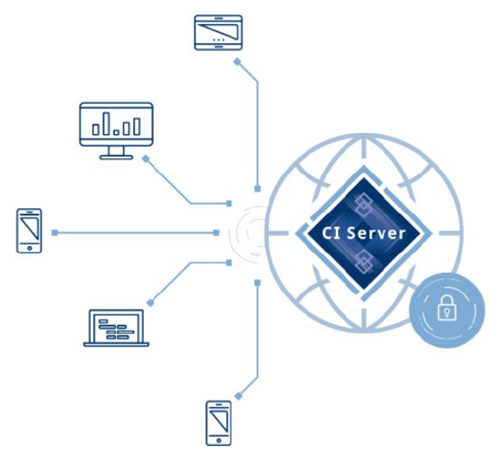
CI Server
Key Benefits
- Enhanced Yield & Zero-Drift Reliability: Yokogawa’s world-class input modules ensure long-term stability, significantly reducing wafer scrap and the frequency of costly recalibrations.
- Sustainability through Thermal Efficiency: By identifying areas of "over-cooling," plant managers can optimize HVAC setpoints to reduce energy consumption by up to 15% while maintaining safety margins.
- Intelligent Smart Alarming: Customizable "Delay Alarms" ignore transient temperature spikes caused by brief equipment access, focusing operator attention on genuine thermal runaway risks.
- Audit-Ready Compliance: Automatically generates encrypted, electronic thermal reports that comply with global quality standards (such as ISO 14644-1), eliminating paper-based errors and dust contamination.
Industrias Relacionadas
-
Farmacéutica
La industria farmacéutica enfrenta actualmente el importante reto de aprovechar al máximo las oportunidades que se presentan en los grandes mercados emergentes. Ahora, más que nunca, las compañías farmacéuticas necesitan introducir técnicas de fabricación ajustada que mejoren la rentabilidad. Siendo uno de los principales proveedores de automatización en el mundo, Yokogawa asume el compromiso de suministrar las mejores soluciones posibles para sus mejores prácticas de fabricación.
-
Semiconductor
Yokogawa provides the products and solutions that support for the semiconductor industry.
-
Semiconductor Equipment
Yokogawa provides the products and solutions that support for the semiconductor equipment industry.
Productos y Soluciones Relacionadas
-
Collaborative Information Server
Accelerate digital transformation and boost production efficiency
-
Touch Screen GP10/GP20
- SMARTDAC+TM GP10/GP20 Yokogawa Data Logger
- Paperless recorder
- Intuitive, human-centric design
- Web-enabled functionality
- Scalable architecture
-
Touch Screen GX10/GX20
- SMARTDAC+ Touch Screen GX10/GX20
- Multi-point touch screen recorder
- Intuitive design
- Web functionality
- Scalable
- GX20 supports 920 MHz band wireless
-
Wireless Temperature Sensor - Wireless Temperature Monitoring
Battery-powered wireless temperature sensor for IIoT, with LoRaWAN (6mi/10km Wi-Fi range). Corrosion-resistant materials, easy installation, and up to a 10-year battery life. Monitors temperature in hazardous areas.
-
Wireless Temperature Transmitters
Yokogawa offers the dual-input YTA510 temperature transmitter.
¿Tiene Dudas?
Contacte a un Experto de Yokogawa y conozca como podemos ayudarle a resolver sus retos.