As Peter Drucker would say, “a well-managed refinery is boring. Nothing exciting happens in it because the crises have been anticipated and have been converted into routine.” The best way to keep things from being exciting is to deploy a Yokogawa solution, which will:
- Enable operational knowledge management
- Increase productivity
- Ensure compliance with health, safety, and environmental regulations.
Clear information delivered in context allows responsible personnel to deal with events efficiently and maximize plant profitability.
Discover how to realize a boring, unexciting refinery today.


Challenges
Customer Challenge

Knowledge-intensive operations in refineries such as plant startup and shutdown, compressor start-up, and crude tank switchover still require manual handling by a large number of operators. For instance, an effective crude switchover transfer will often require that a complicated set of operations including starting/stopping motors, opening/closing valves, flow measurement and flushing be executed in a specific sequence decided by only the most experienced operators.
In addition, because experienced operators will eventually retire or resign, it is necessary to retain their know-how and best practices and pass on such knowledge precisely to unskilled operators. This is crucial in order to maximize production efficiency and to avoid or eliminate shutdowns that could result from mis-operation.
Our Solutions
By using Exapilot, Yokogawa’s knowledge-based automation solution, know-how and best practices of operation can be formalized, managed and configured in a standardized procedural flowchart. This standardized approach not only enables 100% automation of complicated operations, but also guarantees that valuable expertise is precisely transferred and executed whenever there is a change of operators or a difference in their skill level.

Customer Benefits

One of our customers, a leading producer and distributor of oils, lubricants, and petrochemical products in Japan, estimates that introducing Exapilot in one of its experimental facilities reduced man-hours by up to 2,000*.
Customer Challenge

Energy savings can be achieved at a refinery by installing highly efficient facilities and operating them more efficiently. Yokogawa has solutions that help companies improve efficiency and reduce energy consumption.
Our Solutions
Ever since the oil crisis in the 1970s, the refining industry in Japan has dealt with rising energy prices and strict regulations by reducing energy consumption and cutting CO2 emissions. Refinery operators have accomplished this by introducing some of the world’s most advanced technologies, and have been supported in this by Yokogawa's systems, solutions, and engineering capabilities. Yokogawa has been involved in more than 1000 refinery projects and has built a strong reputation in this industry. The company provides solutions that save energy through increased efficiency.
1. Visualization of energy consumption and management of key performance indicators (KPI)
To save energy and reduce CO2 emissions at refineries, the status of emissions and energy consumption must be clearly visualized. Yokogawa provides a comprehensive range of solutions such as field sensors and production management systems that rely on the latest technologies to monitor and manage energy related parameters.
- Visualization through operation management
- Visualization through production management
- Visualization of field data
2. Reducing excess O2% in furnace/boiler flue gas
When excess oxygen (O2) is present in flue gas, incomplete combustion is the result. Usually, O2 is kept within 1.5–2% of the optimum level, but it has been shown that laser sensing technology can improve the speed and reliability of CO/O2/CO2 measurement and lead to even further reductions in excess O2, resulting in additional energy savings.

Enabling Technology

Yokogawa’s new TDLS8000 houses all of the industry’s leading features in one robust device. The platform design is for in situ measurements which negate the need for sample extraction and conditioning. The non-contacting sensor allows for a variety of process types including corrosive, abrasive and condensing.
Customer Challenge

Oil blending is the final step in the process of converting crude oil into finished products such as gasoline. When using traditional blending technologies such as tank blending and ratio blending, refiners tend to use excess amounts of additives to guarantee that the gasoline product meets the minimum specifications set by regulators. However, due to the high cost of blending additives, a blending solution that can both reduce quality giveaways and meet the minimum specifications is required.
Our Solutions
Yokogawa offers a blending optimization system, or a Blending Property Control (BPC) solution, which calculates the optimum blend ratios in real time, based on values measured by continuous online analysis of product properties from an NIR analyzer, and automatically modifies the controller's setpoints to automatically adjust the blend ratios online.
In addition to the BPC solution, Yokogawa can also provide fully integrated offsite solutions that cover all offsite process operations such as oil movement systems (OMS), laboratory information systems, analyzer systems and scheduling/planning systems.

Customer Benefits

Following are customer testimonials for the benifits that could be realized using Yokogawa's BPC and other offsite solutions:
- Improved security: the security of off-site area operations is guided and supervised by the system.
- Enhanced product quality: system supervision minimizes the probability of operational errors that can cause product contamination.
- Improved environmental performance: movement control by the OMS resolves environmental problems that may be caused by tank overflow and other factors.
- Increased operational efficiency: the number of operations carried out by each person is minimized through valve motorization and the ability to search the existing isolation for lined-up jobs.
- Extended spatial awareness: full area awareness is available to all operators and is kept continuously up-to-date in the system database.
Details
Yokogawa has experience with approximately 1000 projects in the refining industry earning the Company's high credibility from refiners.

Design and Engineering
Front-End Engineering & Design (FEED), Main Instrumentation Vender (MIV) Services
Installation and Commissioning
Site Engineering, Integration Tests, Turn-Key Services
Operation and Optimization
Optimization Consulting, 24/7 Operation Support, Online Diagnosis Support
Maintenance and Upgrade
Asset Optimization, Online Upgrade, Lifecycle Solution Support
Revamp and Expansion
Online Expansion, Hot Cutover
Resources

Yokogawa provided a Dynamic Real-Time Optimizer (RT-OP) to optimize the operations of the hydrocracker unit at Aramco Riyadh Refinery.
By dynamically calculating optimal setpoints, the RT-OP optimizes operations beyond the APC system.

An in-situ TDLS8000 installed on a process leg or bypass stream provides a reliable and high-speed measurement that is representative of the process composition.

VOC (Volatile Organic Compounds) are compounds that evaporate easily at room temperature. They generate photochemical oxidants and cause soil and water pollution.

Conductivity measurement can be used as a reliable indicator of the real-time brine concentration. Using an online process analyzer removes the need for timely grab sample analysis.


Enhance the efficiency and safety of your vapor recovery systems and flare/vent headers with Yokogawa's cutting-edge Tunable Diode Laser Spectrometers – the TDLS8000 and TDLS8220. Elevate your oxygen measurement capabilities with our interference-free analyzers, providing direct measurements. Experience unparalleled reliability, ensuring minimal upkeep and secure operations without the need for system shutdowns.

Ideal for various tank and vessel level measurements, diaphragm seal systems with compensating capillaries set a new standard for high performance, safety, and reliability.

The Yokogawa DTSX1 Fiber Optic Heat Detector protects your equipment against abnormal heat events while being more affordable than other heat detection solutions.
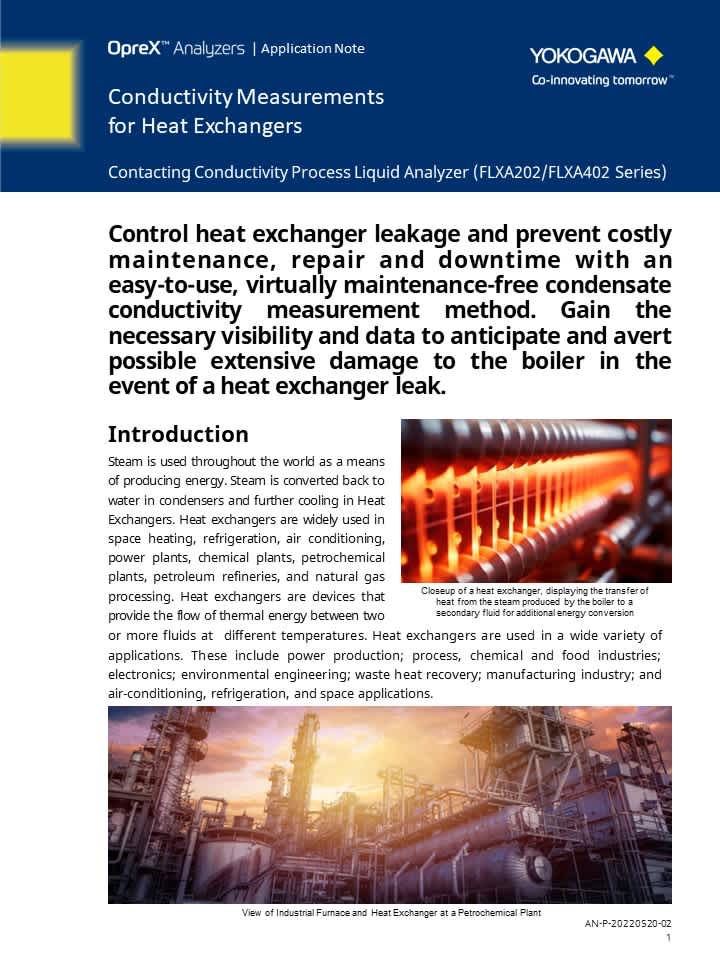
Heat exchangers are devices that provide the flow of thermal energy between two or more fluids at different temperatures. Heat exchangers are used in a wide variety of applications. These include power production; process, chemical and food industries; electronics; environmental engineering; waste heat recovery; manufacturing industry; and air-conditioning, refrigeration, and space applications. Yokogawa offers a means to control heat exchanger leakage and prevent costly maintenance, repair and downtime with an easy-to-use, virtually maintenance-free condensate conductivity measurement method.

Ion Exchange is a method for the exchange of ions between two electrolytes or between an electrolyte solution and a complex molecule. In most cases the term is used to denote the processes of purification, separation, and decontamination of aqueous and other ion-containing solutions with solid polymeric or mineralic ion exchangers.
The U.S. refineries represent approximately 23 percent of the world's petroleum production, and the United States has the largest refining capacity in the world. Petroleum refining is an industry, which is undergoing intense amounts of scrutiny in the United States from regulatory agencies and environmental groups.
Yokogawa's Data Aquisition Temperature Uniformity Survey enable heat-treaters to produce accurate records of TUS, instrumentation and thermocouple calibration certificates.

The client wanted to monitor the temperature on a chimney. Exhaust air is exposed to the heat on the way traveling from the inlet to the outlet in the chimney. Then constituent of the air transform to harmless elements. It is important to keep the temperature in the chimney as designed.

In this eBook we explain how to improve fired heaters safety & efficiency by controlling combustion using TDLS technology. Download it now and learn:
- The 4 top industry challenges related to fired heaters
- How to efficiently and safely manage combustion
- How TDLS technology can improve operational excellence in fired heaters
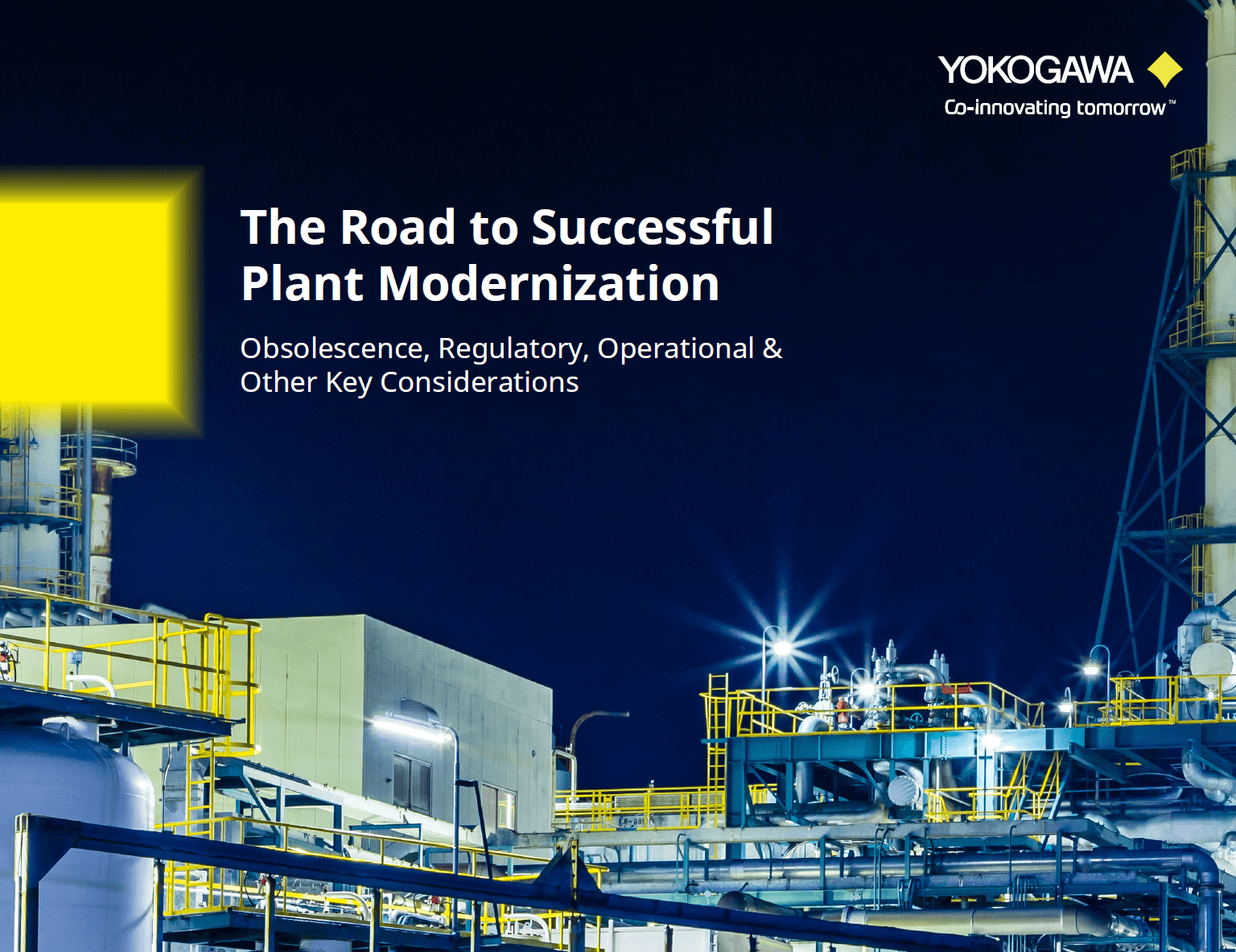
Download this eBook and learn:
- The top challenges that drive reinstrumentation
- How to plan for and achieve a successful project
- Best practices in identifying your project scope
- 5 ways to improve operator effectiveness
- Different scenarios and best practices for updating, migrating or replacing process controls, safety systems, and instrumentation in plants
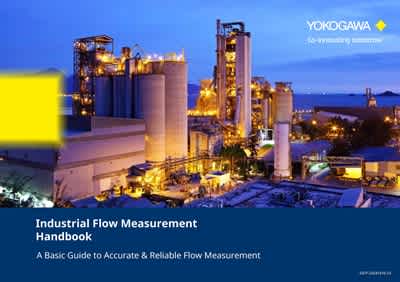
A Basic Guide to Accurate & Reliable Flow Measurement.
Smart devices, like Yokogawa’s line of Total Insight transmitters and flowmeters contribute to Digital Transformation during operations and throughout the lifecycle of the instrument.
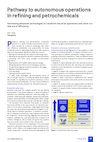

Vibrating element (VBE) type gas measurement devices measure refinery reformer stream compositions, power generator hydrogen purity, centripetal compressor gas inputs, process heater fuel gas quality, and others in multiple process control environments.

Hydrocarbon Processing article discussing tunable diode laser (TDLS) gas analysis for combustion management in fired heaters | June 2015.

Optimizing the maintenance cycle is not always straightforward. In some cases, cleaning once a week is sufficient and other processes may require every 8 hours.
- Ammonia
- Base Chemical
- Biomass Power
- Chemical
- Chlor-Alkali
- Desalination
- Drinking Water Treatment
- Energy Transition
- Food & Beverage
- Geothermal Power
- Hydro Power
- Industrial Water
- Iron & Steel
- LNG Liquefaction
- LNG Regasification & Storage
- LNG Supply Chain
- Methanol
- Mining & Metal
- Nuclear
- Ocean Thermal Energy Conversion
- Pharmaceutical
- Power Generation
- Processing & Fractionation
- Pulp & Paper
- Refining
- Specialty & Fine Chemical
- Water & Wastewater

Select the correct pH glass and reference type to improve your pH sensor lifetime and you can limit or even eliminate the effects of temperature and pressure on especially the reference sensor.
- Ammonia
- Base Chemical
- Biomass Power
- Chemical
- Chlor-Alkali
- Desalination
- Drinking Water Treatment
- Energy Transition
- Food & Beverage
- Geothermal Power
- Hydro Power
- Industrial Water
- Iron & Steel
- LNG Liquefaction
- LNG Regasification & Storage
- LNG Supply Chain
- Methanol
- Mining & Metal
- Nuclear
- Ocean Thermal Energy Conversion
- Power Generation
- Processing & Fractionation
- Pulp & Paper
- Refining
- Specialty & Fine Chemical
- Water & Wastewater

The lifetime of a pH sensor has a significant impact on the overall annual costs of a pH measuring loop. Optimizing four key factors will decrease these costs and optimize process control and overall plant efficiency.
- Ammonia
- Base Chemical
- Biomass Power
- Chemical
- Chlor-Alkali
- Desalination
- Drinking Water Treatment
- Energy Transition
- Food & Beverage
- Geothermal Power
- Hydro Power
- Industrial Water
- Iron & Steel
- LNG Liquefaction
- LNG Regasification & Storage
- LNG Supply Chain
- Methanol
- Mining & Metal
- Nuclear
- Ocean Thermal Energy Conversion
- Pharmaceutical
- Power Generation
- Processing & Fractionation
- Pulp & Paper
- Refining
- Specialty & Fine Chemical
- Water & Wastewater

Learning these four lessons will help you improve your engineering skills and most importantly extend the life of your pH sensors.
- Ammonia
- Base Chemical
- Biomass Power
- Chemical
- Chlor-Alkali
- Desalination
- Drinking Water Treatment
- Energy Transition
- Food & Beverage
- Geothermal Power
- Hydro Power
- Industrial Water
- Iron & Steel
- LNG Liquefaction
- LNG Regasification & Storage
- LNG Supply Chain
- Methanol
- Mining & Metal
- Nuclear
- Ocean Thermal Energy Conversion
- Pharmaceutical
- Power Generation
- Processing & Fractionation
- Pulp & Paper
- Refining
- Specialty & Fine Chemical
- Water & Wastewater
Downloads
Brochures
- Yokogawa Solutions and Products in North America (9.9 MB)
- Brochure: Five Mistakes When Selecting a Flowmeter
- Five Mistakes When Selecting a Flowmeter (439.6 KB)
- Yokogawa Performance Blending Solution
- Steam Methane Reformer for Methanol Production
- Improved Combustion with TDLS - TDLS8000, TDLS8200 Series (2.0 MB)
- Yokogawa Engineered Solutions for Ambient Air Monitoring (761.2 KB)
- Improved Combustion Efficiency and Safety with TDLS Measurements (526.2 KB)
- TDLS8220 LOC (Limiting Oxygen Concentration) Infographic
- Extractive Tunable Diode Laser Spectrometer TDLS8220 (5.6 MB)
- Refining Solutions (12.5 MB)
- Yokogawa Performance Distillation Solutions
- Overcome Temperature Effects for DP Level (778.1 KB)
Technical Information
Videos
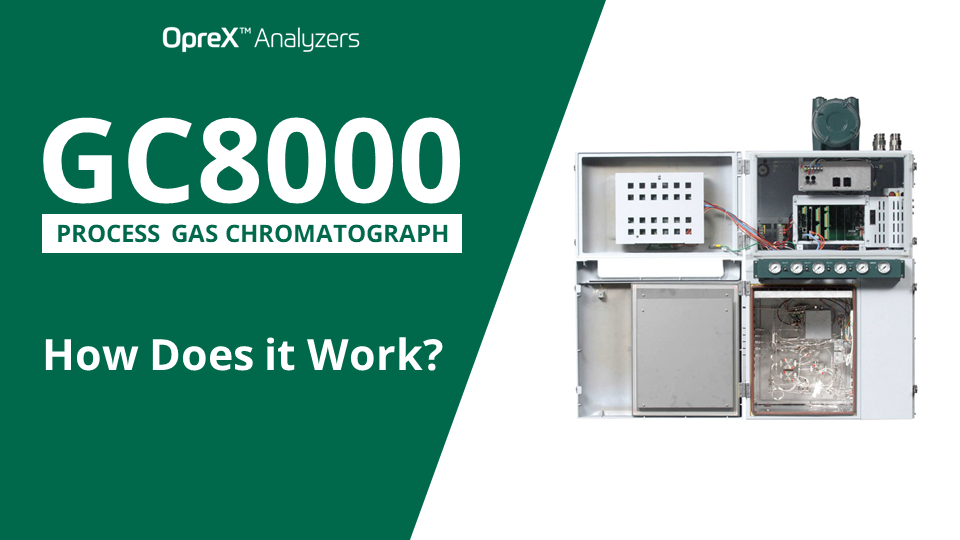
Yokogawa programs each oven to suit one or multiple process samples via its main components (sets of valves, columns, and detectors explicitly designed to the customer's application), and the combination of which is based on the chemical properties of all or some of the components in the specific gas mixture.
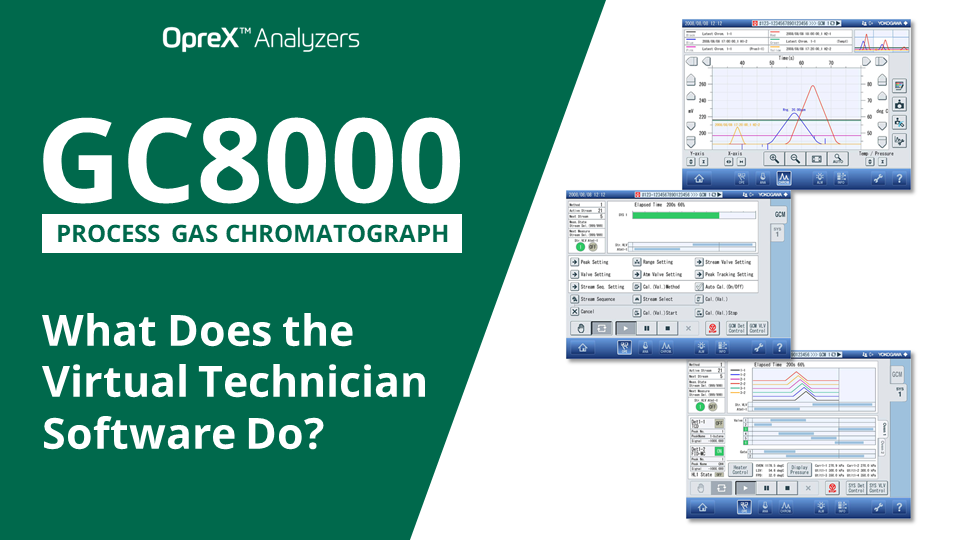
The GC8000 has an innovative predictive diagnostics; Virtual Tech, package built in to help keep the unit operating at peak performance. A number of Key Performance Indicators (KPI) are monitored during every analysis to verify the analyzer is operating within proper tolerances. The data monitored includes: Chromatogram Shape, Peak Data, Valve Data, Detector Data, Oven Performance Data
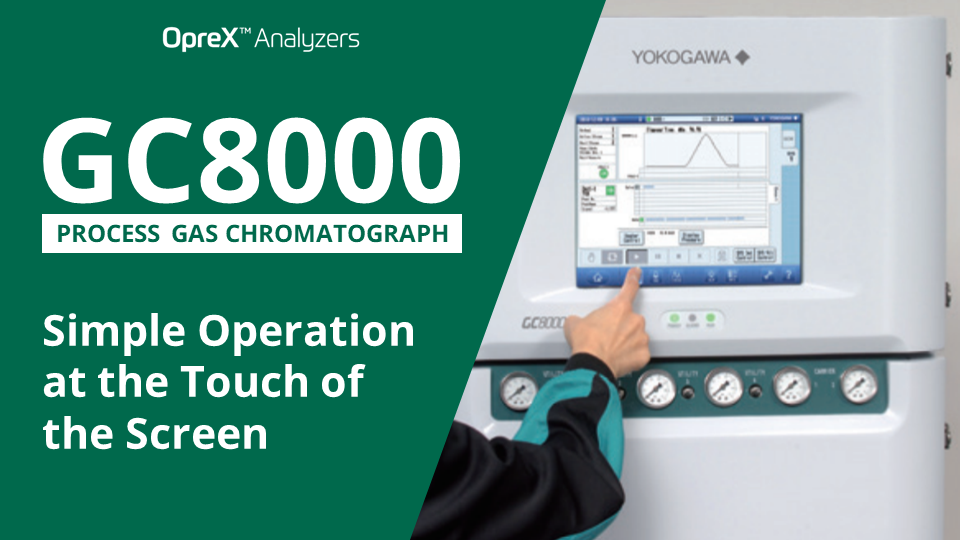
The GC8000 has a built-in 12-inch color touch screen display that dramatically simplifies maintenance. At the touch of the screen, the technician can access all of the analytical parameters and measurement results; displayed in easy-to-understand graphical color screens.

The GC8000 is a process analyzer that uses gas chromatography to measure the composition of multiple components in a stream. Engineered with reliable electronics and intelligently designed columns and valves, the GC8000 improves ease of maintenance while reducing operating costs. Its intuitive touchscreen HMI with system diagnostics reduces operation and maintenance headaches, maximizing measurement accuracy, reliability, and uptime. More Information



Fired heaters are the largest energy consumer in the manufacturing sector and represent a tremendous opportunity for energy savings. However, energy efficiency is not the only concern for fired heaters. Compliance and safety are continuous challenges.
In this one-hour presentation, we will discuss:
- How to improve fired heater safety and efficiency by controlling combustion using Tunable Diode Laser Spectrometers (TDLS) technology
- The 4 top industry challenges related to fired heaters
- How to efficiently and safely manage combustion
- How TDLS technology can improve operational excellence in fired heaters
In this webinar, we will:
- Share best practices for monitoring, recording, and transferring data
- Challenges in data acquisition and how Yokogawa can help
- Demonstrate GA10 Data Logging Software capabilities

Sample systems are a crucial component of and have a significant impact on the performance of a process gas chromatograph analyzer. When working on sample systems, you must have a constant awareness of time delays. This fundamentals webinar will take the mystery out of lag times.

News
-
Press Release | Corporate Feb 20, 2023 Yokogawa Enters into Partnership with Radial Software Group to Provide AI-powered Viewport Software Worldwide
- Giving customers a single view of all their technical data -
-
Press Release | Projects Dec 22, 2014 Yokogawa Wins Control System Order for Large Oil Refinery in Southwestern China
-
Press Release | Projects Sep 8, 2014 Yokogawa Receives Order to Provide Control System for New PEMEX Ultra-low-sulfur Diesel Fuel Plant
Looking for more information on our people, technology and solutions?
Contact Us