Flow Meters Built for Accurate Measurement and Process Efficiency
Get high accuracy measurements and improve process performance with Yokogawa ROTAMASS Coriolis flow meters. Whether you need precise measurement for high-value processes, improved control over dosing and blending, or reliable performance under temperature and pressure conditions that are variable and demanding, ROTAMASS combines application-specific sensor designs with advanced digital technologies to deliver the mass flow, density, and temperature data you need to improve efficiency and make stronger operational decisions.
10 Key Features of Yokogawa Coriolis Flow Meters
Learn about the attributes that make Coriolis Flow Meters so useful for such a wide array of applications.
What Are You Trying to Measure?
Start with your primary measurement challenge. Each ROTAMASS Coriolis meter family is designed for a different range of flow rates, process conditions, and application requirements.
Not Sure Which ROTAMASS is Right for You?
A Yokogawa flow meter specialist can help evaluate your application and identify the appropriate sensor, transmitter, size, materials, connections, outputs, and options.
Compare ROTAMASS TI Models
ROTAMASS TI can provide very high accuracy for measuring liquids and gases under process conditions.
| ROTAMASS Nano |
ROTAMASS Prime |
ROTAMASS Hygienic |
ROTAMASS Supreme |
ROTAMASS Intense | ROTAMASS Giga |
||
|---|---|---|---|---|---|---|---|
 |
 |
 |
 |
 |
 |
||
| Main Application | For low-flow applications | Versatility with superior turndown and low pressure loss | For food & beverage, biotechnology, and pharmaceutical utility applications | Superior performance under demanding conditions | For high-pressure applications | Flexible installation for high flow applications | |
| Process temperature | -50 to +260 °C | -70 to +200 °C | -70 to +140 °C | -196 to +350 °C | -70 to +150 °C | -70 to +350 °C | |
| Process pressure up to | 285 bar or 460 bar *1 |
100 bar | 40 bar | 100 bar or 250 bar *1 |
260 bar or 360 bar *1 |
100 bar or 180 bar *1 |
|
| Accuracy | Mass flow for liquids up to | ±0.1 % | ±0.1 % | ±0.1 % | ±0.1 % | ±0.1 % | ±0.1 % |
| Mass flow for gas up to | ±0.35 % | ±0.35 % | ±0.35 % | ±0.35 % | ±0.35 % | ±0.35 % | |
| Density for liquids up to | ±0.5 g/l | ±0.5 g/l | ±0.5 g/l | ±0.5 g/l | ±0.5 g/l | ±1.0 g/l | |
*1: available on demand
-
ROTAMASS Total Insight
It is the most technologically advanced mass flowmeter yet. By combining the superior design of the application specific flow sensor and transmitters with the Total Insight philosophy and functionality, the flexibility of the Rotamass to adapt to changing requirements guarantees performance throughout the lifecycle of the process measurement.
Details
ROTAMASS Total Insight Is Designed for Measurement Stability
External vibration, piping stress, and installation forces can affect Coriolis meter performance. ROTAMASS Total Insight uses Yokogawa’s Box-in-Box design to isolate the measuring tubes from these influences, helping maintain zero stability and consistent mass flow and density measurement.
SensPlus Buddy extends support beyond the sensor by connecting plant personnel with remote specialists through live video, images, text, and augmented-reality guidance, helping teams troubleshoot and resolve instrument issues more efficiently.
How Does Total Insight Support the Flow Meter Lifecycle?
The Total Insight concept supports ROTAMASS selection, configuration, commissioning, operation, verification, and maintenance. Depending on the selected transmitter and configuration, available capabilities may include sizing with FlowConfigurator, guided setup, event data logging, process diagnostics, Features on Demand, and in-line meter verification through Tube Health Check.
These functions provide engineering and maintenance teams with additional information for evaluating meter condition, investigating changes in process or instrument behavior, and planning service. They supplement rather than replace calibration, inspection, or verification procedures required by the application, quality system, or applicable regulations.
Which Industries Use Coriolis Flow Meters?
Coriolis flow meters are used across industries that require direct mass flow measurement, multiple process variables, or measurement across changing fluid conditions. Common applications include:
- Chemical and petrochemical: Dosing, blending, reactor feeds, concentration measurement, and the transfer of corrosive or viscous fluids
- Food and beverage: Ingredient dosing, batching, blending, density and concentration measurement, hygienic processing, and product transfer
- Pharmaceutical and biotechnology: Hygienic utility measurement, formulation, dosing, and processes requiring controlled material addition
- Oil and gas: Fuel measurement, loading and transfer, density measurement, and high-pressure liquid or gas applications
- Power and energy: Fuel-flow measurement, material accounting, and applications that compare fuel consumption with energy production
- Industrial manufacturing: Chemical dosing, coatings, lubricants, process skids, and material-balance applications
- Cryogenic and specialty applications: Low-temperature fluids, high-temperature media, low flow rates, high pressures, and other demanding process conditions
The appropriate Coriolis meter depends on the fluid, required flow range, temperature, pressure, density, viscosity, allowable pressure loss, material compatibility, accuracy requirements, process connections, and installation conditions. Another flow technology may be more practical when an application requires only basic volumetric flow measurement or when very large pipe sizes, limited available pressure, or installed cost make Coriolis measurement less suitable.
History of Yokogawa’s Coriolis Mass Flow and Density Meters
Yokogawa's Coriolis Mass Flow and Density Meters was sold worldwide in 1993 as ROTAMASS.
The first ROTAMASS was a product that improved noise resistance by adopting a self-drain structure that reduces fluid accumulation, and a Box-in-Box structure that greatly reduces piping noise and flow noise.
In the last decade, the use of Coriolis Mass Flow and Density Meters has shifted from general-purpose to supporting your needs in specific applications. While the technological complexity increased, the demand for simple operation and handling is also a rising requirement. Yokogawa answers these needs by offering six dedicated product lines with two specialized transmitters, allowing the highest flexibility — the ROTAMASS Total Insight.

Coriolis Flow Meter FAQ
How Do I Select the Right Coriolis Flow Meter?
The right Coriolis flow meter depends on the process fluid, minimum and maximum flow rates, required accuracy, line size, temperature, pressure, density, viscosity, allowable pressure loss, wetted-material requirements, and installation conditions. The meter should be sized around the required operating range rather than selected by pipe diameter alone.
Yokogawa offers six ROTAMASS sensor families for different measurement needs, including low flow, general process measurement, hygienic processing, demanding temperatures, high-pressure service, and high-flow applications. Final selection should account for the complete process conditions and the required sensor, transmitter, connection, communication, and approval options.
What Type of Flow Meter Is Best for Food and Beverage Processing?
The best flow meter for food and beverage processing depends on the product, measurement objective, cleaning requirements, and process conditions. Coriolis flow meters are frequently considered when an application requires direct mass flow, density, temperature, concentration, dosing, batching, or blending measurements from a single instrument.
Meter selection should also consider hygienic process connections, wetted materials, surface finish, drainability, clean-in-place or sterilize-in-place procedures, operating temperature, and required approvals. ROTAMASS Hygienic is designed for food, beverage, biotechnology, pharmaceutical utility, and other hygienic process applications. The final configuration should be verified against the facility’s process and sanitation requirements.
What Is the Best Flow Meter for Dosing, Batching, or Blending?
Coriolis flow meters are often used for dosing, batching, and blending because they directly measure the mass of material moving through the meter. They can also provide density and temperature data, which may support concentration measurement, formulation control, and verification of changing product conditions.
The best meter depends on the minimum batch size, required repeatability, flow range, fluid properties, response requirements, valve behavior, and allowable pressure loss. ROTAMASS Nano may be a suitable starting point for low-flow dosing, while other ROTAMASS families support larger batches and broader process conditions. The entire measurement and control system should be evaluated when repeatable batch totals are critical.
What Type of Flow Meter Is Best for a Brewery?
The best brewery flow meter depends on the measurement point and the fluid being measured. Coriolis flow meters may be suitable when a brewery needs direct mass flow, density, concentration, ingredient dosing, blending, transfer measurement, or material-balance information. Potential applications include wort and beer transfer, ingredient dosing, extract measurement, blending, and carbon dioxide dosing.
Selection should account for hygienic design, cleanability, process connections, flow range, pressure loss, temperature, fluid viscosity, and the presence of entrained carbon dioxide. ROTAMASS Hygienic is designed for food and beverage applications, but the final model and configuration should be selected using the complete brewery process conditions.
When Is a Coriolis Flow Meter Better Than a Magnetic Flow Meter?
A Coriolis flow meter may be preferred when an application requires direct mass flow, density, concentration, gas measurement, or measurement of a nonconductive liquid. Coriolis meters can measure multiple process variables from one instrument and do not require the process fluid to meet a minimum electrical-conductivity threshold.
A magnetic flow meter may be more practical for conductive liquids in large pipes, particularly when direct mass flow and density measurements are not required. Magnetic meters generally introduce little pressure loss because they do not place a flow restriction in the pipe. The better choice depends on the fluid, pipe size, required measurements, accuracy, pressure-loss limits, installation requirements, and total installed cost.
Which Flow Meter Is Best for High-Volume or High-Flow Processes?
The best flow meter for a high-volume process depends on the pipe size, fluid properties, required accuracy, available pressure, measurement variables, and installed cost. A Coriolis flow meter can be appropriate when high-flow applications also require direct mass flow, density, temperature, or concentration measurement.
ROTAMASS Giga is the ROTAMASS family designed for high-flow liquid and gas applications where capacity and installation flexibility are important. However, another flow technology may be more economical for very large pipes or processes that only require volumetric flow measurement. The expected minimum, normal, and maximum flow rates should be reviewed before selecting the meter technology and size.
Can a Coriolis Flow Meter Measure Viscous Liquids?
Coriolis flow meters can measure many viscous liquids, including oils, syrups, coatings, concentrates, and chemical products. Because Coriolis technology directly measures mass flow, it does not require a separate density value to convert a volumetric measurement into mass flow.
Viscosity remains an important sizing consideration because it can increase pressure loss through the measuring tubes. Fluid temperature can also change viscosity and affect pumping requirements. Meter selection should therefore consider viscosity at the actual operating temperature, minimum and maximum flow, available process pressure, line size, fluid density, and allowable pressure loss. Heat tracing, insulation, or another meter size may be required for some high-viscosity applications.
Can a Coriolis Meter Measure Carbonated Liquids or Liquids Containing Entrained Gas?
A Coriolis meter may be used with carbonated liquids or liquids containing entrained gas, but the expected gas content and process conditions must be evaluated carefully. Gas bubbles can change the density and dynamic behavior of the fluid inside the vibrating measuring tubes, potentially affecting mass flow, density, and derived volumetric measurements.
Application review should consider the expected gas fraction, bubble behavior, fluid viscosity, pressure, temperature, flow regime, meter size, and piping arrangement. Preventing unwanted air or gas from entering the process is generally preferable when possible. Applications with unavoidable entrained gas should be reviewed by a flow specialist to determine the appropriate ROTAMASS model, size, configuration, and expected measurement performance.
Should a Coriolis Flow Meter Be Sized to the Pipe Diameter or the Flow Rate?
A Coriolis flow meter should generally be sized for the required flow range and process conditions rather than automatically matched to the nominal pipe diameter. A meter that is too large may not provide the desired performance near the minimum flow rate, while a meter that is too small may create excessive pressure loss at maximum flow.
Proper sizing considers minimum, normal, and maximum flow, required accuracy, fluid density and viscosity, process pressure, temperature, allowable pressure loss, and connection requirements. In some applications, the selected meter may be smaller than the surrounding process pipe and installed with appropriately designed reducers. The complete piping arrangement should be reviewed during selection.
How Much Pressure Drop Does a Coriolis Flow Meter Create?
Pressure drop through a Coriolis flow meter varies with the meter size and measuring-tube design, as well as the fluid’s flow rate, density, viscosity, and operating conditions. There is no single pressure-drop value that applies to every Coriolis meter or application.
Selecting a smaller meter can improve performance at lower flow rates but may increase pressure loss at the maximum operating flow. This can be especially important for viscous liquids, gases, gravity-fed processes, and systems with limited pump head or available pressure. Coriolis meter sizing should balance the required measurement performance against the process’s allowable pressure drop and pumping capacity.
What Information Is Needed to Size a Coriolis Flow Meter?
To size a Coriolis flow meter, provide the fluid or gas being measured; minimum, normal, and maximum flow rates; process temperature and pressure ranges; fluid density and viscosity; line size; process connection; wetted-material requirements; required accuracy; and allowable pressure loss.
Selection may also require information about entrained gas, multiphase conditions, hygienic requirements, hazardous-area classification, available installation space, transmitter location, output signals, communication protocols, required approvals, and whether the application involves batching, filling, concentration measurement, or another specialized duty. The meter should be evaluated across the entire operating range rather than at only one design point.
When Is a Coriolis Flow Meter Not the Best Choice?
A Coriolis flow meter may not be the most practical choice when the process uses a very large pipe, has limited available pressure drop, or only requires a basic volumetric flow measurement. Another technology may also offer a lower installed cost for general utility monitoring where direct mass flow, density, temperature, and concentration measurements are unnecessary.
Applications involving substantial two-phase flow, entrained gas, difficult installation conditions, or flow rates outside the available meter range require additional review. Magnetic, vortex, ultrasonic, differential-pressure, or variable-area flow meters may be better suited to certain fluids and process objectives. Flow meter selection should compare measurement requirements, fluid properties, operating conditions, installation constraints, maintenance needs, and lifecycle cost.
Resources

A milk tanker is typically fitted with a pump and flowmeter that records the volume of milk loaded from each individual farm. Confirmation of the total volume of milk delivered to the dairy plant is performed either by weighing the tanker or via flowmeters in the tanker bays.

Accurate tracking of a facility's intake and output is needed as multiple state and federal agencies and environmental programs are involved. Since re-refined oil is considered a renewable resource it qualifies for various state and federal energy credits or pollution programs, so accurate accounting is critical.

Reconciliation achieved between fuel consumed and power generated, petroleum-fired plants demand precise, durable instrumentation. This note outlines solutions to support stable combustion, safety, and efficiency.

Avoid flashing issues while loading cryogenic liquids with safe, reliable, and accurate density fluid measurements utilizing Yokogawa’s industry-leading Coriolis flowmeter to eliminate measurement issues and increase the accuracy of inventory.

Trappist monks, brewers of the infamous Trappist beer, leverage the precise and reliable measurement of the Rotamass TI Prime Mass Flow Meter.


The process consists of mixing meats, oils, and water to create a finished product, animal feed, using a PLC-based automation system.

Accurate and reliable measurement of wash oil in a high temperature process to avoid solidification of the chemical, it is essential to adjoin heat and insulation to the piping and equipment. Therefore, thermal management of the pipe runs is required, to avoid any heat loss in the fluid to maintain the fluid properties.

Accurate measurement of the oil concentration would allow the heat/steam to be adjusted. Increases efficiency and saves money.
Challenge: The customer's existing measurement device was disturbed by vibration and could not be compensated or corrected by the product that was installed.

In the food and beverage industry, government regulations for whisky production require compliance of distillation strengths to strict limits. Yokogawa’s ROTAMASS TI Coriolis mass flowmeter is well-matched for the application with its density calibration for ethanol or water percentage and a special calibration for maximum accuracy and stability. The mass flow meter’s dual bent tube technology and advanced software enabled the customer to measure the very small and sensitive range required. Yokogawa commissioned the mass flowmeter onsite to ensure the correct installation and commissioning from the outset, affording Total Insight through the entire product lifecycle.
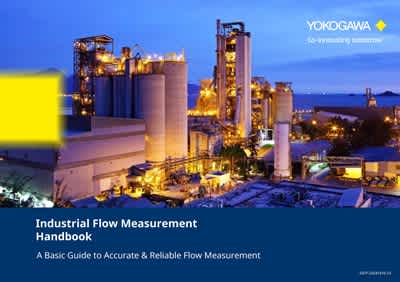
A Basic Guide to Accurate & Reliable Flow Measurement.

In this eBook, we explore how digital control systems, advanced instrumentation, and integrated data platforms can help you boost flexibility, extend equipment life, and reduce unplanned downtime - without compromising on safety or compliance.
Smart devices, like Yokogawa’s line of Total Insight transmitters and flowmeters contribute to Digital Transformation during operations and throughout the lifecycle of the instrument.

Downloads
Brochures
- Top 10 Coriolis Flow Meters Features Infographic Poster (3.8 MB)
- ROTAMASS Giga Coriolis - Mini Brochure (1.8 MB)
- ROTAMASS Prime Coriolis - Mini Brochure (1.8 MB)
- ROTAMASS Nano Coriolis - Mini Brochure (2.0 MB)
- ROTAMASS Intense Coriolis - Mini Brochure (1.7 MB)
- ROTAMASS Hygienic Coriolis - Mini Brochure (1.7 MB)
- ROTAMASS Supreme Coriolis - Mini Brochure (1.9 MB)
- Precision in Every Drop: Unveiling Net Oil Wealth through Density Mastery (2.5 MB)
- Coriolis Mass Flowmeter - ROTAMASS Total Insight (2.3 MB)
- Flow Meter Selection Guide Poster
- Yokogawa Performance Blending Solution
- Steam Methane Reformer for Methanol Production
- Preserving Our Water Resources One Drop at a Time (6.5 MB)
- Five Mistakes When Selecting a Flowmeter (439.6 KB)
- Brochure: Five Mistakes When Selecting a Flowmeter
- Electrolysis Solutions: Instrumentation Solutions for Electrolysis Plant Applications (841.1 KB)
- Gas and Combined Cycle Power Plant Solutions (3.7 MB)
Videos

ROTAMASS is the integral and remote type Coriolis Mass Flow Meter. Both types have highly refined digital signal processing electronics, so that accurate and stable mass flow measurement is achieved.
It is the most technologically advanced mass flow meter yet. By combining the superior design of the application specific flow sensor and transmitters with the Total Insight philosophy and functionality, the flexibility of the ROTAMASS to adapt to changing requirements guarantees performance throughout the lifecycle of the process measurement.
Discover how Yokogawa’s Total Insight Flowmeters with Process Guard transform operational safety and efficiency. In this video, we highlight its advanced capabilities in monitoring, diagnostics, and proactive intervention to minimize risks and maximize uptime.


Our experts review the theory behind flow measurement technologies. Discuss common flow application challenges and evaluate the different technologies when selecting a flow meter. They also give examples of best installation practices for successful measurements.

To effectively control and optimize industrial processes, trusting measurements from flowmeters is vital.
Looking for more information on our people, technology and solutions?
Contact Us