Measure Conductive Liquids with Stable, Low-maintenance Flow Measurement
Yokogawa ADMAG magnetic flow meters measure the flow of conductive liquids without moving parts or flow obstructions. Designed with dual-frequency excitation, Yokogawa's ADMAG series supports stable, responsive measurement across a variety of demanding industrial applications, including water and wastewater, chemical processing, pulp and paper, food and beverage, and slurry measurement.

What Are Magnetic Flow Meters?
Magnetic flow meters, also known as magmeters, are widely used in a variety of industrial field applications due to their reliable flow rate measurements and features such as low-pressure loss and maintenance-free operation.
What Do You Need to Measure?
Process Fluids, Chemicals & Slurries
ADMAG AXG Magnetic Flow Meters measure conductive, corrosive, and slurry fluids across oil and gas, chemical, pulp and paper, metals and mining applications.
Water & Wastewater
ADMAG AXW Magnetic Flow Meters measure water, wastewater, and other conductive liquids across municipal utilities and general industrial applications.

Don't See Your Application?
Measuring abrasive fluids, hygienic processes, or other specialized applications and installation requirements? Talk to a Yokogawa flow measurement expert to identify the right ADMAG configuration for your process.
All Products
-
ADMAG AXG
Magnetic flowmeters for oil & gas, chemical, pulp & paper, food & beverage, and metal & mining applications
-
ADMAG AXW
Magnetic flowmeters for water supply/sewage applications and general industrial applications
-
Magnetic Flowmeter CA Series
Magnetic flowmeters for slurry fluids and adhesive fluids
-
FSA130 Magnetic Flowmeter / Vortex Flowmeter Verification Tool
Magnetic Flowmeter/Vortex Flowmeter Verification Tool for diagnosis, reporting, and data management.
-
ADMAG TI Remote Transmitters
Remote transmitters (converters) for ADMAG TI provide outstanding reliability and quicker response time.
-
ADMAG TI - AXG Ethernet Flow Meter with EtherNet/IP Connectivity
Flow Meters with EtherNet/IP connectivity
Details
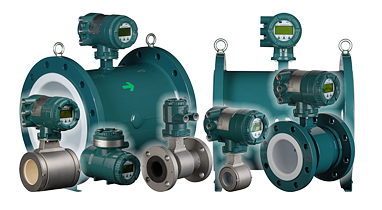 ADMAG Total Insight Electromagnetic Flow Meters
Total Insight is a Yokogawa concept for optimizing operations and reducing maintenance costs through every phase of the product lifecycle. The ADMAG TI magnetic flow measurement series consists of the ADMAG AXG and the ADMAG AXW electromagnetic flow meters. For industries such as pulp & paper and more, ADMAG TI series magnetic flow meters have digesters that are reinforced and protections to resist wear and deformation and extend service life, even under harsh high-pressure and high-temperature conditions. The ADMAG AXG is a complete redesign of the ADMAG AXF and will accommodate bore diameters from 2.5 mm up to 500 mm, while the revamped ADMAG AXW will accommodate bore diameters ranging from 25 mm to 1800 mm.
What Are the Benefits of Magnetic Flow Meters?
All Yokogawa magnetic flow meters are engineered with dual-frequency excitation, an innovative method that superimposes high frequencies on low frequencies, providing the best of AC and pulsed DC excitation. This technology ensures excellent flow noise immunity, fast response times, and excellent stability by utilizing the low-frequency spectrum while maintaining high accuracy and high zero stability.
With no moving parts or flow obstructions in the measuring tube, magnetic flow meters can reduce maintenance requirements and minimize pressure loss in your process. Their measurement principle also makes them suitable for applications involving corrosive fluids, wastewater, slurries, and other challenging process media when appropriate wetted materials are selected.
How Does a Magnetic Flow Meter Work?

Flow Measurement
Magnetic flow meters consist of a detector and a converter, with the principle of the detector adopting Faraday's electromagnetic induction law. Faraday's Law states that if conductive fluid flows in a magnetic field, an electromagnetic force is generated in proportion to the fluid's flow velocity. Generally, the inner walls of a detector's measurement tube (metal pipe made of SUS, etc.) are lined with a relatively thick insulating layer to prevent the shorting of the generated electromotive force. This insulating layer is referred to as "lining." There are many kinds of lining materials available that provide corrosion and abrasion resistance to the fluids being measured.
Magnetic Flow Meter FAQ
What types of fluids can a magnetic flow meter measure?
Magnetic flow meters measure electrically conductive liquids, including water, wastewater, acids, caustics, chemical solutions, slurries, pulp stock, and other conductive process fluids. Because the measurement principle depends on the electrical conductivity of the fluid, suitability should be confirmed against the conductivity requirements and material compatibility of the selected magnetic flow meter.
Can magnetic flow meters measure hydrocarbons, oils, or other non-conductive liquids?
Magnetic flow meters generally cannot measure non-conductive fluids such as most hydrocarbons and oils because electromagnetic flow measurement requires sufficient electrical conductivity. They also cannot measure gases or steam. For applications where fluid conductivity is uncertain, verify the fluid properties against the requirements of the selected flow meter.
What minimum fluid conductivity is required for an ADMAG magnetic flow meter?
Minimum fluid conductivity requirements depend on the ADMAG model, configuration, and application. Fluids must provide sufficient electrical conductivity for the meter to generate a reliable measurement signal. Check the specifications for the selected ADMAG AXG or ADMAG AXW configuration before sizing or specifying a meter.
Can an ADMAG magnetic flow meter measure slurries and fluids with suspended solids?
Yes. ADMAG magnetic flow meters can measure many conductive slurries and fluids containing suspended solids when properly selected and configured. Applications involving abrasive solids, high flow noise, or electrode adhesion require careful consideration of liner and electrode materials, fluid velocity, and installation conditions. Yokogawa's dual-frequency excitation technology supports stable measurement in demanding, high-flow-noise applications.
What is the difference between ADMAG AXG and ADMAG AXW magnetic flow meters?
ADMAG AXG magnetic flow meters are designed for a broad range of demanding process applications, including oil and gas, chemical, pulp and paper, metals and mining. ADMAG AXW magnetic flow meters are primarily designed for water supply, wastewater, and general industrial applications, with configurations available for larger pipe diameters. The appropriate model depends on the fluid, pipe size, process conditions, accuracy requirements, materials, and installation.
How do I select a magnetic flow meter for corrosive or abrasive fluids?
Select a magnetic flow meter for corrosive or abrasive fluids by considering fluid chemistry, concentration, temperature, pressure, solids content, flow velocity, and the compatibility of wetted materials. The liner and electrode materials are particularly important because they must withstand the chemical and mechanical conditions of the process. Confirm material compatibility and operating limits for the specific meter configuration before selection.
How do I choose the liner and electrode materials for a magnetic flow meter?
Choose liner and electrode materials based on the fluid's chemical properties, abrasiveness, temperature, pressure, tendency to coat the electrodes, and cleaning requirements. The correct combination helps protect wetted components from corrosion and wear while supporting reliable measurement. Material availability and operating limits vary by magnetic flow meter model and configuration.
Should a magnetic flow meter match the pipe size, or should it be sized for flow velocity?
A magnetic flow meter should be sized for the expected flow range and resulting fluid velocity rather than automatically matching the process pipe diameter. Consider minimum, normal, and maximum flow conditions, required measurement performance, and the characteristics of the fluid. Applications involving abrasive slurries require particular attention because excessive velocity can increase wear.
Does a magnetic flow meter require a completely full pipe?
Magnetic flow meters generally require the measuring tube to remain completely filled with conductive liquid for reliable measurement. Partially filled pipes, trapped air, or an empty measuring tube can interfere with the measurement signal. Proper meter orientation and installation location can help maintain a full pipe and reduce problems caused by air or gas pockets.
What causes noisy, unstable, or inaccurate magnetic flow meter readings?
Unstable or inaccurate magnetic flow meter readings can result from improper grounding, insufficient fluid conductivity, entrained air or gas, a partially filled pipe, electrode coating, high flow noise, unsuitable fluid velocity, or improper installation. Slurries and other difficult fluids may require additional consideration of electrode condition, liner selection, grounding, and process noise. Diagnostic capabilities on the selected meter can help identify process and device conditions affecting measurement.
Resources

- To bring the customer a real-time monitoring and management capability, Yokogawa installed STARDOM (FCJ), flow meters, and transmitters at key points throughout the distribution network.
- The STARDOM FCJ controllers achieved an accurate water loss management system while keeping the running costs to a minimum.

Water Supply Treatment
FAST/TOOLS, STARDOM, Flowmeters, Liquid Analyzers
- Bali's water treatment plant decided to employ the latest reliable control system in order to increase availability and quality of operation.
- Centralized control system using FAST/TOOLS provides the sophisticated and flexible operation.

ADMAG AXG Magnetic Flowmeter Helps to Optimize Production Throughput and Reduce Energy Consumption in Chlor-Alkali Plant
The construction of the ADMAG AXG magnetic flowmeter makes it an ideal meter for use in the high temperatures and abrasive conditions seen in a digester blow line.
Challenge: The customer's existing measurement device was disturbed by vibration and could not be compensated or corrected by the product that was installed.

Boosting efficiency in Chlor-Alkali Plants with the ADMAG Magnetic Flowmeter provides accurate, stable flow measurement for Brine and Caustic in Chlor-Alkali electrolyzer cells, improving production efficiency and reducing energy consumption.

Yokogawa’s latest generation of ADMAG AXG Series is the most suitable magnetic flowmeter with adhesion level diagnosis and dual-frequency excitation method provides stable flow measurement even under high flow noise in the severe applications like the flow of aluminum slurries.

Angel Yeast Co., Ltd. is a leading global player in the yeast and deep-processed products industry, with production bases in 13 cities worldwide. Their yeast series products account for over 17% of the global market, ranking second globally.
In their production process, additives like nitrogen, phosphorus, and potassium are crucial, requiring accurate measurement and stabilization to ensure the final product meets specifications. Yokogawa proposed the AXG electromagnetic flowmeter as a solution, providing dual-frequency excitation for both rapid response and reduced noise.

Questionable flow and conductivity measurements during CIP could raise questions about food quality and safety.

Flow performance extends cell membrane life with accurate, reliable, and stable performance - saving millions of dollars in membrane repair costs, reducing instrument maintenance costs and production downtime, and production loss.

The condiment facility staff had success with Yokogawa’s ADMAG TI AXG magnetic flowmeters in other applications. When they learned EtherNet/IP communication was now offered on the ADMAG TI - AXG, they chose to use the Yokogawa magmeter solution on the mustard grinding lines.

Accurate and durable magnetic flow meters (magmeters) were difficult to maintain in the process as the corrosive and abrasive nature of the process degraded their operation. That led to leaks that not only reduced the flow but also contaminated the product and the magmeters. Since Sigura maintained strong vigilance, the company needed to replace some magmeters monthly...

Yokogawa’s ADMAG TI - AXG magnetic flowmeter (magmeter) with EtherNet/IP is used to measure the water moving from the pump to the snow cannons. The accurate measurement allows the operator to monitor and control the water in the mixture to produce artificial snow with the perfect consistency.

Read this eBook to learn how to best leverage the latest measurement instrumentation to avoid incidents and improve productivity. You will also find valuable information about overcoming common CIP challenges and stories of success.
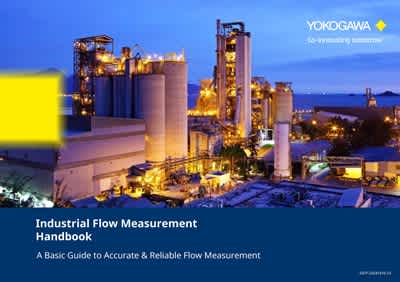
A Basic Guide to Accurate & Reliable Flow Measurement.
Smart devices, like Yokogawa’s line of Total Insight transmitters and flowmeters contribute to Digital Transformation during operations and throughout the lifecycle of the instrument.
Recent or pending air pollution legislation to reduce the amount of air pollutants is increasing worldwide. In the U.S., The Clean Air Act address numerous air quality problems. One of these problems is acid rain (much of which falls in Canada) caused by sulfur dioxide and nitrogen oxide emissions from fossil-fueled power plants and other industrial and transportation sources.
Downloads
Brochures
- CA Series – Measuring the Impossible When Nothing Else Will Work (330.1 KB)
- Preserving Our Water Resources One Drop at a Time (6.5 MB)
- Benefits of ADMAG Total Insight Series Magnetic Flow Meter for Pulp & Paper (870.5 KB)
- Five Mistakes When Selecting a Flowmeter (439.6 KB)
- Yokogawa in the Water Industry in North America (1.8 MB)
- Yokogawa in the Food and Beverage Industry (5.9 MB)
- Gas and Combined Cycle Power Plant Solutions (3.7 MB)
- Electrolysis Solutions: Instrumentation Solutions for Electrolysis Plant Applications (841.1 KB)
- Brochure: Five Mistakes When Selecting a Flowmeter
- Flow Meter Selection Guide Poster
Videos

This video explains how to open .eds files in Studio 5000. The Yokogawa Magnetic Flow Meter ADMAG TI - AXG with EtherNet/IP is used as an example.
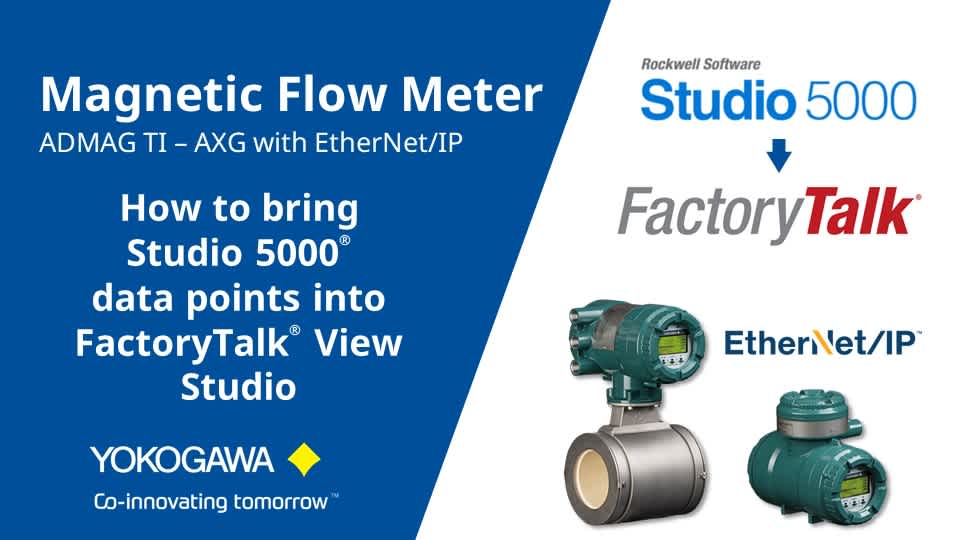
This video shows steps to bring the Studio 5000 Data Points into the FactoryTalk View Studio. The Yokogawa Magnetic Flow Meter ADMAG IT - AXG with EtherNet/IP is shown as an example.
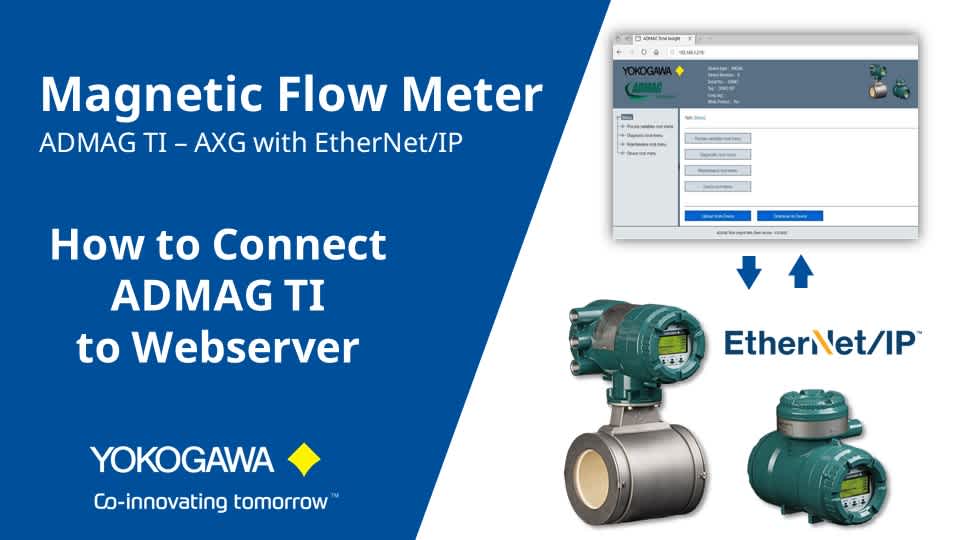
This video describes the process of connecting the Yokogawa Magnetic Flow Meter ADMAG TI - AXG with EtherNet/IP to a webserver

In the digester process, high temperature and pressure, along with the slurry pulp, can cause extreme damage to traditional meters.
Our experts review the theory behind flow measurement technologies. Discuss common flow application challenges and evaluate the different technologies when selecting a flow meter. They also give examples of best installation practices for successful measurements.

What about other instrumentation pain-points in the blow tank, washing, or bleaching process?

To effectively control and optimize industrial processes, trusting measurements from flowmeters is vital.
Looking for more information on our people, technology and solutions?
Contact Us